

So how much resistance training is necessary to increase your lean muscle mass and strength? Not as much as you probably think. Unlike what you may read about in the muscle mags, you do not have to train hours a day, seven days a week to get results. In fact, any more weight/resistance training than 2 to 3 hours a week may be counter-productive.
The best results I've witnessed while in the personal training field come from 3-5 sessions a week with weights, less than an hour each session. Most people like the Monday, Wednesday, Friday approach to weight training. This leaves Tuesday and Thursday for cardio, which should be done separately from weight training.
The following outline for a workout routine is simplistic in it's approach, which is also why it's very effective. The key to proper weight training is to establish a good foundation on which to build upon, much like building a solid foundation for a house. If you cut corners and build a weak foundation for a house, as time goes on, the house will become weaker and less sturdy.
Same thing with weight training. Keep it simple. It's more productive to focus effectively on a few tasks (exercises) than it is to work out with less intensity on many different ones. You can revise and edit the program every 8 to 10 weeks to include different exercises or a different pairing of muscle groups.
Keep your routine simple, follow the suggested exercises (most are simple, well-known basic exercises) and I guarantee you will see more results.

{{caption}}
"The key to proper weight training is to establish a good foundation on which to build upon."
Step 1 Create A Weekly Schedule
From the following muscle groups, pick two that you will be working out on Day 1 of weight training.
Pick 2 from the following
Day 1: (Monday) of weight training and __.
Day 2: (Wednesday) of weight training _ and __.
Day 3: (Friday) of weight training and __.
Here's your three day weight training routine: Monday, Wednesday, Friday is good or maybe Tuesday, Thursday, and Saturday.
The key is to give yourself a day in between weight training sessions so that you may include a cardiovascular session on your non-weight training days. Include at least 1-2 days off each week for rest and recovery purposes.

{{caption}}
"The key is to give yourself a day in between weight training sessions so that you may include a cardiovascular session on your non-weight training days."
Step 2 Pick Exercises
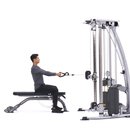
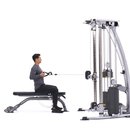
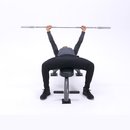
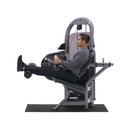
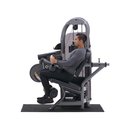
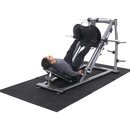
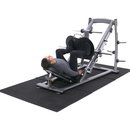
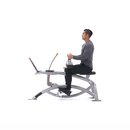
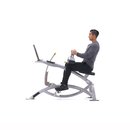
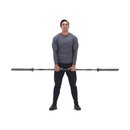
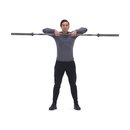
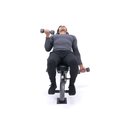
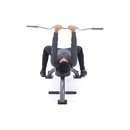
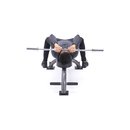
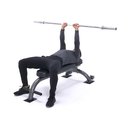
Depending on which muscle groups you are training, pick 2-3 exercises for each muscle. Below is a sample week with sample exercises.




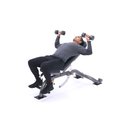
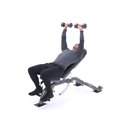
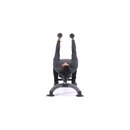
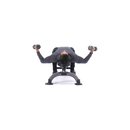












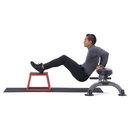
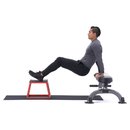
Step 3 Put it Together With Sets And Reps
Each workout day would look like this
1st exercise x 4 sets of 8-10 reps 2nd exercisex 4 sets of 8-10 reps 3rd exercise (if applicable)x 4 sets of 8-10 reps 1st exercise x 4 sets of 8-10 reps 2nd exercise x 4 sets of 8-10 reps 3rd exercise (if applicable)x 4 sets of 8-10 reps 1st muscle group in workout 2nd muscle group in workout
Do only 2-3 heavy sets per exercise. You can do as many "warm-ups" as you feel necessary. For example:
- 1st set-10 reps (warm-up)
- 2nd set-8 reps (heavier warm-up)
- 3rd set and the 4th sets (heavier sets) Hit Failure between 8 - 10 reps on last heavy sets.