
Exercise can be truly addicting. Once you start, it's a hard habit to break. People dedicate years of their life to strict dieting, hardcore training, and the entire fitness and bodybuilding lifestyle.
But just as often, the habit gets broken. Injury or health problems, hectic schedules, a necessary change in life, work or family problems, loss of motivation, and stress can all send your fitness lifestyle off the rails. It's nobody's fault. It just happens.
When it does, it's your choice whether or not you want to get back in the game. Your muscles aren't going to like it at first. They clearly aren't going to be the same as they once were. They need a solid routine to help trigger muscle memory.
This workout from one of our Bodybuilding.com BodySpace members, BurningHeart, is great for getting back in shape!
How Do I Get Back in Shape?
If you have any history of lifting weights, I've got good news: You have a long backlog of muscle memory to pull from!
Simply put, muscle memory is your body's ability to activate muscle fibers quickly and efficiently due to having done it so many times in the past. It may take a few sessions to "feel" your squat and bench press like you used to, but you're at a great advantage over someone starting from scratch.
There's another great aspect to muscle memory, too. If you once had a significant amount of muscle mass, your muscles actually hold onto the extra fibers, even when you fall out of shape.
That means it's easier for you to add muscular weight back on![1] This benefit can be felt months, even years, after the peak of your fitness.
What's the Best Comeback Routine?
This basic routine is designed to help someone who used to be fairly serious about lifting get back in the game. It consists of three stages, each four weeks long.
The first stage is all about getting your body back into shape. It includes easier exercises at high reps in order to increase muscle size by taking advantage of muscle memory.
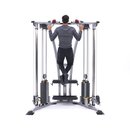
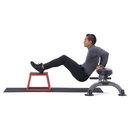
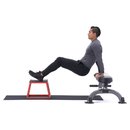
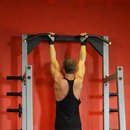
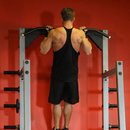
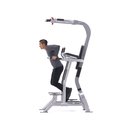
The second stage includes harder exercises at moderate reps. You'll be doing plenty of compound exercises, such as pull-ups and dips, in order to increase muscle strength and prepare your body for heavy loaded exercises.
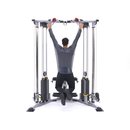
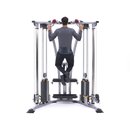
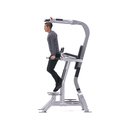
Finally, the third stage consists of more advanced exercises, such as weighted pull-ups and dips. They are done at low reps in order to be able to use high weight, which is perfect for strength gains.
Workout Tips:
- While on this routine, use the maximum weight possible for the rep ranges called for. If it says 12-15 reps, you should be able to do 12 clean reps, but 15 should be a real struggle. It's OK if it takes a few workouts to find the sweet spot.
- Rest between sets should be about 90 seconds. Rest between exercises should be about 3 minutes. This way, a day's workout shouldn't last longer than an hour.
- Each exercise should be done with proper form coming before added weight.
A Bodybuilder's Comeback Workout: 3-Day Split
Weeks 1-4

BodyFit
$6.99/month- 2,500+ expert-created single workouts
- 3,500+ how-to exercise videos
- Detailed workout instruction
- Step-by-step workout tips
- Training at gym or at home
- Access to Workout Plans
- Access to Bodyfit App
- Store Discounts
Already have a Bodybuilding.com account with BodyFit? Sign In

What comes with BodyFit?
- Instructional Videos
Don't risk doing a workout improperly! Avoid injury and keep your form in check with in-depth instructional videos.
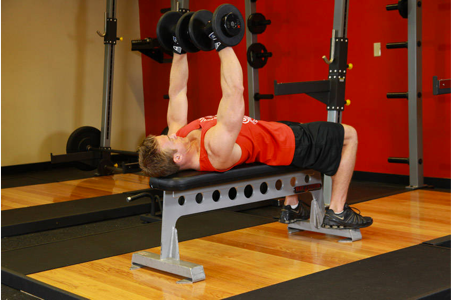
- How-to Images
View our enormous library of workout photos and see exactly how each exercise should be done before you give it a shot.
- Step-by-Step Instructions
Quickly read through our step-by-step directions to ensure you're doing each workout correctly the first time, every time.
BodyFit
$6.99/month- 2,500+ expert-created single workouts
- 3,500+ how-to exercise videos
- Detailed workout instruction
- Step-by-step workout tips
- Training at gym or at home
- Access to Workout Plans
- Access to Bodyfit App
- Store Discounts
Already have a Bodybuilding.com account with BodyFit? Sign In
What comes with BodyFit?
- Instructional Videos
Don't risk doing a workout improperly! Avoid injury and keep your form in check with in-depth instructional videos.
- How-to Images
View our enormous library of workout photos and see exactly how each exercise should be done before you give it a shot.
- Step-by-Step Instructions
Quickly read through our step-by-step directions to ensure you're doing each workout correctly the first time, every time.
BodyFit
$6.99/month- 2,500+ expert-created single workouts
- 3,500+ how-to exercise videos
- Detailed workout instruction
- Step-by-step workout tips
- Training at gym or at home
- Access to Workout Plans
- Access to Bodyfit App
- Store Discounts
Already have a Bodybuilding.com account with BodyFit? Sign In
What comes with BodyFit?
- Instructional Videos
Don't risk doing a workout improperly! Avoid injury and keep your form in check with in-depth instructional videos.
- How-to Images
View our enormous library of workout photos and see exactly how each exercise should be done before you give it a shot.
- Step-by-Step Instructions
Quickly read through our step-by-step directions to ensure you're doing each workout correctly the first time, every time.
Weeks 5-8
BodyFit
$6.99/month- 2,500+ expert-created single workouts
- 3,500+ how-to exercise videos
- Detailed workout instruction
- Step-by-step workout tips
- Training at gym or at home
- Access to Workout Plans
- Access to Bodyfit App
- Store Discounts
Already have a Bodybuilding.com account with BodyFit? Sign In
What comes with BodyFit?
- Instructional Videos
Don't risk doing a workout improperly! Avoid injury and keep your form in check with in-depth instructional videos.
- How-to Images
View our enormous library of workout photos and see exactly how each exercise should be done before you give it a shot.
- Step-by-Step Instructions
Quickly read through our step-by-step directions to ensure you're doing each workout correctly the first time, every time.
BodyFit
$6.99/month- 2,500+ expert-created single workouts
- 3,500+ how-to exercise videos
- Detailed workout instruction
- Step-by-step workout tips
- Training at gym or at home
- Access to Workout Plans
- Access to Bodyfit App
- Store Discounts
Already have a Bodybuilding.com account with BodyFit? Sign In
What comes with BodyFit?
- Instructional Videos
Don't risk doing a workout improperly! Avoid injury and keep your form in check with in-depth instructional videos.
- How-to Images
View our enormous library of workout photos and see exactly how each exercise should be done before you give it a shot.
- Step-by-Step Instructions
Quickly read through our step-by-step directions to ensure you're doing each workout correctly the first time, every time.
BodyFit
$6.99/month- 2,500+ expert-created single workouts
- 3,500+ how-to exercise videos
- Detailed workout instruction
- Step-by-step workout tips
- Training at gym or at home
- Access to Workout Plans
- Access to Bodyfit App
- Store Discounts
Already have a Bodybuilding.com account with BodyFit? Sign In
What comes with BodyFit?
- Instructional Videos
Don't risk doing a workout improperly! Avoid injury and keep your form in check with in-depth instructional videos.
- How-to Images
View our enormous library of workout photos and see exactly how each exercise should be done before you give it a shot.
- Step-by-Step Instructions
Quickly read through our step-by-step directions to ensure you're doing each workout correctly the first time, every time.
Weeks 9-12
BodyFit
$6.99/month- 2,500+ expert-created single workouts
- 3,500+ how-to exercise videos
- Detailed workout instruction
- Step-by-step workout tips
- Training at gym or at home
- Access to Workout Plans
- Access to Bodyfit App
- Store Discounts
Already have a Bodybuilding.com account with BodyFit? Sign In
What comes with BodyFit?
- Instructional Videos
Don't risk doing a workout improperly! Avoid injury and keep your form in check with in-depth instructional videos.
- How-to Images
View our enormous library of workout photos and see exactly how each exercise should be done before you give it a shot.
- Step-by-Step Instructions
Quickly read through our step-by-step directions to ensure you're doing each workout correctly the first time, every time.
BodyFit
$6.99/month- 2,500+ expert-created single workouts
- 3,500+ how-to exercise videos
- Detailed workout instruction
- Step-by-step workout tips
- Training at gym or at home
- Access to Workout Plans
- Access to Bodyfit App
- Store Discounts
Already have a Bodybuilding.com account with BodyFit? Sign In
What comes with BodyFit?
- Instructional Videos
Don't risk doing a workout improperly! Avoid injury and keep your form in check with in-depth instructional videos.
- How-to Images
View our enormous library of workout photos and see exactly how each exercise should be done before you give it a shot.
- Step-by-Step Instructions
Quickly read through our step-by-step directions to ensure you're doing each workout correctly the first time, every time.
BodyFit
$6.99/month- 2,500+ expert-created single workouts
- 3,500+ how-to exercise videos
- Detailed workout instruction
- Step-by-step workout tips
- Training at gym or at home
- Access to Workout Plans
- Access to Bodyfit App
- Store Discounts
Already have a Bodybuilding.com account with BodyFit? Sign In
What comes with BodyFit?
- Instructional Videos
Don't risk doing a workout improperly! Avoid injury and keep your form in check with in-depth instructional videos.
- How-to Images
View our enormous library of workout photos and see exactly how each exercise should be done before you give it a shot.
- Step-by-Step Instructions
Quickly read through our step-by-step directions to ensure you're doing each workout correctly the first time, every time.
How Long Will It Take to Build Back My Muscle?
The time it takes to build back the muscle you once had depends on a number of factors, including how much muscle mass was achieved in the past, how you're eating, and, of course, how you're training.
If someone only worked out for a month and achieved little added muscle mass, they would only have muscle memory spanning to that previous point. However, if they worked out for two years or more before stopping, their muscle memory would span a greater time, and their potential would be that much greater.
Whatever the amount of time you may have worked out in the past, it will help you get back to that level faster than the average person. This alone gives you an excellent reason to get back into weightlifting. Now go do it!
References
- Bruusgaard, J. C., Johansen, I. B., Egner, I. M., Rana, Z. A., & Gundersen, K. (2010). Myonuclei acquired by overload exercise precede hypertrophy and are not lost on detraining. Proceedings of the National Academy of Sciences of the United States of America, 107(34), 15111–15116.