

MRT, a.k.a. "metabolic resistance training," might as well be called "madman training." It's no-holds-barred, haul-ass, maximum-effort, build-muscle, heave-weight, torch-fat, absolutely insane huff-n-puff training. It'll spike your metabolism, crush calories like beer cans, lift your lactate threshold, boost your ability to make muscle, and maximize your body's capacity for change.
Whew! I'm winded just rattling off MRT's many benefits.
No magic here—MRT is just a term covering various combinations of intense, efficient cardiovascular and muscular training. MRT can involve supersets, circuits, speed, low rest and compound movements; it almost always packs a double-punch of aerobic and anaerobic work, breaking down barriers between traditional weight training and cardio. If you're sick of long rest periods and the sleepy treadmill slump, MRT might be for you.
MRT, WTF?
MRT works by heightening the metabolic "cost" of exercise. This might sound geeky... until you try it. Whereas traditional resistance training might tap 25 or 30% of the body's "change capacity," MRT can maximize your potential for change and unleash metabolic forces that work all day and night.
By maximizing your body's change capacity, you can improve 50%—not 25 or 30%—in only 6 weeks. Even better, MRT spreads improvement across multiple desired targets. Basically, when properly integrated into a periodized-training scheme, MRT can help you build muscle, burn fat and gain strength at the same time.
MR-Tea Time
Energy expenditure over the course of an MRT workout can easily approach or exceed 600 calories, depending on the routine. Better yet, excess post-exercise oxygen consumption (EPOC) increases dramatically. EPOC, often referred to as afterburn, measures the energy expended to return your body to its normal, resting state after a workout. Post-workout, your body uses an immense amount of energy to go from Mr. Huff-and-Puff back to Mr. Breathe-Normal. Considering that intense training can elevate EPOC for 38 hours or more, the total number of calories burned quickly stacks.[9]
In addition to stoking your body's fat-burning fire, MRT can also enhance muscle growth. It does so by increasing your lactate threshold, the point at which lactic acid rapidly begins to accumulate in your muscles. Lactic acid build-up can interfere with muscle contraction, reducing your reps.
MRT counteracts lactic acid's negative effects by improving your ability to buffer lactic acid and shuttle it out of muscle tissue. The upshot: a greater tolerance for high volumes of work, an important component for maximizing muscle growth. What does all this crazy crap mean? If you want to build muscle, consider using MRT for a brief mesocycle (2-6 weeks) before embarking on a longer, more traditional muscle-building routine.
Ready to give MRT a try? Good! Let's nail the basics of how it's done:
1. Crunch Time
First, the essence of MRT is to pack more exercise into less time. This is best achieved by employing high repetitions (15-20 reps per set, equating to about 60-65% 1RM) with minimal rest between sets4. The key to optimizing results is to train at maximal or near-maximal levels of effort. So take most sets to muscular failure or close to it (equating to a Rated Perceived Exertion [RPE] of 9 or 10 on a scale of 1-10). If you aren't sufficiently pushing yourself to complete each set, the metabolic effect and your results will suffer.
2. More Muscles, More Energy
MRT should be a total-body routine that works all the major muscles each session. Since the metabolic cost of an exercise relates directly to the amount of muscle worked, incorporate multi-joint exercises whenever possible.[3] Involve more muscle, and you expend more energy. Opt for compound movements: squats, rows and presses will work the muscles of the torso and thighs. Reserve single-joint movements for the arms and calves. Train three, non-consecutive days per week (i.e. Monday, Wednesday, Friday) to allow for adequate recuperation.
3. Speedy To Slowly
Repetitions should be performed at a moderately fast tempo, particularly on the concentric portion (the "positive" half) of the movement. Despite the hype that "super-slow" training optimizes metabolic effects, studies suggest otherwise.[5] Aim to perform concentric lifts as explosively as possible without sacrificing clean technique.
Eccentric reps - the negative motion, when you lower the weight - should be performed somewhat slower. You want your working muscles to resist gravitational pull on the negative phase of each rep. Understand that eccentric exercise has been shown to have a significant effect on MRT-induced energy expenditure.[2]
Not lowering weights under control diminishes results. An eccentric cadence of approximately 2-3 seconds is recommended.
MRT Routines
Okay, you've suffered through the particulars and are sufficiently MRT-educated. Let's get to the good stuff: three tried-and-true MRT strategies guaranteed to help strip away stubborn fat and heighten acid-buffering ability. You can stick with one strategy for a given timeframe or periodize strategies from one week to the next. Regardless of what you decide to do, it's best to insert an "unloading microcycle" (one week of light weight) every fourth week or so to avoid the potential for overtraining. During the unloading cycle, reduce the effort expended so you're not substantially challenging your muscles on the last few reps of each set (aim for about a 7 on an RPE scale of 1-10). As a general rule, limit metabolic training cycles to a maximum of about 8 weeks. Any longer and you risk compromising muscular gains.
Circuit Training
Circuit training is probably the most popular MRT technique, and for good reason: it works! The energy cost of a circuit session has been estimated to be 7 kcal/kg/hr10. That equates to around 600 calories per hour for a typical 180-pound male. Not bad, huh?
Better yet, circuit training has been shown to have greater effects on the magnitude and duration of EPOC than traditional forms of strength training.[8] All told, you can burn hundreds and hundreds of calories in a properly-executed circuit training workout.
Set up a series of exercise stations that work muscles in a push/pull fashion, starting with the upper body and proceeding to the lower body (i.e. chest, back, shoulders, biceps, triceps, quads, hamstrings, calves and abdominals). Move from one exercise to the next with minimal rest (ideally less than 15 seconds). Perform three circuits in total. Don't pass out. Reap the rewards.
Sample Circuit


















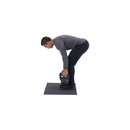
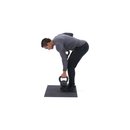

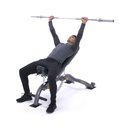
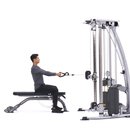
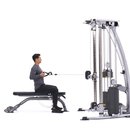
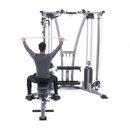
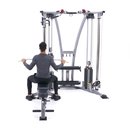
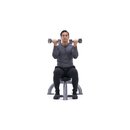
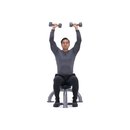
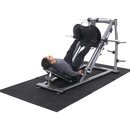
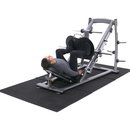
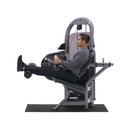
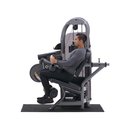
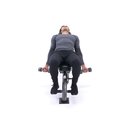
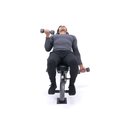
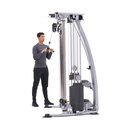
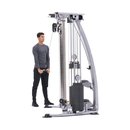
If necessary, rest briefly between rounds.
Paired Set Training
A superset is two exercises performed in succession without rest. One of the best metabolic supersets involves training agonist/antagonist muscle groups (i.e. back/chest, biceps/triceps, quads/hamstrings, etc). This technique, commonly known as paired-set training, has been shown to increase EPOC and result in greater total energy expenditure when compared to traditional strength training protocols.[7]
Better yet, paired sets can actually increase muscle force output (strength) via a phenomenon called "reciprocal inhibition," and/or an increase in stored elastic energy in the muscle-tendon complex.[1,6]
Bottom line: You're better able to maintain strength capacity on subsequent sets, allowing you to train at higher levels of intensity.
Set up agonist/antagonist stations so you are able to move quickly between exercises. Perform a set of the first exercise and then go directly to the second movement. Rest for approximately 30 seconds, and then perform two additional supersets. Once you finish, quickly proceed to the next agonist/antagonist pairing (and so on) until all muscle groups have been worked.
Sample Paired Set Workout
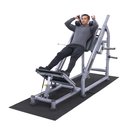
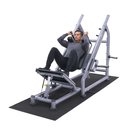
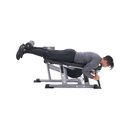
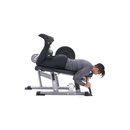


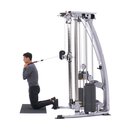
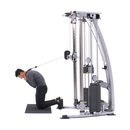
Combo Training
As the name implies, combo training is a combination of resistance training and aerobic exercise. This is probably the most demanding of all the MRT techniques; it's sure to leave you physically drained by the end of your session. That said: the results are worth it. I've used this extensively with private clients over the years and can attest that it skyrockets fat burning.
Perform a set of an exercise, follow it immediately with a short bout of moderate-intensity aerobics, and then repeat for another couple sets. For example, you may perform a set of leg presses, go straight to a 30-second set of jumping jacks, go back to a set of leg presses, then to jumping jacks, etc. Once you perform three sets of an exercise, move to the next exercise as quickly as possible. On the downside, this form of MRT has the greatest potential to lead to overtraining, so use it judiciously!
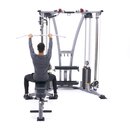
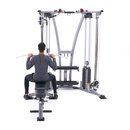
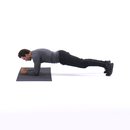
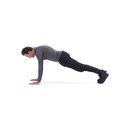
Sample Combo Workout
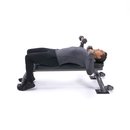









References
- Baker D and Newton RU. (2005). Acute Effect on Power Output of Alternating an Agonist and Antagonist Muscle Exercise During Complex Training. The Journal of Strength and Conditioning Research, 19(1), 202-205
- Da Silva RL, Brentano MA, Kruel LF. Effects of different strength training methods on postexercise energetic expenditure. J Strength Cond Res. 2010 Aug;24(8):2255-60.
- Elliot, DL, Goldberg, L, and Kuehl, KS. Effect of resistance training on excess post-exercise oxygen consumption. J Appl Sport Sci Res 6: 77-81, 1992.
- Haltom R., Kraemer R.R., Sloan R.A., Frank K., Tryniecki J.L. 1999. Circuit weight training and its effects on excess postexercise oxygen consumption. Medicine & Science in Sports & Exercise, 31, 1613-8.
- Hunter, GR, Seelhorst, D, and Snyder, S. Comparison of metabolic and heart rate responses to super slow vs. traditional resistance training. J Strength Cond Res 17: 76-81, 2003.
- Kamimura, T., Yoshioka, K., Ito, S., & Kusakabe, T. (2009). Increased rate of force development of elbow flexors by antagonist conditioning contraction. Human Movement Science, 28(4), 407-414.
- Kelleher AR, Hackney KJ, Fairchild TJ, Keslacy S, Ploutz-Snyder LL. The metabolic costs of reciprocal supersets vs. traditional resistance exercise in young recreationally active adults. J Strength Cond Res. 2010 Apr;24(4):1043-51.
- Murphy, E and Schwarzkopf, R. Effects of standard set and circuit weight training on excess post-exercise oxygen consumption. J Appl Sport Sci Res 6: 88-91, 1992.
- Schuenke MD, Mikat RP, McBride JM. Effect of an acute period of resistance exercise on excess post-exercise oxygen consumption: implications for body mass management. Eur J Appl Physiol. 2002 Mar;86(5):411-7.
- Wilmore JH, Parr RB, Ward P, Vodak PA, Barstow TJ, Pipes TV, Grimditch G, Leslie P. Energy cost of circuit weight training. Med Sci Sports. 1978 Summer;10(2):75-8.