TOPIC: What Is The Best Complete Abdominal Workout?
The Question:
Everyone wants a rock hard six-pack, however, the abdominals can be a tricky set of muscles to train.
What is the best complete abdominal workout? Be specific.
Should the obliques be directly targeted?
What kind of results can this workout deliver?
Bonus Question: How important is it to train your abdominals? How often do you train your abdominals?
Show off your knowledge to the world!
The Winners:
- ho_124 View Profile
- EAGLES56
- Opiewags99 View Profile (Mighty Kev)
Prizes:1st place - 75 in store credit. 2nd place - 50 in store credit.
To use your credit, e-mail Justin @ justin.podzimek@bodybuilding.com for more info.
1st Place - ho_124 View This Author's BodySpace Here.
Visible abdominals are one thing that almost everyone is trying to get, yet it is also one of the many things that evades these people.
One of the primary reasons for this hardship is the lack of knowledge people have about getting abdominals. Also, you have to be dedicated and train hard like anything you want in life. You're not just going to wake up one day and say "Hey, I want abs now!" And they just pop out of your mid section!
The most important thing to keep in mind is that you must train hard and consistently to get results. Also don't be misled by the television commercials with stupid abdominal machines that guarantee results or pills that promise to shrink your midsection in a week or two. You're just going to waste your money and get more discouraged.
What Is The Best Complete Abdominal Workout? Be Specific.
Before I get into a workout I always like to outline important elements so people who read it become knowledgeable about what they are doing and not just blindly following a program. It also helps them design their own program and become independent which is a great thing because you know your own needs the best.
So first of all we must look at what is required to bring out those abdominals. You can have the strongest abs, as well as some decent size. However if your body fat percentage isn't low enough, your not going to see them. So therefore:
You need at least some decent size and strength of the abdominal muscles. Sure you can have a low body fat percentage, but if your ab muscles are puny then you're not really going to see anything. To do this you need a good abdominal workout.
Also a good abdominal workout consists of one that works both the upper and lower abdominals as well as the obliques. If you just concentrate on the upper abdominals like some people do, then you're not going to get an even 6-pack.
Next you need a low body fat percentage to bring out the definition of the abdominals to get the desired 6-pack. Contrary to what many believe, doing sit-ups won't magically shrink away the fat in your midsection. You must perform cardio to help your body burn away fat.
So looking at these two central requirements what must you do? Well there are two things you must do, and the order you do them in is important. The order you do them in turn is dependent on the attributes of your body at the present moment. So you must:
1. Go Through A Bulking Phase
This is self explanatory. Basically the goal here is to put on as much mass as possible. In this phase you're not so much going to be concerned in getting a visible 6-pack, but doing a complete abdominal workout to put on some good size even if it's not super visible.
This phase is characterized by heavy and intense workouts to push your muscle to grow. Diet in this phase consists of eating more calories than your maintenance level thus allowing the body to put on weight, in the form of muscle but fat as well.
2. Go Through A Cutting Phase
So when you have decent size on your abdominals you want to show off your hard work and get that 6-pack going.
Basically in this phase, with the assistance of cardio, your going to cut away fat and try to get to a low body fat percentage as possible which will bring out the definition of your abdominals. Diet consists of eating below the calorie maintenance level, thus forcing the body to burn off fat to compensate.
So now that you know how to get a good set of abdominals, the next thing is which phase do you go through first? Well this will be different for everyone and also important. If you do the wrong phase first then it can set you off and be a waste of time.
If your body fat is low, about 10%, then you want to go through a bulking phase. This is especially true for people who don't have developed muscles. Even people who do have good muscle mass should try to pack on more mass at this point. The exception would be bodybuilders who are trying to get to much lower body fat percentages of 6 and below.
If you start cutting away more fat instead but you don't have the size to really show your abdominals, then that would really be a waste of time.
If your body fat is high, greater than 18 percent, then you want to go through a cutting phase first. This will shed away fat and make your abdominals visible. However it might not show that well for some people because the size might be lacking.
You still should go through a cutting phase if your high body fat. If you go through a bulking phase then you're just going to pack on more fat and make it harder for yourself to cut it away in the end.
So once you've decided what phase you must go through first then it is time to get into the workouts.
The Bulking Phase - Abdominal Workout
There are a few things about this workout I would like to go over first such as:
1. Frequency:
Most people just do abdominals once a week. However if your abdominals are something that is lacking behind then if you can fit it in, then try doing it twice a week, just remember not to overtrain them.
2. Rest In Between Sets
Rest in between sets should be kept as minimal as possible, ideally 25-45 seconds and 60 seconds at the most. Your not doing a powerlifting workout here where you need to rest for 2-3 minutes. For maximal growth of muscle bodybuilders usually subscribe to a rest time of 60 seconds or less.
3. Repetitions
The number of repetitions is important. I see a lot of people who do say 20, even 30-plus repetitions, but why? You're not trying to work endurance here but to get your muscles to grow.
Unless there is an exception in your program that requires you to use that many repetitions, keep your rep range at 8-12 which is optimal for muscular growth. There seems to be a certain thinking that the abdominals need to be worked with a higher rep range than usual, which isn't true.

BodyFit
$6.99/month- 2,500+ expert-created single workouts
- 3,500+ how-to exercise videos
- Detailed workout instruction
- Step-by-step workout tips
- Training at gym or at home
- Access to Workout Plans
- Access to Bodyfit App
- Store Discounts
Already have a Bodybuilding.com account with BodyFit? Sign In

What comes with BodyFit?
- Instructional Videos
Don't risk doing a workout improperly! Avoid injury and keep your form in check with in-depth instructional videos.
- How-to Images
View our enormous library of workout photos and see exactly how each exercise should be done before you give it a shot.
- Step-by-Step Instructions
Quickly read through our step-by-step directions to ensure you're doing each workout correctly the first time, every time.
The Cutting Phase - Abdominal Workout & Cardio
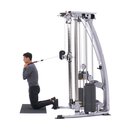
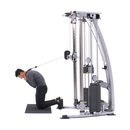
For the cutting phase you would want to switch up the workout. If you stick with the same exercises then your body is going to adapt and thus your progress will plateau. Also you want to introduce cardio to cut away the fat and bring out your abdominals.
Frequency should be once a week since during cutting your going to have less energy. Also the rest in between sets should stay the same as well as the repetition range.
BodyFit
$6.99/month- 2,500+ expert-created single workouts
- 3,500+ how-to exercise videos
- Detailed workout instruction
- Step-by-step workout tips
- Training at gym or at home
- Access to Workout Plans
- Access to Bodyfit App
- Store Discounts
Already have a Bodybuilding.com account with BodyFit? Sign In
What comes with BodyFit?
- Instructional Videos
Don't risk doing a workout improperly! Avoid injury and keep your form in check with in-depth instructional videos.
- How-to Images
View our enormous library of workout photos and see exactly how each exercise should be done before you give it a shot.
- Step-by-Step Instructions
Quickly read through our step-by-step directions to ensure you're doing each workout correctly the first time, every time.
The Cardio
So now you must shred that fat away to show off that six pack. Cardio is a must to do this and you have two options. The first is HIIT cardio and the second is a 30-60 minute low intensity run. I will talk about each separately and the pros and cons.
HIIT cardio stands for high intensity interval training. It is relatively short and designed to burn as much calories as possible by incorporating high intensity intervals coupled with lower intensity ones.
This is best for people who are in shape and looking to burn as much calories as possible. As well it saves time and can be integrated into many sports training programs since many of them require high intensity intervals as part of training.
The cons are that the calories that are burned are mainly carbohydrates not fat because of the high intensities used. Also it isn't desirable for people who aren't in shape since the high intensity intervals might be hard to keep up. Lastly it doesn't really work on endurance for people that are looking for that aspect.
Your second choice is the 30-60 minute run at low intensity. I will admit I wasn't a big fan of this but I see its benefits now. This is something that is used by a lot of pro bodybuilders and specifically Bob Cicherillo.
Some people are concerned that doing this will burn off muscle, but you are not pushing your body to a point where it has to burn muscle in order to get nutrients. This isn't a professional endurance athletes training schedule so do not be afraid.
The great thing is that the main source of fuel is fat because of the lower intensity, the body is able to utilize fat as energy. Also it is great for people who are not in shape since it is at a lower intensity.
The key however is maintaining that low intensity, at the end you should be comfortably tired, not dead. If you shoot your intensity too high, then you're just going to start burning carbs instead of fat.
The main drawbacks are it can be boring for some people since it is longer and it also does not work the fast-twitch muscle fibers for people who are looking for that.
So after you chose what type of cardio you want to do here is how you go about doing it.
HIIT Cardio
To perform this choose an exercise whether it be running, biking, or even the rowing machine. Say you choose running, so you start by doing 1 minute of medium-paced running at 60-75% of your max heart rate, at the end of the minute you do a 15-30 second sprint at 90-95% of your max heart rate. That is one set which you repeat ten times.
It looks like this:
- Medium paced run at 60-75% heart rate 1 minute
- Sprint at 90-95% heart rate for 20-30 seconds
- Repeat x 10 for a total of 15 minutes
Frequency - You should do this about 2-3 times a week. This coupled with your workouts should burn off the majority of your fat. If you're really in good shape you could try it 4 times per week but beware not to overtrain.
30-60 Minute Low Intensity Run
This is simple to do, pick an exercise and do it for 30-60 minutes. If you're not in shape then go for 30 minutes, but if you are then you can perform 30-60 minutes depending on how much fat you need to lose. If you have more fat to lose then go longer, but if your just finishing up then you can go for a shorter duration.
Frequency - You should do this about 2-3 times per week and if your in shape you can do it 4 times per week.
Intensity - Remember intensity is the key thing, you shouldn't be a passed out sweat pile by the end, rather comfortably tired.
Obliques - Should The Obliques Be Directly Targeted?
Yes of course they should. You don't want any part of your body lacking because you're not directly training it. This is especially true for athletes who aren't out there for looks but performance.
Obliques are extremely important for balance and also generating power. For example an MMA fighters punch relies on the obliques to turn the mid section to put more power in the punch. Wrestlers need well balanced obliques to perform some throws and turn their opponents off balance.
Results - What Kind Of Results Can This Workout Deliver?
By following the workout you can expect a number of things:
- Increased size of abdominals especially during the bulking phase where you're putting on as much mass as possible.
- Visible 6-pack since during cutting you strip away the fat that covers your abdominals thus bringing out the definition.
- Core strength is going to increase as well since you are dealing with heavy weight. This will be a benefit if you play sports such as football, hockey, martial arts, wrestling etc.
Bonus Question - How Important Is It To Train Your Abdominals? How Often Do You Train Your Abdominals?
It is as important as all your other body parts, and it is important to train all your body parts. It does not make sense to just workout your abdominals but not your chest or the other way around, every body part is important. However if your talking about sports, then the abdominals are essential.
Like I said it is where a lot of power is generated for throws, punches, kicks, swings and much more. If you have a weak core, then your performance will surely suffer.
I train in sports so abdominals are important to me. Therefore I do ab work at least 1-2 times per week. I might also do exercises that incorporates the core such as sledge hammer slams and medicine ball throws as well in addition the ab workout.
2nd Place - EAGLES56
Everyone wants a rock hard 6-pack, however, the abdominals can be a tricky set of muscles to train. Many people approach abdominal training improperly and do not obtain their goals.
Workout What Is The Best Complete Abdominal Workout? Be Specific.
The best complete abdominal workout targets the entire abdominal complex. For the sake of simplicity, we will refer portions of the 'core' as upper, middle and lower abdominals. The best ab routine will target each of these regions for more muscle stimulation. More muscle stimulation influences increased hypertrophy.
"Isn't there ONE exercise which hits everything!?"
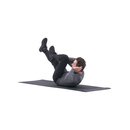
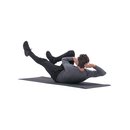
Funny you should ask. While there may not be one perfect exercise, there is a great one; the bicycle/sprinter crunch.
I've included two workout options which can be alternated or used continuously. Feel free to consult the chart and switch up the exercises.
Typically, ab training varies dependant on the individual. However, be sure to hit the entirety of the abdominals. Ideally, you want to hit each area of the abdominals with at least one exercise. Exercise the upper abdominals first as the lower abdominals tend to fatigue quicker.
Focus on the muscles during the exercise and practice perfect form. Aim to work through the burning sensation, but do not sacrifice form for additional repetitions.
Perform each workout as a superset, moving from one set of the first exercise to the next with minimal rest. Rest upon completing one set of each exercise (one circuit).
BodyFit
$6.99/month- 2,500+ expert-created single workouts
- 3,500+ how-to exercise videos
- Detailed workout instruction
- Step-by-step workout tips
- Training at gym or at home
- Access to Workout Plans
- Access to Bodyfit App
- Store Discounts
Already have a Bodybuilding.com account with BodyFit? Sign In
What comes with BodyFit?
- Instructional Videos
Don't risk doing a workout improperly! Avoid injury and keep your form in check with in-depth instructional videos.
- How-to Images
View our enormous library of workout photos and see exactly how each exercise should be done before you give it a shot.
- Step-by-Step Instructions
Quickly read through our step-by-step directions to ensure you're doing each workout correctly the first time, every time.
BodyFit
$6.99/month- 2,500+ expert-created single workouts
- 3,500+ how-to exercise videos
- Detailed workout instruction
- Step-by-step workout tips
- Training at gym or at home
- Access to Workout Plans
- Access to Bodyfit App
- Store Discounts
Already have a Bodybuilding.com account with BodyFit? Sign In
What comes with BodyFit?
- Instructional Videos
Don't risk doing a workout improperly! Avoid injury and keep your form in check with in-depth instructional videos.
- How-to Images
View our enormous library of workout photos and see exactly how each exercise should be done before you give it a shot.
- Step-by-Step Instructions
Quickly read through our step-by-step directions to ensure you're doing each workout correctly the first time, every time.
Tips:
- Perform crunches with the feet elevated (on a bench/box, ball etc.) to place more stress on the actual abdominal muscles instead of the lumbar spine and hip flexors.
- During leg raises, bring the legs up to 90 degrees to the body.
- To increase difficulty, focus on the contraction and eccentric portions of each rep. Aim for a 5-10 second eccentric to really feel the burn.
- Only add minimal weight once exercise is no longer challenging. Increase weight slowly.
Obliques - Should The Obliques Be Directly Targeted?
Yes. Would you train your biceps and not your triceps? I hope not. Failure to do so not only affects appearance, it creates an imbalance which may cause injury.
Many bodybuilders abstain from training the obliques in an effort to avoid obtaining larger outer abs - which would negatively affect the appearance of the much sought after 'V-Taper' appearance. The obliques are still involved and can be a great source of power during exercises. Even bodybuilders are recommended to train the obliques, however, do not make them the primary focus.
Results What Kind Of Results Can This Workout Deliver?
This workout delivers direct abdominal stimulation. You can expect to be sporting a solid set of abs. However, don't give this workout a trial run and then come to me complaining when you don't have your perfect 6-pack - visible abs are only attainable with a lower body fat percentage.
This workout helps build the muscle, it doesn't trim you down. To shed the fat and uncover your abs, assess your diet and current training protocol.
Bonus Question How Important Is It To Train Your Abdominals? How Often Do You Train Your Abdominals?
As the fitness industry expands across the world, the phrase 'core training' always comes up. Is the emphasis on 'core training' well-founded? Of course! Although the 'core' is not limited to only the abs, a strong, fully functional set of abdominals is a necessity. Why?
The abdominals help form the link between the upper and lower body. Abs withstand a phenomenal amount of tension during squats and deadlifts. A solid set of abdominals actually increases maximal force output (during day-to-day living, as well as in the gym).
What does this mean? Abs are necessary bearing weight during exercise and can also help you lift more. That said, it is important that abs are trained and not neglected - unless you want to lift less and increase your chances of injury.
I train my abdominals every other day to some extent. Remember that heavy squats and deadlifts work the abs. I also throw in the occasional few sets of planks, bicycle crunches and leg raises. I was never a fan of ab training in the past until I realized how much it could benefit my squat and deadlift. Doubtful? Try it out!
EAGLES56
References:
- https://www.bodybuilding.com/fun/topicoftheweek30.htm
- https://www.bodybuilding.com/fun/layne4.htm
3rd Place - Opiewags99 (Mighty Kev) View This Author's BodySpace Here.
Perhaps one of the most attractive muscle groups on the body would be the stomach muscles, or the abdominal muscles. A desire for the perfect 6-pack is a one of the most universal aspirations of guys and girls alike, whether in the fitness world or just in regular real life.
Building the abs requires a great deal of dedication and discipline, assuming you want them to show and not be covered by a layer of flab. But that is beside the point for now, because in this article the goal is to build the abdominal muscles. If you're looking for fat loss tips, they can be found here.
But since we're here to discuss the best complete abdominal workout, why don't we begin by looking at what I like to call the three essential sections of the abs that need to be trained: The middle/upper abs, the lower abs and the obliques.
Now, I know what you're saying, you want a 6-pack, not a 3-pack. You'll get a 6-pack, don't worry about that, but this is just a common way of splitting the abs training into sections, because there is no exercise that hits all three sections effectively.
The Workout
This workout should be performed twice every week. Now since variation in the training routine is one of the strongest tools we have in sculpting a strong and balanced body, 2 exercises from each section will be picked for each separate workout and performed with as short of rest periods in between sets as possible.
Upper/Middle Abs Exercises:
- Ab Crunch Machine
- Air bike
- Ab Roller
- Cable Crunch
- Decline Crunch
Lower Abs Exercises:
- Decline Reverse Crunch
- Exercise Ball Pull-In
- Flat Bench Leg Pull-In
- Flat Bench Lying Leg Raise
- Hanging Leg Raise
Oblique Exercises:
- Decline Oblique Crunch
- Oblique Crunches
- Oblique Crunches - On the Floor
- Plate Twist
- Russian Twist
Begin by warming up for 15 minutes jogging or doing some cardiovascular activity in addition to some dynamic stretches. Then pick out your 6 exercises above on the list, two from each category, and begin. Do 15-20 repetitions of each, with 15 seconds of rest in between each set.
I typically like to go through the exercises in the sequence they're in, before going back and doing my second set of Upper/Middle Abs exercises, so I can put a little bit more effort into each repetition due to working different exercises.
Beginners do 2 sets of each exercise to the best of your ability. Ideally over time the goal will be to work up to 3-or-4 sets of each of the 6 exercises.
- One thing to remember about these exercises: at the peak of each repetition, you should squeeze your abs as hard as physically possible. This will ensure an extremely good contraction which translates to muscle breakdown and an excellent workout. This is why there are fewer repetitions than you're used to.
- Another Note: If you're a more experienced lifter, feel free to add weight to any of the above exercises, for example hold a plate while performing the exercises or make the weight on the Ab Crunch machine much higher than a normal person would. You control your workout, so put your best effort in and you will see the best results.
Obliques Should The Obliques Be Directly Targeted?
Many bodybuilders talk about avoiding direct oblique work. You ask why? Well, the obliques are the muscles on the sides of your 6-pack muscles, and they wrap partially around the sides of your body toward your back.
The only problem with training the obliques is that one of the criteria in bodybuilding for a great physique is that it be streamlined and with a small waist. Large and muscular obliques can cause a "blocky" look, which essentially would be considered an undesirable physique.
The flipside to the issue is that if you're not a bodybuilder, but rather, an athlete who is looking for all around strength and explosive power, strong and muscular obliques possibly could help you accomplish your athletic feats. For example, the obliques are the muscles that allow your torso to turn quickly and catch that perfect spiral pass in time to win a big game.
As a hockey player, I'm trapped in the middle of the two issues. While I want strong obliques to help me play to the best of my ability, I also don't want to lose the pleasing appearance of a bodybuilder.
This is why I advise still doing direct oblique work, but leaving weight out of the equation. Weighted ab exercises will build mass much more quickly than un-weighted, so keep your oblique work without too much resistance, aside from your body weight.
Results What Kind Of Results Can This Workout Deliver?
The results of this kind of workout is that you will have a much stronger core to build upon, whether your eventual goal is to be a powerlifter, a baseball player, or even simply an amateur bodybuilder.
A stronger and more balanced core will allow you to do more complicated motions such at compound weighted lifts with ease and a lesser risk of injury.
That being said, always be careful while performing these exercises, as injury can be detrimental to your fitness and muscular goals, slowing progress to a standstill. Be cautious and safe, and your progress will be steady and constant.
Bonus Question How Important Is It To Train Your Abdominals? How Often Do You Train Your Abdominals?
A lot of people want to have that cut up 6-pack, but fall into a routine of doing the "fun" lifts such as the bench press rather than exercises that push them in the direction of their dreams.
It is incredibly important to perform abdominal work if you ever want to achieve a six-pack; it is simply a requirement. It's mentally difficult to stay consistent with doing your ab work, but if you do, you won't even be able to believe the results you achieve. But you can have too much of a good thing in this case, so be careful not to over-train your abs or they won't have time to recover.
Definitely look into some supplementation to help you recover faster so you can get back into the gym as quickly as possible and back working on that midsection.