
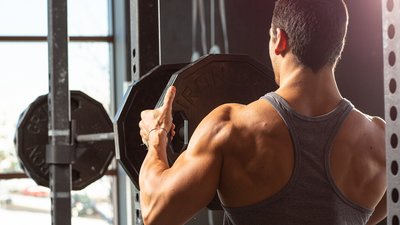
Have you ever seen Ronnie Coleman squat or leg press? How about Branch Warren's intensity level during a leg workout, or Jay Cutler flexing his legs onstage in peak condition? Mighty, well built quadriceps is a true sign of utter power on a physique.
Huge, thickly developed, sweeping quads can dominate a bodybuilding show, differentiating you from the rest of the pack. It can make all the difference between a balanced, well proportioned aesthetically pleasing physique and a top-heavy, stick-legged candy apple body.
Now, we can't all possess professional bodybuilder-sized quads, but we can develop big, thick, well proportioned, and separated quad muscles that would be impressive by any standard.
Don't get caught years from now wishing you had trained your quads a little harder or dedicated more time to them. I can not tell you how many trainers in gyms workout with pants on in the dead heat of summer just to hide their lack of dedication and development regarding quad training.
The quadriceps make up a huge amount of muscle mass on our bodies. They are challenging to train, with countless hours in the gym and gallons of sweat required for what seems to be just a few ounces of muscle. Training quads intensely will give the entire body an opportunity to grow due to the natural growth hormone and testosterone surge you will initiate.
A squat, for example, requires a huge amount of muscle from the entire body in order to drive the weight up - quads, hams, back, traps, shoulders, and abs all contribute to move and/or stabilize the weight during the lift. This will only spell growth that surges throughout the body constructing one powerful-looking build.
You have to ask yourself one question: Do I want that?
Quick Anatomy Lesson
The quadriceps is a large muscle group that comprises of four muscles on the front of the thigh. Let's take a quick look at what comprises the main muscles of the quadriceps and their function.
Rectus Femoris: Originating from the ilium, the rectus femoris occupies the middle of the thigh covering most of the other three quadriceps muscles.
Vastus Lateralis: Originating from the femur, the vastus lateralis extends down the lateral side (outer area) of the thigh and inserts into the patella.
Vastus Medialis: Also originating from the femur, the vastus medialis extends down the medial side (inner area) of the thigh and inserts into the patella. This muscle makes up the much sought-after "tear drop" look.
Vastus Intermedius: This muscle lies between the vastus lateralis and vastus medialis on the front of the femur inserting into the patella.
All four quadriceps muscles extend the knee joint. Additionally, the rectus femoris, due to its originating location, also flexes the hip joint.
Tree Trunk Action
Now that you know a little about anatomy and function, let's delve into what makes outstanding quadriceps. The movements and routines presented are designed to get the most out of each trip to the gym. Remember to always use good form and not to use too much weight to compromise your safety.
Back Squats
The back squat (the so called granddaddy of leg movements) is the quintessential exercise for developing impressive quads.
Get under the bar in a squat rack and place the bar on a comfortable position across your upper back on your trapezius muscle. Grasp the bar with both hands out to the sides on the bar for stability. Now, step back from the rack into a shoulder-width stance or a little wider.
This is crucial: begin the movement by bending your knees first. Do not bend at the hips or back at the beginning of the movement, this will cause you to pitch forward. Lower the weight until your hamstrings touch your calves or you reach a comfortable range of motion (ROM). Drive the weight back up first utilizing your hips and then your knees. Do not lock your legs out at the top.
The range of motion is entirely up to the individual. Using a full ROM is always the most ideal way to perform any exercise, but squats can raise questions regarding knee pain and back strain.
For a rule of thumb, descend as far as you are comfortable and then return to the start. Just remember not to short change yourself and take it as a challenge. Squats are a tough movement, but the reward is well worth it.
To hit the inner quads (vastus medialis) a little more try doing squats with more of a wide stance and the toes slightly pointed out.
Front Squats
For front squats position yourself under the bar in front of you and rest the bar in the crook of your shoulder girdle across your deltoids. Cross your forearms over one another and steady the bar on either side. Keep your upper arms parallel with the floor and your head up. Pick up the weight and step back with a shoulder-width stance.
Perform the movement as you would a back squat. You will notice that you are able to keep your back a little straighter throughout this movement. Front squats target the quads a little better than the traditional back squat which involves more hip strength.
If you are new to front squats and need added stability, perform them on a Smith machine for a while until you are comfortable with handling the weight.
If you are a tall trainer and find yourself either pitching too far forward or your heels are rising off of the floor at the bottom of the movement, try placing a five or ten pound plate under each heel for added stability. This can be applied to either squat versions.
Hack Squats
To focus a little more on the outer sweep (vastus lateralis) of the quad nothing beats the hack squat. With a moderate weight place yourself comfortably under the pads of the machine and take a shoulder width stance in the middle of the foot plate. Descend until you reach a full ROM and then return to the starting position.
Make sure not to accelerate into the descent too much as this will put too much strain on your knees. Keep the movement at a steady pace. Again, as with most leg movements, do not lock out your knees at the top.
Some gyms are not equipped with a hack squat machine, but do not despair, there is a solution. Simply grasp a loaded barbell from behind your calves (kind of a deadlift but with the weight behind your legs).
With your back straight and your head up, begin lifting with your legs until you are almost standing straight up. Without locking your legs return the weight to the starting position without touching the floor.
This movement requires very strict form and a moderate weight that can be handled easily until you are comfortable.
Leg Press
Another great mass builder is the traditional 45 degree angled leg press. The advantage of this machine is that it places very little if any stress on the lumbar area and focuses on the thighs to a greater extent.
Seat yourself in the machine and make sure the seat is back far enough for a full ROM. Place your feet about shoulder width apart in the middle of the foot plate. Push up the weight without locking your knees and turn down the safety catches.
Lower the weight under control and explode back up to the starting position. Go as far down as you can with the weight. Try to avoid half or partial reps - you are just cheating yourself out of developing your quads to the fullest.
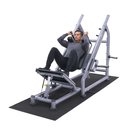
If you find the leg press in your gym to constantly be occupied or your gym simply does not have this piece of equipment there are other options to choose from. Many gyms have alternate machine leg presses to utilize including weight selectorized versions as well as Hammer Strength brand.
Leg Extensions
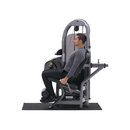
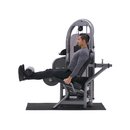
For ultimate isolation of the quad muscles nothing comes close to the leg extension machine. Sit into the machine with your knees lined up with the axle of the action arm and your back flat against the back pad. Adjust the shin pad so it fits right into the 90 degree angle of your foot and ankle.
Lift the weight at a moderate pace and squeeze at the top without pause, then return to the start. Try to avoid holding the weight up at the top as this may put unnecessary stress on your knees, specifically the patella tendon.
For a bit of a shock to the top portion of your quads and a wicked burn try this variation of the leg extension. Perform the movement as described above, but this time lean your upper body forward off of the back pad so you are 90 degrees or less to your legs in the top position. You will have to lighten the weight a bit, but the reward will be one intense burn!
Lunges
Lunges are a great shape movement for the quads. They give your thighs that nice round look and really ties each muscle in together. While some may profess that lunges are a total thigh exercise with an equal amount of ham and glute involvement, for the sake of this article we will focus on how lunges can be applied specifically to quad training.
Place a relatively light barbell across your shoulders as you would on back squats. Step back from the squat rack and step forward with one leg well in front of you. Bend down on that leg so that your knee is just a few inched from the floor.
You want to avoid striking your knee to the floor. Also, make sure your knee does not travel over your toes - if they are, step out further. You trailing foot will stay back the entire time. Once you are in the down position power yourself up into the upright starting position and bring your lunging foot back next to your trailing foot. Repeat with the opposite leg - this will count as one rep.
A great alternative to barbell lunges is the Smith machine lunge. Simply start with one leg in the lunge position and complete all reps with that leg. You will not return to the start after each rep, you will stay forward, complete all reps for that leg and then switch legs and repeat.
A favorite of trainers in most gyms is the walking lunge. These are performed in a spacious area of your gym and make sure you have at least 30 or so feet of "runway" space to walk.
Walking lunges are just that - you will lunge forward and then walk the trailing leg forward to meet the other foot in the starting position and lunge again with the opposite leg. It is a constant walking motion.
Tree Trunk Thigh Schedules

BodyFit
$6.99/month- 2,500+ expert-created single workouts
- 3,500+ how-to exercise videos
- Detailed workout instruction
- Step-by-step workout tips
- Training at gym or at home
- Access to Workout Plans
- Access to Bodyfit App
- Store Discounts
Already have a Bodybuilding.com account with BodyFit? Sign In

What comes with BodyFit?
- Instructional Videos
Don't risk doing a workout improperly! Avoid injury and keep your form in check with in-depth instructional videos.
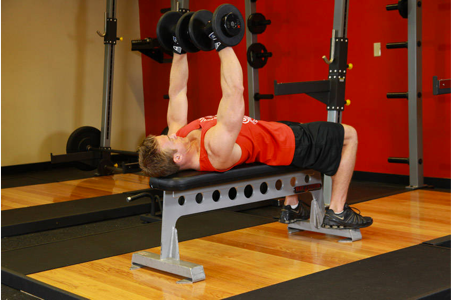
- How-to Images
View our enormous library of workout photos and see exactly how each exercise should be done before you give it a shot.
- Step-by-Step Instructions
Quickly read through our step-by-step directions to ensure you're doing each workout correctly the first time, every time.
BodyFit
$6.99/month- 2,500+ expert-created single workouts
- 3,500+ how-to exercise videos
- Detailed workout instruction
- Step-by-step workout tips
- Training at gym or at home
- Access to Workout Plans
- Access to Bodyfit App
- Store Discounts
Already have a Bodybuilding.com account with BodyFit? Sign In
What comes with BodyFit?
- Instructional Videos
Don't risk doing a workout improperly! Avoid injury and keep your form in check with in-depth instructional videos.
- How-to Images
View our enormous library of workout photos and see exactly how each exercise should be done before you give it a shot.
- Step-by-Step Instructions
Quickly read through our step-by-step directions to ensure you're doing each workout correctly the first time, every time.
BodyFit
$6.99/month- 2,500+ expert-created single workouts
- 3,500+ how-to exercise videos
- Detailed workout instruction
- Step-by-step workout tips
- Training at gym or at home
- Access to Workout Plans
- Access to Bodyfit App
- Store Discounts
Already have a Bodybuilding.com account with BodyFit? Sign In
What comes with BodyFit?
- Instructional Videos
Don't risk doing a workout improperly! Avoid injury and keep your form in check with in-depth instructional videos.
- How-to Images
View our enormous library of workout photos and see exactly how each exercise should be done before you give it a shot.
- Step-by-Step Instructions
Quickly read through our step-by-step directions to ensure you're doing each workout correctly the first time, every time.
BodyFit
$6.99/month- 2,500+ expert-created single workouts
- 3,500+ how-to exercise videos
- Detailed workout instruction
- Step-by-step workout tips
- Training at gym or at home
- Access to Workout Plans
- Access to Bodyfit App
- Store Discounts
Already have a Bodybuilding.com account with BodyFit? Sign In
What comes with BodyFit?
- Instructional Videos
Don't risk doing a workout improperly! Avoid injury and keep your form in check with in-depth instructional videos.
- How-to Images
View our enormous library of workout photos and see exactly how each exercise should be done before you give it a shot.
- Step-by-Step Instructions
Quickly read through our step-by-step directions to ensure you're doing each workout correctly the first time, every time.
BodyFit
$6.99/month- 2,500+ expert-created single workouts
- 3,500+ how-to exercise videos
- Detailed workout instruction
- Step-by-step workout tips
- Training at gym or at home
- Access to Workout Plans
- Access to Bodyfit App
- Store Discounts
Already have a Bodybuilding.com account with BodyFit? Sign In
What comes with BodyFit?
- Instructional Videos
Don't risk doing a workout improperly! Avoid injury and keep your form in check with in-depth instructional videos.
- How-to Images
View our enormous library of workout photos and see exactly how each exercise should be done before you give it a shot.
- Step-by-Step Instructions
Quickly read through our step-by-step directions to ensure you're doing each workout correctly the first time, every time.