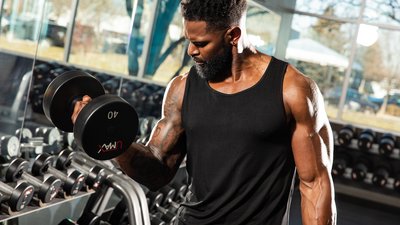
To look great on the beach this summer you will need a great set of arms. If you don't know by now, arms—collectively comprised of the biceps, triceps and forearms—are usually the most popular body part a beginning bodybuilder seeks to develop.
Probably no other body part signifies impressive strength and superior development as arms do, as, of all muscle groups, they are the most apparent (whether in clothing or onstage attention is automatically dawn to them), and impressively shaped (the bicep and triceps combined have five heads of varying shapes and sizes).
Horseshoe triceps that hang off the arm like a side of beef along with baseball biceps complete with mountainous peaks, have always symbolised bodybuilding greatness. Witness the greatest bodybuilder of them all, Arnold Schwarzenegger, famous for his otherworldly arm development.
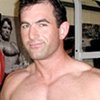
Bodybuilders today strive for the same outcome: full development and perfect shape. One man who has risen through the pro ranks, thanks partly to his spectacular arm development, is the Asian sensation, Wong Hong. His arm development, near flawless with full muscle bellies and jutting peaks, has helped earn him the moniker "Beast from the East".
As well as crafting his own cannons, Wong provides expert training advice as a personal trainer. In fact, people pay Wong big money to achieve he kind of shape he, in his country of Malaysia, and increasingly on the world stage, is known for. Now he provides for bodybuilding.com readers arm training advice second to none. Learn from him and your sleeves will soon be popping.
Mass Building
As with all muscle groups, a solid foundation of mass in needed before attempting the refining work that will bring out the deeper cuts. Wong prefers to do mostly compound movements with the heaviest poundage's, while keeping his form perfect (no shaking and bouncing).
In addition, he emphasizes the eccentric (lowering part) of the movement for a full stretch, which promotes micro-trauma to the working muscle fibres. On a mass cycle, Wong maintains three sets of six to eight repetitions for each exercise.
Here are the exercises he uses to craft his massive biceps and triceps.
Biceps
- Barbell curls
- Dumbbell curls
- Preacher curls
- Hammer curls
Triceps
- Skullcrusher
- Close-grip bench press
- Dips
- Dumbbell overhead extension
The Best Approach For Overall Development
As a pro, Wong has through much trial and error, found the approach the works best for him. As opposed to a pure mass cycle, it involves mixing things up to stimulate the arms from all angles. He has used this approach to great success with many of his clients also.
For both biceps and triceps he will do 10-12 total sets. For each exercise he does three sets of 10-12, using a full range of motion from point A to B. He is always sure to stretch in between sets, while, once again, emphasising the eccentric part of the movement (commonly referred to as negatives). Twice weekly training does it for Wong and for both sessions he does a combination of compound, isolation and cable exercises.
Big Guns
We all want big biceps and Wong is no exception. His favourite movement for biceps is the incline dumbbell curl because, due to the incline position, a tremendous amount of stress is generated through the entire biceps (both the long and short heads), and a maximum stretch is achieved.
The hard-to-target upper biceps is also stimulated to a large degree with the exercise. As this movement is done in an incline bench, the back is supported, meaning Wong is less likely to cheat by bouncing and swinging the weight up. One look at the fullness and amazing peak his biceps possess and it is no surprise Wong is an expert on exercise selection for the upper arms.
Program Design
One of the more common questions Wong is asked regards program design.
"People want to know how they can best plan for extreme arm development." - Wong Hong
He suggests that for biceps, one should begin with compound movements like barbell or dumbbell curls, and follow these with isolation exercises like preacher and concentration curls.
This way a person's initial energy can be put into those movements most effective for building a good foundation. Total sets should be around 10-12 per body part (around three sets of 10-12 repetitions for each of four exercises).
Wong adds that a serious trainer should always go as heavy as possible, while maintaining good form. This means using a full range of motion (full contraction at the top and full stretch at the bottom). To facilitate recovery and muscle growth Wong suggests stretching and flexing respectively in between sets.
For triceps Wong recommends starting with pushdowns to warm up the elbows, as these are prone to injury should an eager trainer rush into heavy, compound movements such as lying extensions.
After pushdowns, lying triceps extensions and dips (both compound movements) can be done to build all three heads. Finally, either one or two isolation exercises like dumbbell kickbacks or overhead one-arm extensions can be done for definition. 12-15 sets are recommended (three sets of 10-12 reps for each of four exercises).
Advanced Improvements
As a pro, Wong is continually seeking improvement. His career depends on it. The problem for advanced competitors is they often have trouble making significant progress given the many years they have been training. Wong, however, has over recent years made great progress in his biceps peak.
The key here is continual change. Certain tweaks need to be made to your program if results are to be ongoing. A new exercise' here, a different angel of attack there: always look to include something new.
Speaking of Wong's mountainous peaks, he has some specific advice for developing this area.
"Nothing is better than concentration curls when it comes to developing bicep peak. It is a single limb exercise and it is the peak contraction and the twisting part that makes this exercise so special." - Wong Hong
Intensity Techniques
As Wong mentioned earlier, training with the heaviest weights in good form, while contracting and stretching the muscle over a full range of motion are the key to good arm development. To add variation and additional intensity he also includes several intensity techniques.
"I like supersets the most, as they provide just enough intensity to produce a maximum pump without overstressing the muscles." - Wong Hong
He is also a big believer in posing between sets.
"I flex my biceps and triceps as if I am hitting a front double bicep or side triceps pose for five to eight seconds between sets to further activate more muscle fibres within each muscle group." - Wong Hong
The Right Rep Range
When he is preparing for a show, a rep range of 12-15 works best for Wong.
"I find that my arms get cut faster, which means they obtain more biceps peak and biceps/triceps separation, by doing medium high reps." - Wong Hong
What About The Forearms?
When Wong started training he did a lot of direct forearm work. He would work like crazy on wrist curls and reverse wrist curls until he built up the impressive lower arms he has today. A fast-gainer in this area, he no longer does any direct forearm work, as they tend to grow out of control, which throws off his symmetry.
However, his forearms still get plenty of work through the heavy curling he does for biceps. One area Wong never overlooks is the brachialis, the muscle that runs the length of the arm and is situated between the biceps and triceps.
"I will do several sets of hammer curls to hit the outer forearms and the brachialis muscles," he says."These are very important when dieted down, when nothing can be hidden onstage." - Wong Hong
Why Big, Symmetrical Arms?
As they demonstrate symmetry and proportion, and, perhaps more so than any other grouping, look downright ridiculous (in the bad sense) when underdeveloped alongside a massive chest, back and shoulders, balanced baseball biceps and horseshoe triceps attract the judges attention right away, which creates the favourable impression all bodybuilders want to make.
"Huge, symmetrical arms are important in competitive bodybuilding because they compliment all poses and, of course, lend power and balance to the front, and back double biceps pose." - Wong Hong
As Wong explains: From a functional standpoint, the main function of the biceps is to flex the forearm towards the shoulder (bending the arm to scratch your nose). The main function of the triceps is to extend the elbow (straightening the arm). "The stronger and more developed the arms are, the better people can perform in both these areas," he says. Bigger arms not only look good, they are functionally important too.
For The Beginner
Depending on what their specific goals are, bodybuilders often have different arm training requirements. When Wong initially assesses his clients, he considers the current size and shape of their arms with a view to working on weak areas.
"It all depends on what specific part of the arm my client needs to improve. For example, if he needs overall mass, then I would have him focus on barbell and dumbbell curls. Most of my clients are beginners and skinny, so I would give them two-to-three compound exercises to build mass." - Wong Hong
Barbell curls, alternate dumbbell curls and preacher curls would be sufficient for a beginner to build good arms size, he explains. As they are not yet advanced, Wong has his beginners train arms once a week.
Triceps Advice
It is generally accepted that most beginners tend to emphasize their biceps at the expense of their triceps. But given the triceps comprises the bulk of the upper arm (they make up almost three quarters of overall upper arm size) they should never be neglected. Wong has some specific advice for those who need to increase their triceps size and shape.
Wong recommends doing triceps pushdowns and lying triceps extensions for mass, particularly the long head and inner head, and one arm cable exercise for the long and outer head of the triceps. For a beginner, Wong says to do lots of skull crushers (lying triceps extensions), dips, and close grip bench presses to develop mass - these tend to develop all three heads.
Routines For Massive Arms
Wong's Current Pre-Contest Routine

BodyFit
$6.99/month- 2,500+ expert-created single workouts
- 3,500+ how-to exercise videos
- Detailed workout instruction
- Step-by-step workout tips
- Training at gym or at home
- Access to Workout Plans
- Access to Bodyfit App
- Store Discounts
Already have a Bodybuilding.com account with BodyFit? Sign In

What comes with BodyFit?
- Instructional Videos
Don't risk doing a workout improperly! Avoid injury and keep your form in check with in-depth instructional videos.
- How-to Images
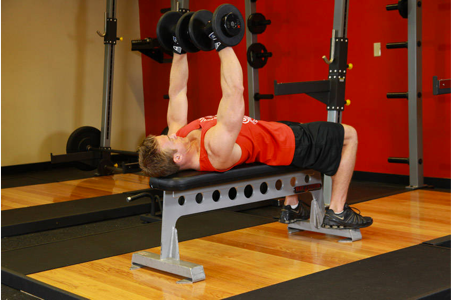
View our enormous library of workout photos and see exactly how each exercise should be done before you give it a shot.
- Step-by-Step Instructions
Quickly read through our step-by-step directions to ensure you're doing each workout correctly the first time, every time.
BodyFit
$6.99/month- 2,500+ expert-created single workouts
- 3,500+ how-to exercise videos
- Detailed workout instruction
- Step-by-step workout tips
- Training at gym or at home
- Access to Workout Plans
- Access to Bodyfit App
- Store Discounts
Already have a Bodybuilding.com account with BodyFit? Sign In
What comes with BodyFit?
- Instructional Videos
Don't risk doing a workout improperly! Avoid injury and keep your form in check with in-depth instructional videos.
- How-to Images
View our enormous library of workout photos and see exactly how each exercise should be done before you give it a shot.
- Step-by-Step Instructions
Quickly read through our step-by-step directions to ensure you're doing each workout correctly the first time, every time.
Wong's Off-Season Program
BodyFit
$6.99/month- 2,500+ expert-created single workouts
- 3,500+ how-to exercise videos
- Detailed workout instruction
- Step-by-step workout tips
- Training at gym or at home
- Access to Workout Plans
- Access to Bodyfit App
- Store Discounts
Already have a Bodybuilding.com account with BodyFit? Sign In
What comes with BodyFit?
- Instructional Videos
Don't risk doing a workout improperly! Avoid injury and keep your form in check with in-depth instructional videos.
- How-to Images
View our enormous library of workout photos and see exactly how each exercise should be done before you give it a shot.
- Step-by-Step Instructions
Quickly read through our step-by-step directions to ensure you're doing each workout correctly the first time, every time.
BodyFit
$6.99/month- 2,500+ expert-created single workouts
- 3,500+ how-to exercise videos
- Detailed workout instruction
- Step-by-step workout tips
- Training at gym or at home
- Access to Workout Plans
- Access to Bodyfit App
- Store Discounts
Already have a Bodybuilding.com account with BodyFit? Sign In
What comes with BodyFit?
- Instructional Videos
Don't risk doing a workout improperly! Avoid injury and keep your form in check with in-depth instructional videos.
- How-to Images
View our enormous library of workout photos and see exactly how each exercise should be done before you give it a shot.
- Step-by-Step Instructions
Quickly read through our step-by-step directions to ensure you're doing each workout correctly the first time, every time.
Tips From The Top
To recap, Wong has the following advice to give regarding training for massive, symmetrical arms.
- Use a variety of exercises for complete arm development.
- Aim for a full contraction from point A to point B. That means a complete full contraction at the top and complete stretch at the bottom of the movement.
- Do not forget to train forearms and triceps. Remember that triceps makes up 2/3 of overall arm development and good forearms compliment a great set of guns. For forearms do wrist curls and reverse wrist curls along with hammer curls.
- Squeeze (flex) and stretch the arms in between sets.
- Ensure you do not over-train your arms, as they are small muscle group. Total sets for biceps for experienced lifter should be 10-12, triceps 12-15.