
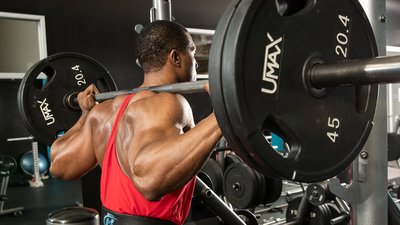
The Marine Corps taught me many valuable lessons. I found that the tenets of being a Marine are completely applicable to living a fit, successful life. It takes determination and strength to build the body you want, and more important, to build the life you want.
This Independence Day, while you chew on a hot dog and watch fireworks, take the time to reflect on our country's freedom. And the next time you hit the gym, reflect on these Marine Corps lessons to enhance your mental and physical ferocity.
1. Your Mind Will Fail Before Your Body
One of the most important lessons I learned while in the Marines was that my body could take much more punishment and go much farther than I ever believed it could. There were times I thought I was pushing myself to my absolute limit, and then I was forced to go far beyond it. I realized it was my mind, not my body that was holding me back. This change in mindset had a huge carryover to my training and life in general. It's one of the most important factors in my overall success today.
2. The Most Important Factor In Your Training Program Is Progression
In the Marines you're taught to strive for constant improvement. Even while repeating tasks over and over again, you should always attempt to perform them to a higher standard than the time before. Obviously, this strategy applies directly to my training. Each day in the gym, I try to push myself to new levels. All effective training programs, regardless of their structure, contain some form of progression. This is the single most important factor in any training program: you will not be successful if today's training does not exceed yesterday's in some manner.
3. Sleep, While Important, Can Be Sacrificed When Necessary
Prior to entering the Marines, I believed it wasn't possible to function effectively on limited amounts of sleep. I soon learned I could go days with little or no sleep and still perform at my highest physical levels. I learned that performing well despite sleep deprivation was just a matter of mental toughness. I just had to push through it. Knowing that I can function well without sleep has been invaluable in my life. Because I spend less time sleeping than most people, I have more time to work on my training, career and other assorted passions. I have also learned that the majority of successful people, regardless their area, sleep far less on average than most people. They spend the extra time furthering their careers.
This is how I was able to put myself through pharmacy school while supporting a wife and three children and simultaneously continue to compete and progress in my lifting. I never missed scheduled training sessions and would often train in the middle of the night after going to school all day and working until late in the evening. Even today, I sleep little compared to most people. My extra hours allow me to work a full time job as a pharmacist, successfully grow two businesses, frequently author articles for magazines and websites, spend quality time with my wife and sons and still always have time for my own training and competitions.
4. Eat Small, High-Protein Meals Often
Throughout much of my time in the Marines, I had little control over my diet. We ate in the barracks chow hall and my food choices were limited. Because I could only eat what was available, I compensated by eating much larger portions at each meal. While this helped me get bigger, it also helped me gain more body fat.
When I reached my first duty station and began working in security, I had to be awake throughout the night. I had to eat an extra meal in the middle of the night. In addition, I started supplementing my diet with several protein shakes spread throughout my long days. I quickly noticed that not only was I making more progress in the gym and gaining more muscle, but I was doing it while staying leaner. Today, I typically eat every 2- to-3 hours, or 7-to-8 meals per day. This meal plan has had a huge impact on my ability to gain muscle mass while maintaining a relatively low degree of body fat.
5. The Single Best Way To Get Stronger Is To Get Bigger
Whether you're a competitive powerlifter or simply desire strength above all else, the single best way to add pounds to your lifts (and especially your squat and bench press) is to gain body weight. I was often frustrated in the Marines because it was difficult to gain weight doing daily bouts of running or other cardiovascular training. The cardio training kept me lean, but it greatly impeded my ability to gain size and strength.
To compensate for all the lost calories, I began drinking three gallons of skim milk every day in addition to all of my regular meals. In a period of just over three months, I was able to gain 30 pounds of body weight and my lifts increased dramatically. Prior to my milk chugging, I had never added so many pounds to my maxes in such a short period of time. Right then and there, I realized how big of an impact gaining weight could have on my strength.
6. Focused Aggression Is Your Ally
I was always competitive in nature, but was not an overly aggressive person. I guess you could say I lacked a real killer instinct. This hindered my competitive success in high school sports, but upon entering the Marine Corps, I learned just how powerful aggression can be. It took me time to learn how to reign in, control and focus my aggression, but once I did, my training was never the same. If you watch any of my YouTube videos or view my "Intensity" training DVD, you will witness how I am now able to unleash this focused aggression whenever I need it.
7. Pain Can Be Overridden By Your Mind
I always had a pretty high pain tolerance, but the Marines brought that to a new level. I learned how to push through physical exhaustion and pain and realized just how much I could endure. In the Marines, we marched over impossible terrain, in extreme heat, carrying heavy gear. From these long, forced marches, I learned how to suffer for hours straight, and that regardless of what I was subjected to, I could keep going. I refused to be broken, physically or psychologically. This mental toughness has been vital to my success in powerlifting. I have the mental strength to cut weight in record time and to recover from muscle tears and tendon ruptures that would be career-ending to many athletes.
8. The Will To Win Is The Single Most Important Factor For Success
To be able to consistently outperform your competition, you have to be willing to suffer more than them. To be willing to suffer more than your competition, you must have a greater desire to achieve victory. The Marine Corps stresses victory above all else, right from day one. Marines pride themselves in being the best in everything they do: from how they wear their uniforms to how they execute combat on the battlefield. I am competitive in nature, and the Marines just added fuel to my fire. My intense desire to achieve victory at all costs separates me from my competition.
9. Fear Nothing
I was already working at conquering my fears when I joined the Marine Corps. But when you train for real-life combat and face the possibility that you may one day have to sacrifice your own life, facing your fears takes on a whole new meaning. Fear is limiting. It prevents you from reaching your true potential unless you are able to overcome it. I am a firm believer that in order to conquer your fears, you must face them. Repeated exposure to the source of the fear is almost always the best way to overcome it.
10. There Are No Real Reasons For Failure, Only Excuses
The Marines Corps does not believe that failure is an option. There are no reasons for failure, only excuses. Whether this is literally true is irrelevant; what is important is being able to view your world in this manner. Once you adopt this philosophy for your life, you find it will naturally lead you to success. You must learn to accept responsibility for your success, or the lack thereof. You must believe the results of your actions are always the direct result of what you have done or failed to do. Once you view your life as something you have complete control over, you can then take the actions necessary to achieve whatever dreams and goals you have for yourself.
11. Train For Gain
This training program incorporates many of the Marine Corps principles. It's designed for an experienced strength athlete who is looking to take their training to the next level in both size and strength.
It is designed around a 4-day training week with a split that alternates the assistance work every other week. The main compound lifts are trained following a weekly progression over a 16-week training cycle.


BodyFit
$6.99/month- 2,500+ expert-created single workouts
- 3,500+ how-to exercise videos
- Detailed workout instruction
- Step-by-step workout tips
- Training at gym or at home
- Access to Workout Plans
- Access to Bodyfit App
- Store Discounts
Already have a Bodybuilding.com account with BodyFit? Sign In

What comes with BodyFit?

- Instructional Videos
Don't risk doing a workout improperly! Avoid injury and keep your form in check with in-depth instructional videos.
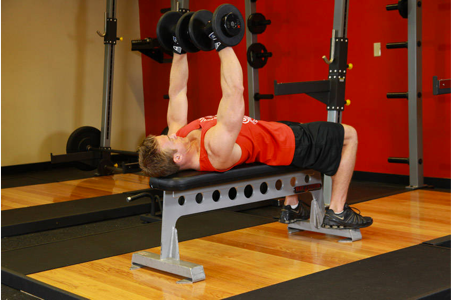
- How-to Images
View our enormous library of workout photos and see exactly how each exercise should be done before you give it a shot.
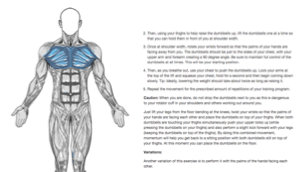
- Step-by-Step Instructions
Quickly read through our step-by-step directions to ensure you're doing each workout correctly the first time, every time.
BodyFit
$6.99/month- 2,500+ expert-created single workouts
- 3,500+ how-to exercise videos
- Detailed workout instruction
- Step-by-step workout tips
- Training at gym or at home
- Access to Workout Plans
- Access to Bodyfit App
- Store Discounts
Already have a Bodybuilding.com account with BodyFit? Sign In
What comes with BodyFit?
- Instructional Videos
Don't risk doing a workout improperly! Avoid injury and keep your form in check with in-depth instructional videos.
- How-to Images
View our enormous library of workout photos and see exactly how each exercise should be done before you give it a shot.
- Step-by-Step Instructions
Quickly read through our step-by-step directions to ensure you're doing each workout correctly the first time, every time.
Day 3: Rest
BodyFit
$6.99/month- 2,500+ expert-created single workouts
- 3,500+ how-to exercise videos
- Detailed workout instruction
- Step-by-step workout tips
- Training at gym or at home
- Access to Workout Plans
- Access to Bodyfit App
- Store Discounts
Already have a Bodybuilding.com account with BodyFit? Sign In
What comes with BodyFit?
- Instructional Videos
Don't risk doing a workout improperly! Avoid injury and keep your form in check with in-depth instructional videos.
- How-to Images
View our enormous library of workout photos and see exactly how each exercise should be done before you give it a shot.
- Step-by-Step Instructions
Quickly read through our step-by-step directions to ensure you're doing each workout correctly the first time, every time.
BodyFit
$6.99/month- 2,500+ expert-created single workouts
- 3,500+ how-to exercise videos
- Detailed workout instruction
- Step-by-step workout tips
- Training at gym or at home
- Access to Workout Plans
- Access to Bodyfit App
- Store Discounts
Already have a Bodybuilding.com account with BodyFit? Sign In
What comes with BodyFit?
- Instructional Videos
Don't risk doing a workout improperly! Avoid injury and keep your form in check with in-depth instructional videos.
- How-to Images
View our enormous library of workout photos and see exactly how each exercise should be done before you give it a shot.
- Step-by-Step Instructions
Quickly read through our step-by-step directions to ensure you're doing each workout correctly the first time, every time.
Day 6 and 7: Rest
BodyFit
$6.99/month- 2,500+ expert-created single workouts
- 3,500+ how-to exercise videos
- Detailed workout instruction
- Step-by-step workout tips
- Training at gym or at home
- Access to Workout Plans
- Access to Bodyfit App
- Store Discounts
Already have a Bodybuilding.com account with BodyFit? Sign In
What comes with BodyFit?
- Instructional Videos
Don't risk doing a workout improperly! Avoid injury and keep your form in check with in-depth instructional videos.
- How-to Images
View our enormous library of workout photos and see exactly how each exercise should be done before you give it a shot.
- Step-by-Step Instructions
Quickly read through our step-by-step directions to ensure you're doing each workout correctly the first time, every time.


BodyFit
$6.99/month- 2,500+ expert-created single workouts
- 3,500+ how-to exercise videos
- Detailed workout instruction
- Step-by-step workout tips
- Training at gym or at home
- Access to Workout Plans
- Access to Bodyfit App
- Store Discounts
Already have a Bodybuilding.com account with BodyFit? Sign In
What comes with BodyFit?
- Instructional Videos
Don't risk doing a workout improperly! Avoid injury and keep your form in check with in-depth instructional videos.
- How-to Images
View our enormous library of workout photos and see exactly how each exercise should be done before you give it a shot.
- Step-by-Step Instructions
Quickly read through our step-by-step directions to ensure you're doing each workout correctly the first time, every time.
Day 10: Rest
BodyFit
$6.99/month- 2,500+ expert-created single workouts
- 3,500+ how-to exercise videos
- Detailed workout instruction
- Step-by-step workout tips
- Training at gym or at home
- Access to Workout Plans
- Access to Bodyfit App
- Store Discounts
Already have a Bodybuilding.com account with BodyFit? Sign In
What comes with BodyFit?
- Instructional Videos
Don't risk doing a workout improperly! Avoid injury and keep your form in check with in-depth instructional videos.
- How-to Images
View our enormous library of workout photos and see exactly how each exercise should be done before you give it a shot.
- Step-by-Step Instructions
Quickly read through our step-by-step directions to ensure you're doing each workout correctly the first time, every time.
Weight progression for squat, bench, military press and deadlift:
- Week One 5 sets of 10 reps at 60% No Deadlift
- Week Two 5 sets of 8 reps at 65%
- Week Three 5 sets of 5 reps at 70%
- Week Four 5 sets of 3 reps at 75%
- Week Five 5 sets of 10 reps at 60% No Deadlift
- Week Six 5 sets of 8 reps at 70%
- Week Seven 5 sets of 5 reps at 75%
- Week Eight 5sets, 3 reps at 80%
- Week Nine 5 sets of 10 reps at 60% No Deadlift
- Week Ten 4 sets of 8 reps at 75%
- Week Eleven 4 sets of 5 reps at 80%
- Week Twelve 4 sets of 3 reps at 85%
- Week Thirteen 5 sets of 10 reps at 60% No Deadlift
- Week Fourteen 3 sets of 8 reps at 80%
- Week Fifteen 3 sets of 5 reps at 85%
- Week Sixteen 3 sets of 3 reps at 90%
Lean Mass Diet for Hard Gainers
The diet that follows is what I am currently eating every day. It is designed and intended for use after a dieting phase when your body is most primed for growth. It is meant to be used by a hard training male athlete who burns a large number of calories each day and who has a relatively high natural metabolism. This method is designed to add significant amounts of muscle mass while allowing the athlete to maintain a relatively low level of body fat.
I based this diet from my own lean body mass. To calculate your lean body mass, subtract your body fat weight from your overall bodyweight. For example, I weigh 250 pounds and my body fat is 8%. 250 X .08 = 20. I have 20 pounds of fat on my body. I subtract this from 250 and get 230, my lean body mass.
To adjust the program for your individual use, figure out what percentage your lean body weight is relative to mine and multiply the macronutrient and calorie numbers. If you weigh 200 pounds and have 10% body fat, your lean body mass is 180 pounds. You then divide your lean body mass (180) by mine (230): 180/230=0.78. To get the appropriate macronutrients, multiply the provided numbers by 0.78. For example, for meal 1, I consume 68 grams of protein; but if your lean body mass is 180, you multiply the protein amount by 0.78. 68 X 0.78=53g of protein. Do the same math for the carbohydrates, fats and total calories. Adjust the amount of food you eat to reflect those numbers.
Getting the right amount of food is important, don't be lazy.
Lean Mass Diet
 Eggs
Eggs
 Egg Whites
 Oatmeal
 Peanut Butter
 Protein Powder
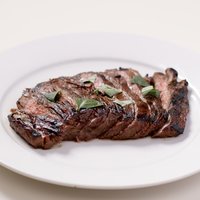 Steak
Steak
 Walnuts
 Brown Rice
Peanut Butter
Protein Powder
Steak
Walnuts
Brown Rice
Protein Powder
Steak
Brown Rice
Peanut Butter
Protein Powder
Steak
Walnuts
Brown Rice
Protein Powder
Steak
 White Rice
Steak
Eggs
White Rice
Steak
Eggs
 Salad
Salad
 Olive Oil
 Vinegar
Macronutrient Daily Totals
Training Day Calories: 5,356 kcal Protein: 599 g Carbs: 341.7 g Fat: 194.5 g
Non-Training Day Calories: 4,886 kcal Protein: 542 g Carbs: 170 g Fat: 191.1 g