
It is important to note that to effectively target all muscle groups, it is helpful to have at least a rudimentary understanding of the least auspicious, but often most impressively sounding, so called, smaller groups.
Knowing the composition of a large muscle complex will allow one to specifically zero in on it, without digressing to other, less specific, areas. This simply takes the stress of the targeted area.
For example, the supraspinatus, related to the rotator cuff complex of the subscapularis, infraspinatus and teres minor, is an important muscle for both shoulder stabilisation and abduction.
However, it is also the most often injured of the rotator cuff muscles, and it is therefore important to target it with specific exercises to strengthen it. Thus, knowing of this muscles existence, and its purpose, will assist one in terms of both injury prevention and muscular development.
In this article, I will endeavour to identify, and explain, the various functions of some of the lesser known, but equally important, muscles. Exercises to directly target these muscles will also be provided. Get ready to impress your friends with your new-found knowledge.

1: The Brachioradialis
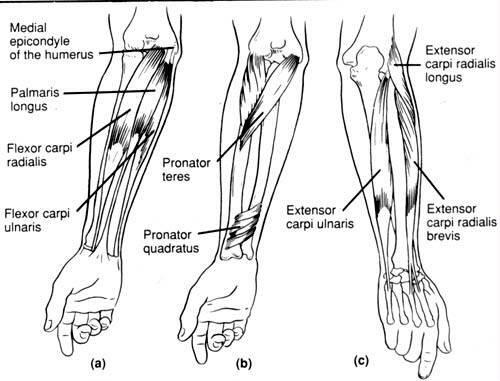
The brachioradialis is essential for elbow flexion. So much so that it is even stronger than the forearm (radioulnar joint) in this department. Its origin is the lateral condyle of the humerus and its insertion is the styloid process of the radius.
 Click To Enlarge.
The muscles most closely related to the brachioradialis are the brachialis and the biceps brachii. Given that the function of the brachioradialis is elbow flexion, its importance for bodybuilders lies in its biceps and forearms strengthening action.
To specifically strengthen the brachioradialis, focus on the following exercises:
- Reverse curls - View Exercise
- Reverse preacher curls - View Exercise
- Hammer curls - View Exercise
2: Erector Spinae
The erector spinae runs from the base of the spine to the base of the skull, is comprised of three heads (the iliocostalis, longissimus and spinalis), and assists with spinal and neck extension, lateral flexion and rotation.
It originates at six points: the sacrum, ribs, lumbar vertebrae, thoracic vertebrae, cervical vertebrae and ligamentum nuchae, and has, as its insertion, the ribs, cervical vertebrae, thoracic vertebrae and skull. Its most closely related muscle is the splenius, which runs from the base of the skull to the cervical and thoracic vertebrae.
All back training movements, and many others, rely, to some degree, on the flexion, rotation and extension of the neck and spine, and thus, it is essential to strengthen the erector spinae.
Specific exercises to accomplish this are:
- The hyper-extension - View Exercise
- Dead-lifts of all varieties - View Exercise
- Seated row - View Exercise
- Wide-grip row
3: The Gracilis
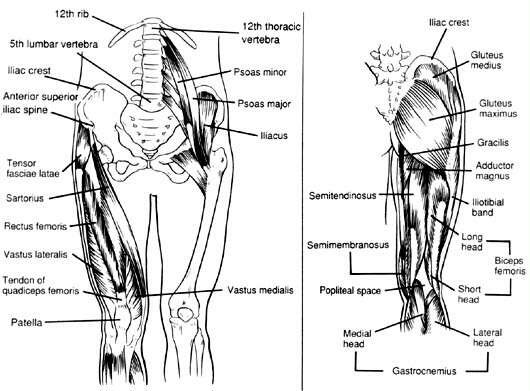
The gracilis, also know as the inner thigh or hip adductor, has just one head (the gracilis itself) and is involved in hip adduction and knee flexion. Its origins and attachments are the pubis and tibia superior respectively. Related muscles are the adductors and hamstrings.
 Click To Enlarge.
Despite its relative obscurity, the gracilis plays a significant role in hip and knee movement. Thus, any form of leg training relies on the interplay of the major leg and hip muscles and the smaller gracilis.
Specific exercises to target the gracilis are:
- Cable hip adduction - View Exercise
- Machine seated and standing hip adduction
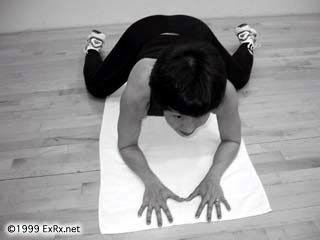
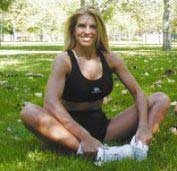
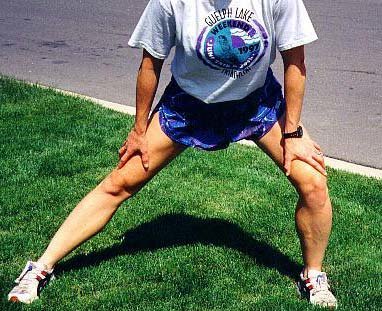
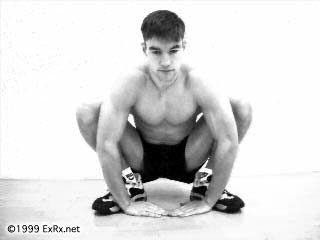
- Stretches: kneeling groin, lying groin, side lunge and squatting groin
4: The Rhomboids
The rhomboids are situated in the mid-back area and assist with the adduction and downward rotation of the scapula. They have two heads (the rhomboids major and minor) and have as their origins and insertions the cervical and thoracic regions of the spine, and the inferior and superior scapula, respectively.
Muscles related to the rhomboids are the middle and lower fibres of the trapezius, the levator scapulae and the serratus anterior. In addition to adduction and downward rotation of the scapula, the rhomboids hold the scapula against the thoracic wall, thus assisting postural stability - all essential when aiming to increase overall back strength. The rhomboids can be targeted with the following:
- Chin-ups - View Exercise
- Close-grip chin-ups
- All pull-down movements - View Exercise
- Close-grip bent-rowing
5: Sartorius
The sartorius is the longest muscle in the body and is commonly referred to as the inner thigh muscle due to its positioning. It has one head (the sartorius), and assists in hip flexion, abduction and external rotation, and knee flexion.
Click To Enlarge.
The sartorius has its origin at the iliac spine of the ilium, and its insertion at the medial condyle of the tibia. Related muscles are the iliopsoas, pectineus, rectus femoris, tensor fascia latae and hamstrings. The sartorius assists with all lower body movements to some degree, and thus should be targeted with specific exercises. These follow:
- Cable lying leg raise - View Exercise
- Weighted decline sit-up* - View Exercise
- Weighted hanging and incline leg raises - View Exercise
- Roman chair sit-up - View Exercise
6: Tensor Fascia Latae
Sounding more like a type of coffee, the tensor fascia latae is, in actual fact, instrumental as far as flexion, abduction, internal rotation and transverse adduction of the hip is concerned.
Click To Enlarge.
Indeed, the tensor fascia latae is often referred to as the hip muscle. It has one head: the tensor fascia latae itself, and it originates at the iliac spine of the ilium and inserts at the lateral condyle of the tibia. Muscles related to the tensor fascia latae are the gluteus medius and minimus, iliopsoas, pectineus, sartorius (see elsewhere in article) and rectus femoris.
A strong tensor fascia latae will enhance squatting and leg-press strength, and, resultantly, enhance leg growth.
Specific exercises for the tensor fascia latae are:
- Cable hip abduction - View Exercise
- Machine seated and standing hip abduction - View Exercise
7: Teres Major & Minor
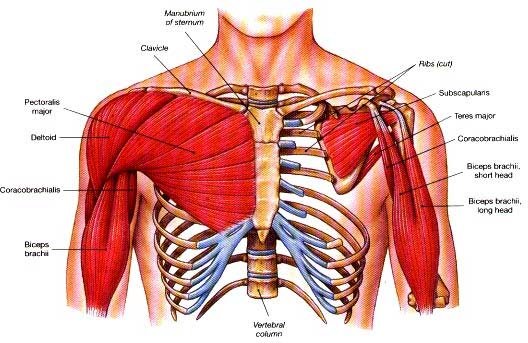
The teres major and minor both assist with different aspects of shoulder movement; teres major with extension, internal rotation and adduction, and teres minor with external rotation, transverse abduction and transverse extension.
 Click To Enlarge.
The teres major has, as its origin and insertion, the inferior angle of the scapular and the intertubercular groove of the humerus, respectively. The teres minor has as its origin and insertion the lateral border of the scapular (posterior on upper middle part) and the greater tubercle of the humerus respectively. Muscles related to the teres major and minor are the latissimus dorsi and the infraspinatus/supraspinatus/subscapularis respectively.
To specifically train the teres major focus on:
- All back exercises - View Exercise
To target the teres minor, focus on:
- Cable seated external rotation - View Exercise
- Lying dumbbell external rotation - View Exercise
- Upright external rotation - View Exercise
Conclusion
The muscle groups expanded upon in this article contribute significantly to the various functions of the, so called, major muscle groups. Through becoming aware of the existence of these groups, and by targeting them specifically, the likelihood of injury occurrence will be reduced, and a greater level of development will occur due to the attention to detail given to all muscle groups.
Indeed, the muscular system is exceedingly complex in its composition and to become knowledgeable in all of its aspects can only enhance ones training experience.
Still need more? Check out:
 |
||||
|
|
 |
||
|
||||
)
)
)
)
)