

TOPIC: How Can One Strengthen Stabilizer Muscles?
The Question:
Although strengthening stabilizer muscles does not give the appearance and feeling of training large muscles, they still play an important role in exercising.
How can one strengthen stabilizer muscles?
Is it important to train stabilizer muscles? Why or why not?
Who would benefit the most from strengthening stabilizer muscles?
Show off your knowledge to the world!
The Winners:
-
1. Megapron
View Profile
2. soundcheck129 View Profile
3. History in Effect View Profile
3. mrkdrt View Profile
-
Prizes:
-
1st place - 75 in store credit.
2nd place - 50 in store credit.
To use your credit, e-mail Justin @ justin.podzimek@bodybuilding.com for more info.
1st Place - Megapron
View This Author's BodySpace Here.
Strengthening The Stabilizer Muscles
If you have been involved in bodybuilding for a while, you've probably heard fellow lifters discussing stabilizer muscles. There are many things out there that might sound complicated, but you're lucky, this isn't one of them.
Much like how a foundation stabilizes a house, your stabilizer muscles help to keep you balanced and upright when moving. Your stabilizer muscles are not directly involved in the lifting of the weight, but help keep your body steady, through isometric muscle contractions.
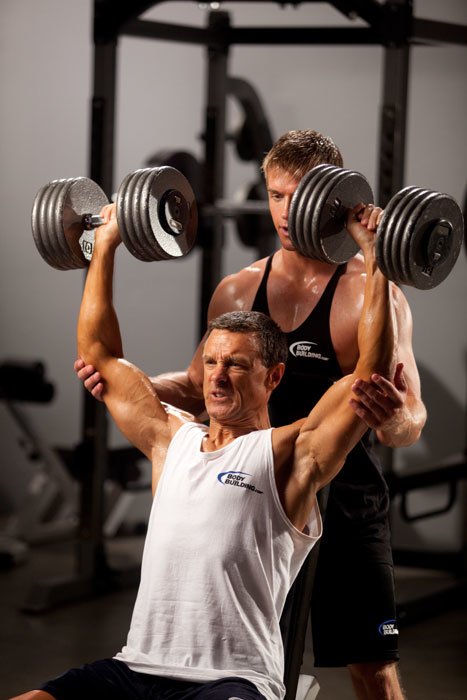
 Click To Enlarge.
Stabilizer Muscles Help Keep Your
Body Steady During A Lift.
Now if you think about it, these muscles sound pretty important. If you didn't have stabilizer muscles your knees would buckle during squats and your elbows during the bench press. The good thing is that if you've been doing many full-range-of-motion, free-weight movements you've already been training them.
Free-weight movements, which includes any exercise done with a barbell, dumbbell or cable (I consider cables redirected dumbbells, as you are not lifting the weight in a guided path) require you to balance the weights yourself, as you are not lifting the weight in a pre-set path, as with machines.
| BODYBUILDING.COM FORUM: STABILIZER MUSCLES | |||
|
Started By: swearujacked 
|

The Methods:
-
1. Free Weights:
-
When doing
free weight movements, your stabilizer muscles contract in order to keep your body steady. Since stabilizer muscles are important to free-weight movements, it makes sense to train those using free weights.
Exercises that recruit a great number of muscles are better for strengthening your stabilizer muscles. For example, during the squat your body needs to stabilize itself more than if you were performing curls. Some of the best exercises include: Bench Press, Squat, Deadlift, Pull-ups, Rows, and Shoulder Press.
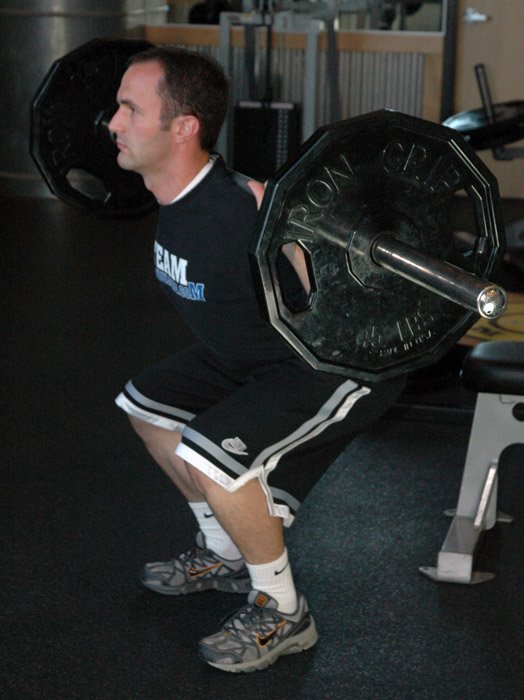
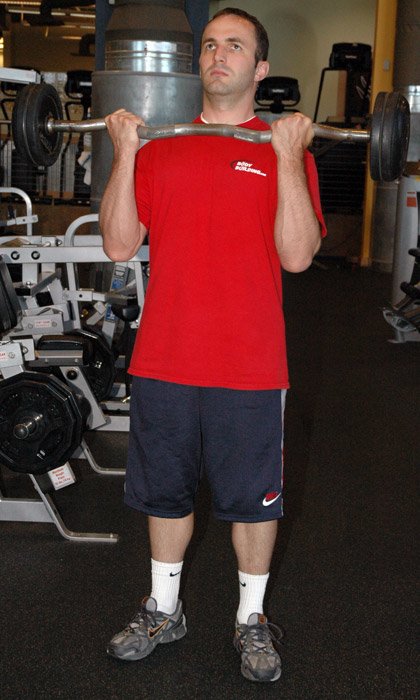 Click To Enlarge.
During A Squat Your Body Needs To
Stabilize Itself More Than During Curls.
-
2. Unilateral Exercises:
-
Adding in single arm/leg exercises to your program will not only help to increase the strength of your stabilizer muscles, but will help significantly correct any muscular imbalances in your physique. These exercises will be done using dumbbells or cables. E.g. the
barbell bench press is a great exercise for strengthening/building your chest, shoulders and triceps but,
dumbbell benching is better for shoulder stability.
Some of the best exercises include: Dumbbell Bench Press/1-Arm Dumbbell Bench Press, Dumbbell Rows/1-Arm Dumbbell Row, Single-Leg Squats, Lunges, Step-Ups, Dumbbell Curls, and Dumbbell Triceps Extensions.
The Workout:
-
This workout designed for strengthening your stabilizer muscles, and will utilize a 3-day split.
- Monday: Chest, Triceps, And Shoulders.
- Tuesday: Off Or Cardio.
- Wednesday: Legs, Abs, And Lower Back.
- Thursday: Off Or Cardio.
- Friday: Back, Biceps, and Traps.
- Saturday: Off Or Cardio.
- Sunday: Off.
- Barbell Bench Press: Work up to a heavy set of 5 reps.
- One-Arm Incline Dumbbell Bench Press: 4 Sets Of 8 Reps (each arm)
- Dumbbell Chest Flyes: 3 Sets Of 10 Reps
- Alternating Dumbbell Tricep Extensions: 3 Sets Of 10-12 Reps
- Dumbbell Front Raises: 3 Sets Of 12-15 Reps
- Deadlift: Work up to a heavy set of 5 reps.
- Front Squat: 3 Sets Of 6-8 Reps
- Barbell Step-Ups: 3 Sets Of 10-12 Reps
- Weighted Back Raises: 3 Sets Of 15-20 Reps
- Leg Extensions: 3 Sets Of 12-15 Reps
- Weighted Sit-Ups: 3 Sets Of 12-15 Reps
- Weighted Pull-Ups: 4 Sets Of 6 Reps
- One-Arm Dumbbell Row: 3 Sets Of 8-10 Reps (each)
- Close-Grip Lat Pulldown: 3 Sets Of 10-12 Reps
- Dumbbell Rear Delt Flyes: 3 Sets Of 12-15 Reps
- Alternating Dumbbell Hammer Curls: 3 Sets Of 12 Reps (each)
- One-Arm Dumbbell Shrugs: 3 Sets Of 12-15 Reps (each)
Monday: Chest, Triceps, And Shoulders
 Click Here For A Printable Log Of Megapron's Monday Workout.
Wednesday: Legs, Abs, And Lower Back
Click Here For A Printable Log Of Megapron's Wednesday Workout.
Friday: Back, Biceps, And Traps
Click Here For A Printable Log Of Megapron's Friday Workout.
As you can see this workout incorporates both free weight and unilateral exercises, both of which are vital for strengthening your stabilizer muscles. Also as most lifters are fully aware off, free-weight exercises are the exercises that generally give you the most bang for your buck; so they should make up the majority of your program regardless. After 3-4 weeks these exercises can be changed up, as variety is one of the keys to steady progression.
The people who would benefit most from training their stabilizer muscles are lifters who rarely use free weights, non-lifters and possibly people with balance issues. Individuals who use only machines are selling themselves short of full muscule development.
| RELATED POLL | |||
|
|||
-
Machine equipment forces the lifter to lift the weight in a pre-set, guided path (e.g. the
leg press, or
chest press); this takes many of the stabilizer muscles out of the movement because the lifter is no longer required to balance the weight.
Non-lifters or people who have problems balancing themselves during certain activities, can benefit from this type of training. Even non-lifters who are active will not have the muscular and stabilizer muscle development of a dedicated bodybuilder.
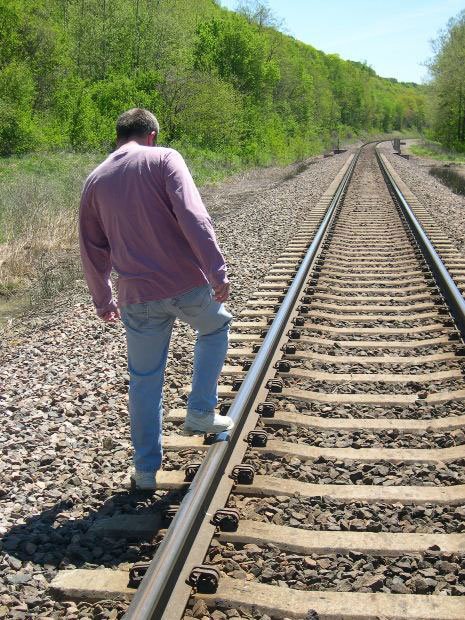 Click To Enlarge.
People Who Have Trouble Balancing Can
Benefit From This Type Of Training.
To Recap:
Using a lifting program, such as the one laid out above, can help develop the stabilizer muscles. The free weight and unilateral movements will help strengthen the stabilizer muscles, while getting you into to amazing shape to boot.
Sources:
2nd Place - soundcheck129
View This Author's BodySpace Here.
Although strengthening stabilizer muscles does not give the appearance and feeling of training large muscles, they still play an important role in exercising.
Often times, people say they want a beach body, but this isn't exactly the case ... what they want is biceps and abs, and they couldn't care less about the countless other unsung muscles that hold everything together. After all, how many times have you seen a guy turn heads flexing his erector spinae? That's right, zero. However, stabilizers are essential, providing support for prime movers through the entire range of motion. The muscular system works best when every part is working together.
 Click To Enlarge.
When People Say They Want A Beach
Body They Usually Mean Biceps And Abs.
How Can One Strengthen Stabilizer Muscles?
Trying to define stabilizer muscles can be tricky, because the muscle taking on this role changes depending on what exercise you are performing. For example, a sit-up features the abdominals as prime movers, but during a deadlift, the abdominals are stabilizers. Therefore, the key to strengthening stabilizers is to perform a wide variety of lifts that target every muscle that you can, because at some point they are all bound to be stabilizers.
But let's say you're only concerned with the big three lifts - bench press, squats and deadlifts. Many workout plans are based on these lifts, and the muscle groups they focus on (chest, back and legs) are the focus of a lot of other exercises as well.
| RELATED ARTICLE | ||
|

Bench Press
-
For a
bench press, the prime movers are your
chest muscles, or pectorals. But they're not working alone; the
anterior deltoids and
triceps perform valuable roles as stabilizers. And while the bench press does work these muscles, there are other exercises that target them directly.
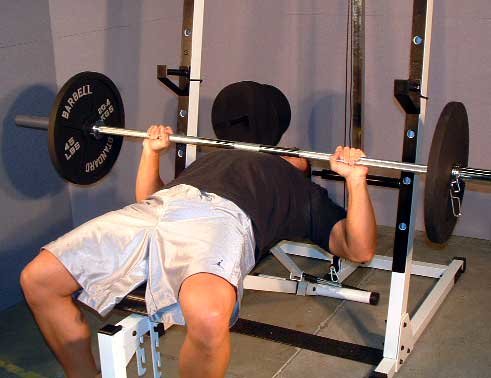
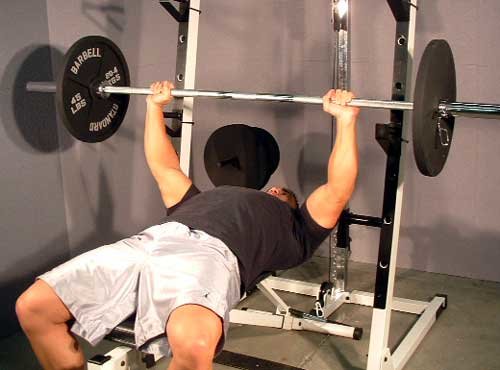
Click To Enlarge.
Bench Press.
Video : Windows Media - Real Player
-
To isolate and strengthen your deltoids, you can perform
lateral or
front raises with dumbbells. And for your triceps, you can perform pulldowns or overhead extensions.
Squat
-
The
squat is a demanding lower body exercise, focusing on your
glutes and
quadriceps to drive resistance upward. The main stabilizers here are the
lower back,
calves and
hamstrings. To isolate your lower back, try some
good mornings or
hyperextensions. For your calves,
seated or
standing calf lifts will do. Hamstrings can be hit hard with
leg curls and
walking lunges.
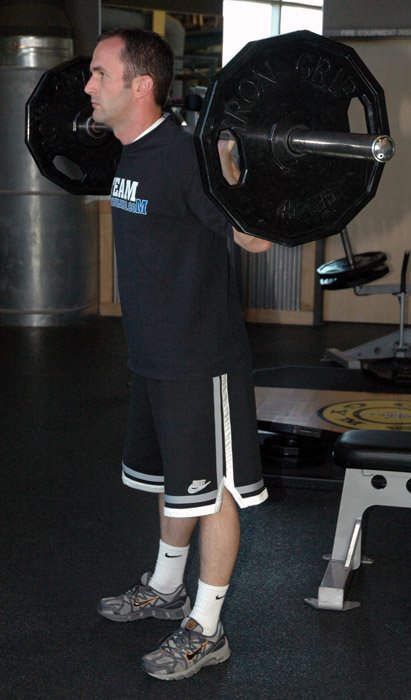
Click To Enlarge.
Squat.
Video : Windows Media
Deadlift
-
The
deadlift may be the most demanding lift, as the
calves,
erector spinae,
hamstrings and
quadriceps are all prime movers. Your
abdominals,
trapezius and
forearms are a few of the stabilizing muscles. Your abdominals can be strengthened with
weighted crunches and
leg lifts; your traps with
upright rows and
shrugs; and your forearms with
wrist curls and
reverse curls.
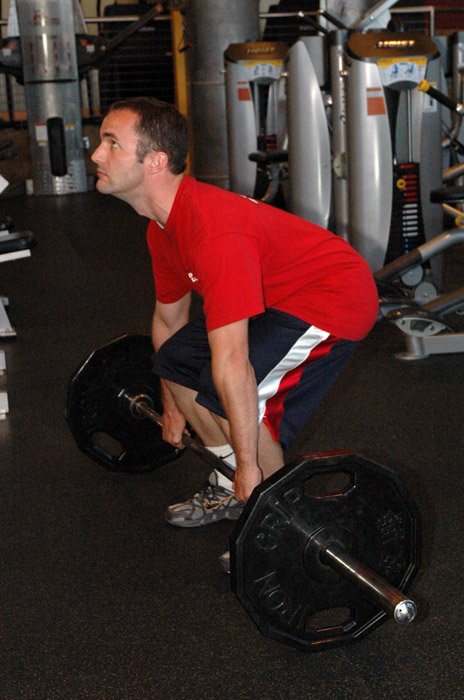
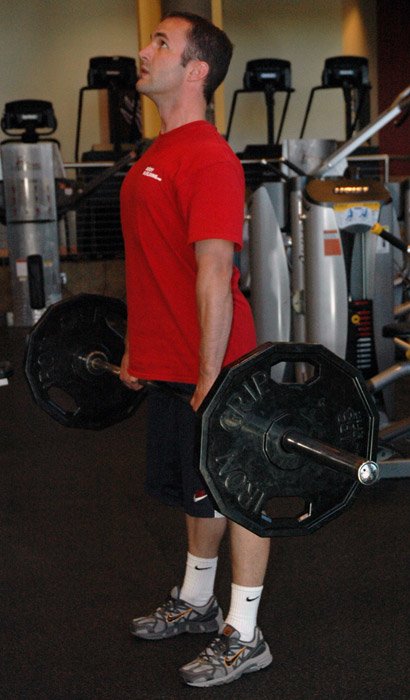
Click To Enlarge.
Deadlift.
Video : Windows Media
Further Strengthening
-
It is important to note, though, that the stabilizer muscles are also strengthened when acting as stabilizers, not just as prime movers. And because all of your muscles play a role in stabilization at some point, your best bet is to incorporate many different exercises into your routine.
Additionally, performing a lot of compound lifts will ensure that a large number of your muscles are active during each exercise, possibly getting a chance to act as stabilizers.
| RELATED ARTICLE | |||
|
Author: Shannon Clark 
|
-
There are some also non-traditional means to strengthen your stabilizing muscles. Using sandbags or weights filled with water results in an uneven load, and your stabilizers will be challenged to lift the load but keep it balanced at the same time.
Similarly, single-leg and single-arm exercises activate stabilizers more than traditional lifts. This is because these lifts involve an element of balance that is not present in exercises that use both of your limbs simultaneously.
For example, single-leg squats will challenge your back and core as stabilizers while your glutes and quads support your weight. In addition, performing a curl with a dumbbell instead of a barbell will strengthen your forearms more than a traditional curl because one arm's weakness cannot be overcome by depending on the other arm.
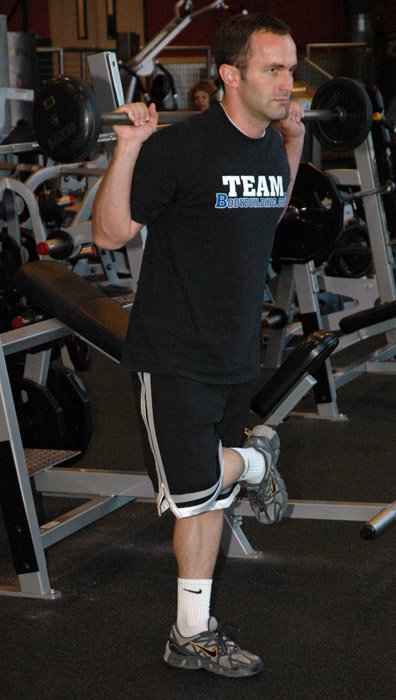
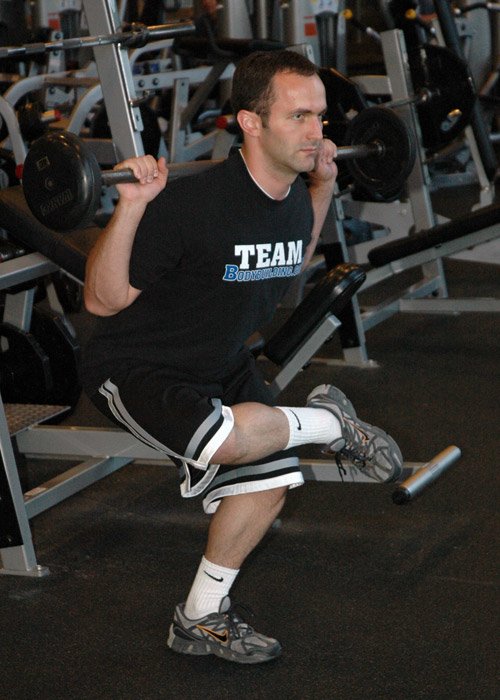
Click To Enlarge.
Single Leg Squat.
Video : Windows Media
-
Free weights are a great way to strengthen stabilizer muscles, because you can't rely on the set structure of a machine to dictate your movement and provide support.
Is It Important To Train Stabilizer Muscles?
It is not only important to train stabilizer muscles, it is imperative. Stabilizer muscles provide the balance and support for taxing compound lifts, allowing you to perform major exercises such as squats and deadlifts. Without this stabilization, you would not be able to produce as much force in these compound maneuvers.
Training stabilizer muscles is vital to sports performance and ensures that your entire muscular system works as a whole. In a way, your stabilizer muscles are the unsung heroes of the kinetic chain, allowing other muscles to produce force as prime movers. Having weak stabilizers puts extra stress on the prime movers, reducing overall strength.
| BODYBUILDING.COM FORUM: STABILIZER MUSCLES | |||
|
Started By: DrunkDriver 
|
But stabilizer muscles can also come to the forefront and be prime movers as well. This is another reason to train and strengthen them. If you ignored your stabilizers, you wouldn't be able to put up much weight on lifts that rely mostly on stabilizer muscles. In short, stabilizers need to be trained because you never know when you're going to be using them!
Who Would Benefit The Most From Strengthening Stabilizer Muscles?
By now, it should be apparent that anyone who wants to make the most of their training program should do everything they can to strengthen stabilizer muscles. If you hope to have a lot of strength for compound movements, training stabilizer muscles is a must.
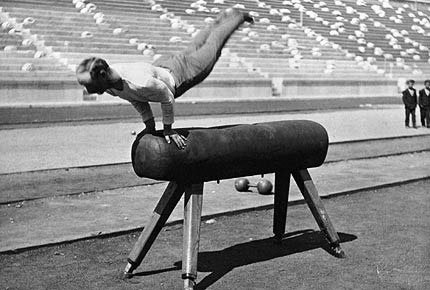
One particular group of people that relies a lot on stabilizer muscles are athletes. Sports involve a lot of situations in which one must produce force while moving or while off-balance. For this reason, strong stabilizer muscles are a must.
 Click To Enlarge.
Athletes Rely Greatly On
Their Stabilizer Muscles.
For instance, when I play hockey, I often find defense men exerting a lot of force on me to try to knock me away from the puck. However, strong stabilizer muscles in my legs allow me to maintain balance, keep moving forward, and still manage to produce enough force to shoot the puck.
Gymnasts, too, must have extremely strong stabilizer muscles so that they can perform complex movements while balancing in the air, often with one limb. The importance of stabilizer muscles cannot be overstated - they are the ultimate team players.
-
Related Gymnast Articles:
3rd Place - History in Effect
View This Author's BodySpace Here.
Stabilize Or Die
When people first start working out, they are just trying to get a feel for the weight room. They don't care about what exercises to do or what equipment to use. In fact, I had no clue what stabilizer muscles were until I started to do research on them.
Stabilizer muscles are not necessarily used in the direct movement of the body, but they keep you steady. The impact of stabilizer muscles is not felt during the first workout, but you will notice it in the long-term. Many of your body parts can be stabilizer muscles. For example, supporting the barbell on your shoulder and traps is key to performing squats.
| RELATED ARTICLE | |||
|
Author: Jim Brewster 
|

How Can One Strengthen Stabilizer Muscles?
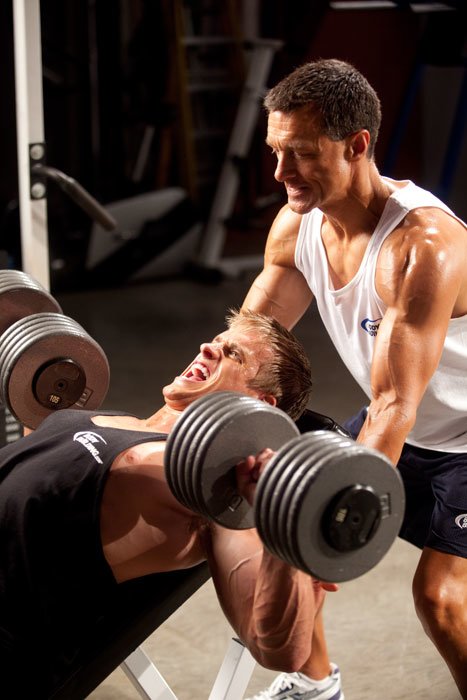
First of all, stabilizer muscles are used most when performing free-weight exercises. The use of machines does not since you follow in a fixed path of motion. The use of dumbbells on the other hand is dependent on you. You must make sure to be careful when using dumbbells and not swing the weight. Be careful and if you need a spotter get one.
 Click To Enlarge.
If You Need A Spotter, Get One.
You should pick exercises that you feel in your whole body. Exercises that target the whole body release hormones throughout the body. These exercises include stuff like that:
Squats
-
You feel them in your whole body and you have to prep your body for them. Your
back,
neck, and
shoulders have to be ready to support the weight and you have to be strong enough in your legs to do a rep.
Click To Enlarge.
Squat.
Video : Windows Media
Dumbbell Presses
-
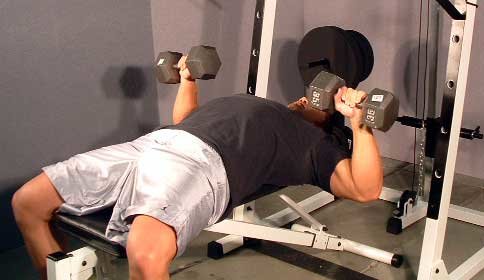
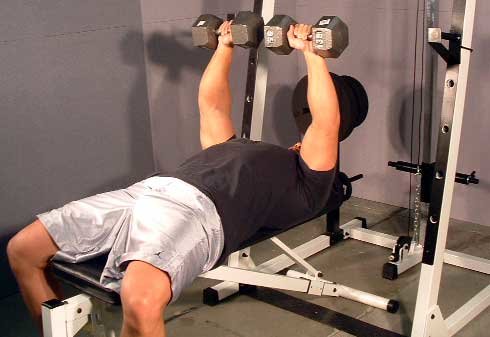
These presses would include
bench press in any variety,
shoulder press, and others. When I do bench press with a lot of weight, I have to get my whole body ready to lift. You feel it through your whole body.
Click To Enlarge.
Dumbbell Bench Press.
Video : Windows Media - MPEG - Video iPod
Bodyweight Exercises
-
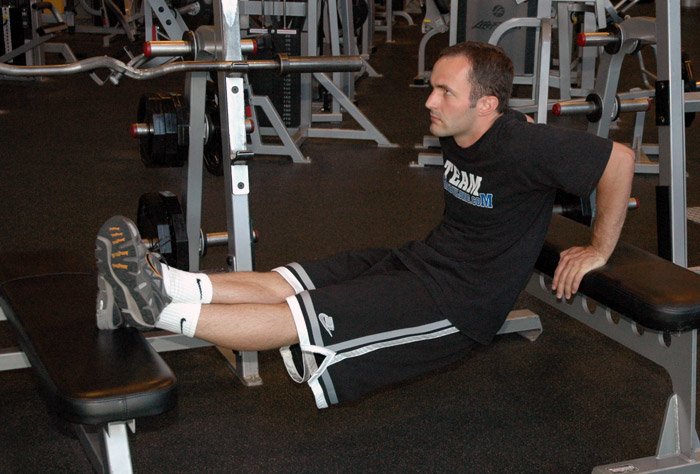
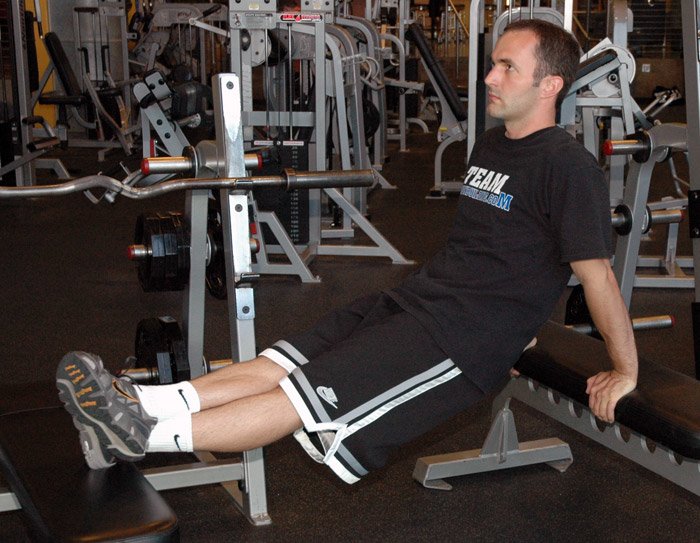
Exercises that involve you supporting your bodyweight are very hard. These include
dips,
pushups,
chinups, and
pullups. Your whole body must be working in tandem to do these exercises. A pullups involves your back and biceps along with forearms working in tandem.
Click To Enlarge.
Bench Dips.
Video : Windows Media
Miscellaneous Exercises
-
I call these "misc" because I rarely do them because I am not training for something in particular. Unilateral training falls under this principle. 1-legged or 1-arm exercises work the core like no other and are hard to do. If you can do unilateral movements, you are probably an all-around complete athlete.
Who Would Have Thought ...
-
Putting stuff in wheelbarrows or picking up kegs are something you might see in the World's Strongest Man, but they do work the stabilizer muscles.
| BODYBUILDING.COM FORUM: KEGS THREAD | |||
|
Started By: stircrazy101 
|
Is It Important To Train Stabilizer Muscles?
It is important to train stabilizer muscles, because it keeps your body guessing. A body that is constantly guessing will have more muscle growth and you experience better strength gains.
Doing barbell weights all the time is not a good idea and mixing it up by doing dumbbells gets those stabilizer muscles working great. You will break plateaus for sure and set new personal records. As soon I started hitting those dumbbells, I could feel new muscles being worked. Therefore, stabilizer muscles bring out new muscles in varied ways.
| RELATED ARTICLE | ||
|

Who Would Benefit The Most From Strengthening Stabilizer Muscles?
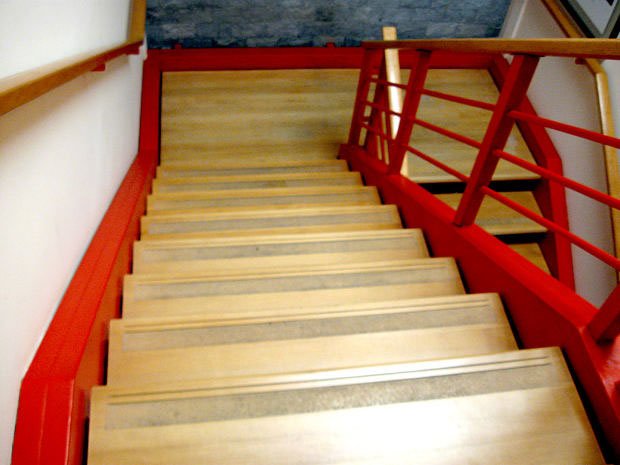
Everybody can benefit from strengthening stabilizer muscles. You use stabilizer muscles everyday. I walk up two flights of dorm room steps and to class. You use your whole body to keep from falling down the stairs or tripping. Using the incline during treadmill involves your legs having to be stabilized to walk with the incline and not down.
 Click To Enlarge.
You Use Your Whole Body To Keep
From Falling Down Stairs.
Athletes benefit the most from using stabilizer muscles. Wide receivers are often faced at the line with aggressive cornerbacks who attempt to jam them as soon the ball is hiked. An athlete who trains stabilizer muscles adequately can get off the line faster and also react quicker being able to push the defensive back off the line.
3rd Place - mrkdrt
View This Author's BodySpace Here.
Although strengthening stabilizer muscles does not give the appearance and feeling of training large muscles, they still play an important role in exercising.
It's all in the name - stabilize muscles. Their role is to stabilize your core, or a limb, and keep you in balance. That means any muscle that serves this purpose can be a stabilizer, but does not necessarily always act as a stabilizer. With that, it is possible to train your stabilizer muscles by putting them into action!
| RELATED ARTICLE | |||
|
Author: David Robson 
|

How Can One Strengthen Stabilizer Muscles?
To be honest, anytime you are lifting with free-weights or even performing bodyweight exercises you are working your stabilizer muscles. But the types of exercises you perform greatly affect how many, and to what degree you are training your stabilizer muscles.
The best exercises to work your stabilizer muscles are compound exercises. Simply put, these exercises are multi-jointed. This means the movement uses several muscle groups - meaning more stabilizer muscles are required also.
Take squats for example. As you perform the eccentric action your knees bend, your hips bend, and your core tightens to keep you balanced. This is working several stabilizer muscles in one movement.
It's no surprise that the "Big Three" (squats, deadlifts and bench press) are part of this group of exercises. Choose Squats over Leg Press, Deadlifts over Hyperextensions and Leg Curls and Bench Press over Machine Bench Press - and you will be rewarded!
| RELATED VIDEO | ||||
|

Isolation exercises, or exercises using machines, on the other hand, work across single joints. For example, when you do a hammer curl, the eccentric movement uses only the elbow joint as a pivot, requiring less stabilization than compound movements.
To train your stabilizer muscles further, you might want to use dumbbells instead of a barbell for some exercises, like bench press for example. Using dumbbells can call into action even more stabilizer muscles - to keep the single weight balanced in each arm, so you can perform the exercise.
Click To Enlarge.
Dumbbell Bench Press.
Video : Windows Media - MPEG - Video iPod
So, to train your stabilizer muscles, lift! Easy enough, right? You're doing that anyway! But focus on free weights and compound exercises to keep them working for you! This does not mean ignore all isolation exercises, but focusing on compound will help you strengthen more stabilizer muscles, and lead to overall greater gains.
Is It Important To Train Stabilizer Muscles?
Training your stabilizer muscles is both critical and inevitable in most cases. A lot of exercises you cannot avoid training your stabilizer muscles. And why would you want to avoid it anyway?
Stabilizer muscles that are put in use consistently through training can have many benefits! For one, it is required for many exercises. Without stabilization, you wouldn't be able to perform much at all.
| RELATED POLL | |||
|
|||
Next time thank your stabilizers with a killer workout they won't forget! Having sufficient strength in your stabilizer muscles for a certain exercise can also help prevent injury performing the movement. Strong stabilizers help support heavier lifts. Heavier lifts, being more effective, can lead to greater gains in muscle size and strength.
Who would benefit the most from strengthening stabilizer muscles?
Everyone and anyone benefits from stronger stabilizer muscles. Not only in the gym, but stronger stabilizer muscles make daily activities, or other physical pursuits easier, and possible.
Anyone trying to achieve a greater level of fitness may appreciate his or her stabilizer muscles the most. Stronger stabilizers can help make heavier lifts - leading to bigger gains. Stronger stabilizers help balance - making athletics easier. If you are trying to break that plateau, come in first in a footrace, or dunk on kids at the court, stronger stabilizers will help you out for sure!