
My university life began in September 2001. I'd not moved far away from home but the changes to my life were just the same as if I'd moved a thousand miles away. As a freshman I found there were many temptations and freedoms that didn't exist at home. But I was left without the many conveniences of home.
I'm a real hard gainer. I have trouble adding size and gaining strength even though working my backside off in the gym on an abbreviated program. My out-of-the gym factors are critical to my progress, even more so than for a "regular" hard gainer. Getting them in order is top priority if I'm to build muscle and might and achieve my goals. I've had to overcome many problems in order to get my nutrition, rest and recovery in good order to promote progress in the gym.
Bodybuilding Nutrition
University and college food is usually overpriced, poorly cooked, high in saturated fat and artificial additives, and just plain bad for your health and bodybuilding efforts. There are, however, some choices you can make whilst at the cafeteria which will be beneficial for your health and bodybuilding.
Here are some basic guidelines:
Chicken breasts
Most colleges will have a grill area offering a variety of cooked meats. Select a grilled chicken breast, and add desired low-fat condiments. A chicken breast will yield approximately 25 grams of protein and 4 grams of fat.
Eggs
Avoid scrambled or fried eggs, and choose the boiled alternatives. Eggs are an excellent protein-rich food.
Cereal and toast
Choose unprocessed cereals and bread, such as bran cereal and wholemeal toast. Shy away from high-fat spreads and sugar-loaded jams and jellies for your toast. Opt for a low-fat spread or low-sugar jam/jelly.
Salads
Cafeterias usually have a salad bar. Vegetables contain many vitamins, minerals and anti-oxidants, as well as fibre. Avoid high-fat dressings and pick out lower-fat alternatives, or even vinegar.
Subs or baguettes
Cafeterias usually offer a range of baguettes, pre-packed and "self-constructable." If you construct your sub right you can get around 30 grams of protein, 60 grams of carbs, and about 10 grams of fat. My personal favorite is a chicken sub with tuna, tomatoes, cucumber, mustard and pickle.
The three-meals-a-day meal plan offered by most universities and colleges leaves a lot to be desired. This leaves it up to you to get your nutrition in good order. Three meals a day isn't usually enough for a serious trainee. You should be consuming protein-rich food (whilst not neglecting carbs and healthful fats) every three hours or so to keep yourself out of catabolism, i.e., your body feeding on itself to obtain energy.
Catabolism is your arch enemy whilst trying to gain muscle. I generally feed 6-8 times a day. Don't, however, think that you have to rely on solid food meals to obtain your nutrition- supplement with blended drinks and shakes. Liquid meals tend to digest faster so the gap between a liquid feed and a solid meal, for example, will probably be quicker (depending on the individual and the drinks you concoct) than that of two solid meals. Blended drinks are convenient as they are quick to make and consume, easily portable, and involve no mess.
You can take them to a lecture or seminar if your feeding time happens to fall in class, with minimal interruption. Most lecturers don't mind if you eat or drink during class so long as you're discrete. Alternatively, drink the potions between classes. Many times I've also taken one of my concoctions to a party or other event to get my nutritional "fix" (discretely, of course) when my feeding time happens to fall in this period. With the desire and dedication you can have quality nutrition throughout the day without neglecting other areas of your student life.
Getting Enough Nutrition: One Day
Here's an example of my daily nutrition:
Meal 1 (in my room)
100 grams of Quaker Oats in skim milk, three egg whites, a banana and a litre of water.
Meal 2 (in the cafeteria)
A chicken and tuna baguette (sub) with mustard, pickles and salad items; and a litre of water.
Meal 3 (in class)
Liquid feed of milk, skim-milk powder, cottage cheese, banana and peanut butter.
Meal 4 (post workout)
30 g of whey protein in 300 ml skim milk, 95 gm dextrose in 500 ml water, and separate 500 ml of water.
Meal 5 (an hour later, in my room)
250 g lean minced beef, 100 g rice, a bowl of salad vegetables, and a litre of water.
Meal 6 (in my room)
Two bowls of bran cereal in skim milk.
Meal 7 (right before bed)
1,200 ml skim milk, an apple. This yields approximately 3,500-3,800 calories, the correct amount for me to gain on.
Meal Preparation
To prepare your own meals you'll need to learn basic cooking skills. Most kitchen appliances come with instructions on how to cook some basic foods. I suggest you invest in a book or two on the subject; you may even be able to take a course. You don't need to be a master chef, but you need basic skills.
You'll need some basic equipment to cook with. The kitchens or kitchenettes are, more often than not, poor in colleges and universities. Not only that, but food stored in the communal fridge is at the threat of thieving hands. I strongly suggest that you invest in the following equipment:
- A suitably sized refrigerator (a freezer compartment is not essential but may come in handy)
- A small microwave
- Some sort of grill for cooking meats, e.g., the George Foreman grill
- A hand blender and calibrated beaker
- Kitchen scales
- Some common kitchen attributes (plates, knives, forks, etc.)
- One or two small (500 ml) thermos flasks or equivalents
I've found these things to be very helpful. You must check though that you're able to have such items in your room. If you explain your case to the accommodation officer and demonstrate your culinary skills and knowledge, you should get approval. Find a way to get these items into your room.
You'll also need to know how much food you're consuming on a weekly basis, so you can budget for it. The figures don't need to be exact, but exact helps a lot more. To know this you must determine what you're consuming on a daily basis. As Stuart advised in BEYOND BRAWN, I suggest you compose several daily dietary schedules to meet your caloric and macronutrient needs. Then you'll know how much milk, eggs, bread, chicken, etc., to buy when you make your weekly trip to the grocery store.
Here's my weekly grocery list:
-
Three gallons of milk
Seven cans of tuna fish
Three dozen eggs
Two containers of skim milk powder
Two containers of cottage cheese
Seven chicken breasts
A kilo of lean minced beef
A kilo box of rice
A kilo bag of pasta
A bag potatoes
Two loaves wholemeal bread
A box Quaker Oats
Two boxes raisin bran cereal
A bag of apples
Two bunches of bananas
Various salad items
A jar of natural peanut butter.
Total (average):
This usually costs me around £40/$60.
Most universities or colleges have some form of store on campus. This can prove to be very convenient if the items are reasonably priced, but you may have to make a trip to the local supermarket. This is why you must know what you consume on a weekly basis, to avoid "Oh, I need more eggs" halfway through the week, or running out of milk before the next shopping day. Get organized.
Supplements 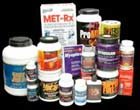
At the best of times supplements can burn a substantial hole in your wallet. But when you're a student, and on a tight budget, supplements are usually out of the question for most people. Saying this though, don't think that supplements are a necessity. They aren't. They are exactly what they're called- supplements. Your focus should always be obtaining quality nutrition through a well balanced diet. I'm only saying this as most people freak out over supplements these days and give them way too much attention-this goes for students and non-students.
Some supplements may be useful post workout, in liquid meals. Some supplements provide a concentrated form of nutrition that's easily dissolved in milk or water and which is quickly digested by the body. The only supplements I believe in are a quality protein supplement (for post-workout feeds), a good multi-vitamin and possibly dextrose or equivalent. Most of the time, however, post workout I rely on my "poor man's protein shake" which mainly consists of skim-milk powder in skim milk, with possibly three cooked egg whites, and three or four bananas.
Drinking And Student Life 
Drinking not only burns a hole in your wallet and eats up your weekly budget very quickly, but it has several negative effects on your body. Alcohol consumption may reduce testosterone levels.
Drinking also impairs the absorption of some vitamins and minerals. Further, it has a dehydrating effect and provides a lot of useless, empty calories. Avoid alcoholic drinks if you're serious about making decent gains. This is especially applicable to the hard-gaining and veryhard- gaining folk.
I know about the kind of treatment and "static" you can get when you're a non drinker in a college or university environment, where drinking is rampant. Here are some techniques you can employ to make yourself fit in, minus the drink. When you're at a party, or drinking venue, find some sort of covered cup and put water in it. It's unlikely that people will look in and see what you're drinking so they will assume you're drinking like the rest of them, and treat you no differently.
If you're going to a party or bar off campus, be the DD (designated driver). This is a fail-safe method of not getting grief for not drinking, because without you people wouldn't be going. Don't make a big deal about not drinking. Take care of getting your own drinks and don't rely on people getting rounds in for you. This way people will neither see what you're drinking nor be interested as they will probably be too busy wondering where their next drink is coming from.
Getting To Sleep, And On Time
Getting enough quality sleep is so important for making decent progress, especially for hard gainers. But getting to sleep in a college or university environment can sometimes be very difficult due to all the commotion going on. I nearly always get to bed at 11:00pm at the latest, to ensure I get a full eight hours of sleep every night. Asking people to keep the noise down usually ends up in them making it louder.
How do you ensure you get a full quota of sleep each night? Here are some methods I've personally found helpful:
-
A. Get yourself some comfortably fitting ear plugs if you sleep in a noisy area of the campus. They must be comfortable enough so that they don't need regular adjustment. These may not come cheap, but will be an excellent aid for reducing background noise, though not eliminating it.
B. Ensure that the curtains in your room are dense enough to block out all external light. You may have to replace the ones in your room if they are poor in this respect. If this is impractical, invest in an eye shade to eliminate light whilst you sleep. It must fit comfortably enough so that you don't have to keep adjusting it.
C. Make sure your room is at a comfortable temperature. A too-hot or too-cold room can be ruinous to your sleeping. But don't open the window to cool the room down if it's too hot, as this can allow external noise to enter, disrupting your sleep further. Turn the heating off. If the room becomes too cold, add an extra blanket to your bed.
D. Designate a time that you have to get to bed at, then get to bed at that time. Employing these measures should help you to get to sleep on time, and for long enough. Never compromise on your sleep. For a hard gainer, progress can unnecessarily stall due to lack of quality sleep.
I vividly recall my four years at college, 1978-1982. Had I known then what I know now, I could have done much better with both bodybuilding and my studies. As it was, I gave tremendous priority to bodybuilding, but trained inappropriately and thus wasn't able to take advantage of my extreme motivation and the height of my recovery powers. What a waste. If you're a college student, make the most of what potentially may be your most productive training years.
It's possible to make your best bodybuilding progress while applying yourself fully to your academic studies providing you know how to train and recover. About halfway through college, and partly out of disillusionment with bodybuilding (due to my inadequate knowledge of how to train), I moved my focus almost totally to another passion-veganism and animal welfare. I remained a vegan for four years before finally accepting that such a regimen was unsuited to me. I reverted to a mixed diet, though still one free of meat, and returned to bodybuilding with a vengeance.

Visit us at Hardgainer Online!
Copyright 2000 by CS Publishing
Thanks,