

The History Of The Ms. Olympia Contest
 The Early 80's:
The Ms. Olympia is a professional female bodybuilding contest organized by the International Federation of Bodybuilders. It was first held in 1980 which began it all. The contest was initially promoted by George Snyder. In order to qualify for the Ms. Olympia, contestants had to send in resumes and pictures which were then hand-picked by Snyder. He look through all the applicants and based his chosen contestants on their potential to be role models in the fitness industry.
Rachel McLish owned the stage in the early 1980's, however in 1981 she lost her crown to Kike Elomaa after finishing second. McLish trained hard the following year and regained the title in 1982.
In 1982 George Snyder lost the rights to the Ms. Olympia contest. From this point forward, the contestants were no longer hand-picked by anyone. In order to qualify for the Olympia, contestants now had to do it through placings in the lesser contests throughout the year.
As the sport began to grow, so did the competitors' level of training. In the earlier years of the Olympia, most competitors showed little weight training experience in their physiques. Then in 1983 the sport slowly evolved into a more muscular physique for shows.
Cory Everson:
In 1984 a new face emerged in the sport with the arrival of Cory Everson. Her physique would set a new standard for the sport. Everson won the NPC Nationals and then took the title away from McLish at the Olympia to take home the trophy. Everson came into the show weighing 150 pounds at 5'9". She then went on to be the only woman to ever win six consecutive Ms. Olympia titles before she decided to retire.
Extra Attention:
All this attention on the sport of women's bodybuilding helped the sport go mainstream. However, all of this extra attention on the competitors caused some controversy and also some suspensions. Anita Gandol decided to bare it all by posing for Playboy in the mid-1980's.
By doing so, she earned herself a one year suspension from the IFBB for her actions. Then in 1987, Erika Mes decided she would show some skin also by posing nude for the Belgian issue of Playboy which also earned her a one year suspension as well from the sport.
NBC saw a great market for the sport of bodybuilding and for several years in the mid-1980's they broadcasted the Ms. Olympia on their network. Although the footage wasn't live and was usually used to fill out television programs which ended early, the attention on the sport was still there.
Lenda Murray:
In 1990, the Women's Pro World contest was cancelled. Competitors normally had to qualify for the Ms. Olympia by placing in some of the lesser contests. With the Cancellation of the Women's Pro World, that left only the Ms. International as the qualifier for the Olympia. The IFBB decided to then allow all competitors with their pro cards to enter. Lenda Murray took the title this year became the next dominant figure in women's bodybuilding since the retirement of Cory Everson.
The Ms. Olympia contest was televised live for the first time in 1991. Bev Francis gave Lenda Murray a real challenge, but Murray finished out on top with Francis placing second. Francis in the previous years had more of a powerlifters physique and in 1991 she changed her physique to more of a bodybuilder and came into the contest noticeably larger.
In 1992, the judges began looking to change the look of the sport from a big muscular physique, to a more feminizing one. They were told to look for competitors who were not overly big and that they were looking for a more feminine physique to win this year. After all the changes and controversy, Lenda Murray changed her look was named the winner.
After the contestants and fans complained about the new judging rules, they were rewritten for the 1992 Ms. Olympia. They were still looking for aesthetics, but they allowed for a more muscular physique once again. Lenda Murray continued her dominance all the way through 1995. Murray tied the record of six consecutive Ms. Olympia titles, which was currently held by Cory Everson.
1996 dethroned the runt that Lenda Murray had going. Kim Chizevsky won the title for her first time after placing second to a virtually unbeatable Murray in the past couple contests.
After Murray's loss to Chizevsky, she decided to give it one more go in 1996 where again she was unsuccessful. Chizevsky won again and Murray announced her retirement from competition.
The Ms. Olympia was contested outside the United States for the first time in November 1984, when the Salle Wilfrid-Pelletier Place Des Arts Theatre in Montreal, Canada, hosted the event. A total of 24 contestants competed with Cory Everson winning the first of her six Ms. O titles.
The Olympia Weekend:
The 1999 Olympia was to be held on October 9th, but a month before the scheduled contest, the IFBB announced that the contest was cancelled because of the withdrawal of promoter Jarka Kastnerova. The reasoning was due to financial issues that also included a low number of tickets that were sold in advance for the contest.
In a last minute attempt, several sources came together as sponsors. Most of the funds for the contest came from Flex magazine ($50,000). Even after all the commotion, Chizevsky once again took home the title giving her four consecutive Ms. Olympia titles.
Since the year 2000 the Ms. Olympia has been held at the same time as the Mr. Olympia contest as part of the "Olympia Weekend". The 2000 contest also saw the introduction of weight classes. Several changes were in the making for the 2000 Ms. Olympia contest. Presentation would factor into the competitors' scores this year.
Jim Manion sent out a letter to all the competitors stating that judges would be scoring based on healthy appearance, face, makeup, and skin tone. This year Kim Chizevsky decided to retire from bodybuilding and pursue fitness competition; therefore allowing for a new champion this year. For the first time in the Ms. Olympia history, there was no overall winner this year which allowed both Valentina Chepiga and Andrulla Blanchette to be Ms. Olympia champions.
2001 had one of the most unexpected winners the Ms. Olympia contest has ever seen. After coming back from a 12 year hiatus, Juliette Bergmann returned to competition at the age of 42 and came out of no where to win the title. This year began a pose down between the two class winners (heavyweight and lightweight), which decided the overall title. Bergmann entered the Olympia as a lightweight, and defeated Iris Kyle who was the heavyweight for 2001.
In 2002, Lenda Murray came back from a five year break to set a new record and won her seventh overall Ms. Olympia.
A record was in the making for 2003. Lenda Murray won her either overall Ms. Olympia title which set a new record, setting the standard for all of the Olympia winners.
In 2004, Jim Manion introduced the 20% rule which asked that female athletes in Bodybuilding, Fitness, and Figure decrease the amount of muscularity they have by a factor of 20%. Also this year during the Olympia, Lenda Murray went for her ninth title but lost in the Heavyweight class to Iris Kyle.
In 2005, the contest returned to the one open class format which eliminated the weight classes. This year a new Ms. Olympia winner was born when Yaxeni Oriquen defeated defending champion Iris Kyle.
Past Ms. Olympia Results
(pictures do not necessarily represent that year or the Olympia contest)
1980 Ms. Olympia Results:
1. Rachel McLish 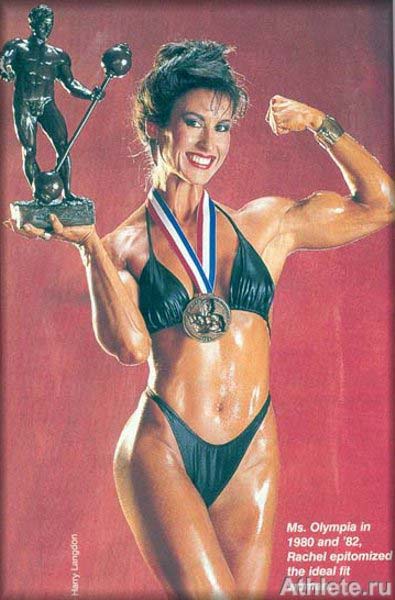
2. Auby Paulick
3. Lynn Conkwright
4. Corinne Machado-Ching
5. Stacey Bentley
6. Suzy Green
7. Patsy Chapman
8. Kyle Newman
9. Cammie Lusko
10. Georgia Fudge
11. Mimi Rivest
12. April Nicotra
13. Carolyn Cheshire
13. Sandy Conners
15. Lorie Johnston
16. Anniqa Fors
17. Lenore Clark
18. Donna Simms
19. Lynda Johnson
20. Kellie Everts
1981 Olympia Results:
1. Kike Elomaa 
2. Rachel McLish
3. Lynn Conkwright
4. Laura Combes
5. Georgia Fudge
6. Candy Csencsits
7. Corinne Machado-Ching
7. Marie Frances Misat
9. Anita Gandol
10. Melinda Perper
11. Kyle Newman
12. Karen Wainwright
13. Ellen Davis
13. April Nicotra
15. Astrid Aschwender
16. Vera Bendel
17. Donna Frame
18. Carolyn Cheshire
19. Debbie Lemmel
20. Lorie Johnston
1982 Ms. Olympia Results:
1. Rachel McLish 
2. Carla Dunlap
3. Kike Elomaa
4. Lynn Conkwright
5. Deborah Diana
6. Laura Combes
7. Candy Csencsits
8. Kay Baxter
9. Lisser Frost-Larsen
9. Sherry Atton
11. Georgia Fudge
12. Shelly Gruwell
13. Corinne Machado-Ching
14. Carolyn Cheshire
15. Marie Frances Misat
16. Jacquueline Roos
17. Claudia Wilbourn
18. Marjo Selin
19. Patsy Chapman
19. Cathy Chang
19. Laura Davies
19. Anita Gandol
19. Susan Koch
19. Kazuko Nakao
19. Kyle Newman
19. Lena Trulsson
1983 Ms. Olympia Results:
1. Carla Dunlap 
2. Candy Csensits
3. Inger Zetterqvist
4. Lynn Conkwright
5. Kike Elomaa
6. Lisser Frost Larsen
7. Carolyn Cheshire
8. Deborah Diana
9. Marjo Selin
10. Kay Baxter
11. Anita Gandol
12. Sherry Atton
13. Georgia Fudge
14. Melinda Perper
15. Corinne Machado-Ching
16. Kathy Ruth
17. Patsy Chapman
1984 Ms. Olympia Results:
1. Cory Everson 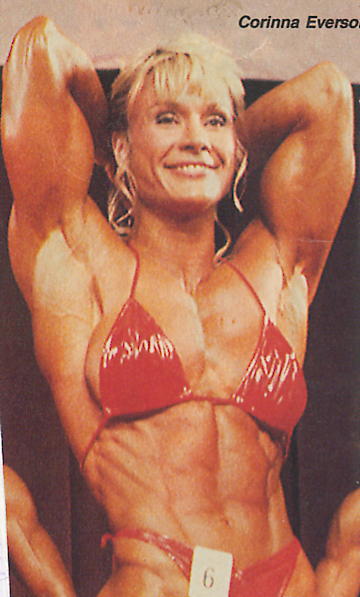
2. Rachel McLish
3. Mary Roberts
4. Carla Dunlap
5. Carla Temple
6. Clare Furr
7. Gladys Portugues
8. Lynn Conkright
9. Ellen Van Maris
10. Dinah Anderson
11. Tina Plakinger
12. Erika Mes
13. Candy Csensits
14. Marjo Selin
15. Inger Zetterqvist
16. Kay Baxter
16. Susan Roberts
16. Carolyn Cheshire
16. Lisser Frost Larsen
16. Holly Buss
16. Josee Baumgartner
16. Carina Johansson
16. Joy Nichols
16. Lydia Cheng
1985 Ms. Olympia Results:
1. Cory Everson 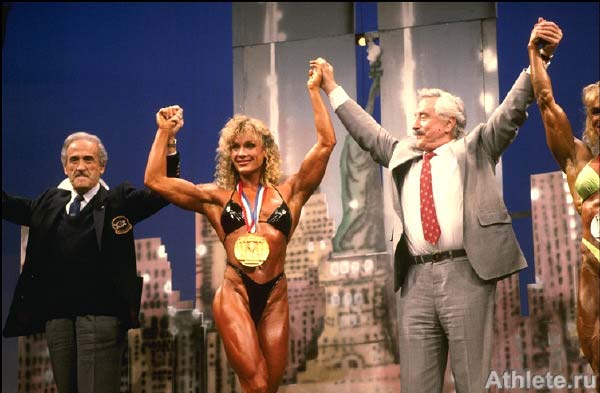
2. Mary Roberts
3. Diana Dennis
4. Carla Dunlap
5. Clare Furr
6. Tina Plakinger
7. Ellen Van Maris
8. Gladys Portugues
9. Lori Bowen-Rice
10. Marjo Selin
11. Dinah Anderson
12. Vera Bendal
13. Kay Baxter
14. Erica Mes
15. Juliette Bergmann
16. Lynn Conkwright
17. Dona Oliveira
18. Joy Nichols
19. Lynne Pirie
20. Carloyn Cheshire
21. Anita Gandol
22. Kris Alexander
23. Lydia Cheng
1986 Ms. Olympia Results:
1. Cory Everson 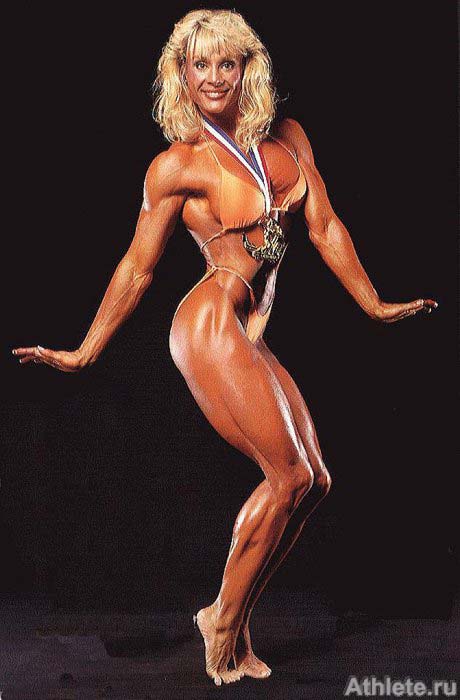
2. Clare Furr
3. Ellen Van Maris
4. Diana Dennis
5. Mary Roberts
6. Juliette Bergmann
7. Sue Ann McKean
8. Janice Ragain
9. Carla Dunlap
10. Bev Francis
11. Erika Geisen
12. Marjo Selin
13. Dawn Marie Gnaegi
14. Susie Jaso
15. Penny Price
16. Dominique Darde
17. Dona Oliviera
1987 Ms. Olympia Results:
1. Cory Everson 
2. Ellen Van Maris
3. Bev Francis
4. Anja Langer
5. Mary Roberts
6. Marjo Selin
7. Janice Ragain
8. Diana Dennis
9. Juliette Bergmann
10. Renate Holland
11. Sue Ann McKean
12. Carla Dunlap
13. Dominique Darde
14. Cathey Palyo
15. Maria Concetta Serio
16. Gundi Froder
1988 Ms. Olympia Results:
1. Cory Everson 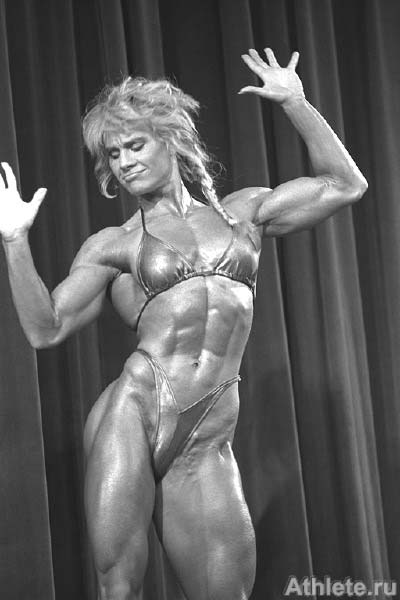
2. Anja Langer
3. Bev Francis
4. Tonya Knight*
5. Ellen Van Maris
6. Marjo Selin
7. Dona Oliviera
8. Janet Tech
9. Renate Holland
10. Carla Dunlap
11. Laura Creavelle
12. Renee Casella
13. Juliette Bergmann
14. Janice Ragain
15. Joy Nichols
16. Cathey Palyo
17. Veronica Dahlen
* Tonya Knight was disqualified after the IFBB learned that someone had taken her drug test for her during the contest.
1989 Ms. Olympia Results:
1. Cory Everson 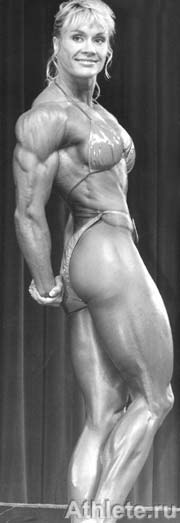
2. Sandy Riddell
3. Bev Francis
4. Jackie Paisley
5. Ellen Van Maris
6. Laura Creavelle
7. Diana Dennis
8. Marjo Selin
9. Marie Laure Mahabir
10. Janet Tech
11. Claudia Profanter
12. Dona Oliviera
13. Laura Beaudry
14. Dorothy Herndon
15. Lisa Lorio
16. Lynn Lemieux
17. Renate Holland
18. Ina Lopulissa
1990 Ms. Olympia Results:
1. Lenda Murray 
2. Bev Francis
3. Anja Schreiner
4. Laura Creavalle
5. Jackie Paisley
6. Sharon Arrildt (Marvel)
7. Diana Dennis
8. Marie Mahabir
9. Claudia Profanter
10. Hannie Van Aken
11. Lisa Lorio
12. Susanne Steurer
13. Kathy Unger
14. Janet Tech
15. Gillian Hodge
16. Dorothy Herndon
16. Dona Oliviera
17. Sandra Blackie
17. Gloria Bouvier
17. Carolyn Ervin
17. Janice Graser
17. Negrita Jayde
17. Lynn Lemieux
17. Debbie McKnight
17. Penny Price
17. Ana Sanchez
17. Tatjana Scholl
17. Eleonore Urbanski
17. Mary Ellen Warman
1991 Ms. Olympia Results:
1. Lenda Murray 
2. Bev Francis
3. Laura Creavalle
4. Sandy Riddell
5. Sharon Marvel
6. Diana Dennis
7. Shelley Beattie
8. Anja Schreiner
9. Claudia Montemaggi
10. Sue Gafner
11. Jackie Paisley
12. Marie Mahabir
13. Hannie Van Aken
14. Claudia Profanter
15. Lisa Lorio
1992 Ms. Olympia Results:
1. Lenda Murray 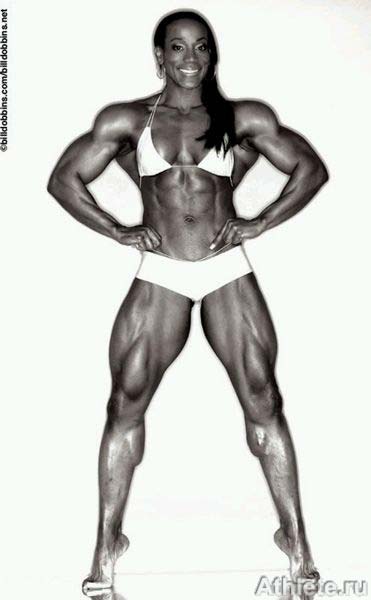
2. Laura Crevalle
3. Shelley Beattie
4. Sandy Riddell
5. Diana Dennis
6. Anja Schreiner
7. Claudia Montemaggi
8. Yolanda Hughes
9. Nikki Fuller
10. Debbie Muggli
11. Sharon Bruneau
12. Sue Gafner
13. Sharon Marvel
14. Nancy Lewis
15. Audrey Harris
16. Gabriella Szikszay
17. Sandra Blackie
18. Diana Gimmler
19. Skye Ryland
20. Eva Sukupova
1993 Ms. Olympia results:
1. Lenda Murray 
2. Denise Rutkowski
3. Laura Crevalle
4. Debbie Muggli
5. Kim Chizevsky
6. Sandy Riddell
7. Shelley Beattie
8. Sharon Marvel
9. Audrey Harris
10. Sharon Bruneau
11. Yolanda Hughes
12. Paula Bircumshaw
13. Nancy Lewis
14. Nikki Fuller
15. Diana Dennis
16. Marie Mahabir
17. Laura Binetti
18. Christa Bauch
19. Diana Gimmler
19. Zuzana Korinkova
19. Loretta Lomax
19. Astrid Falconi
19. Eva Sukupova
19. Janet Marchi
19. Kimberly Jones
19. Mary Ellen Warman
19. Yurie Iijima
19. Anita Gandol
19. Meral Ertunc
19. Kathy Unger
19. Laura Vukov
19. Carol Exbrayat
1994 Ms. Olympia Results:
1. Lenda Murray 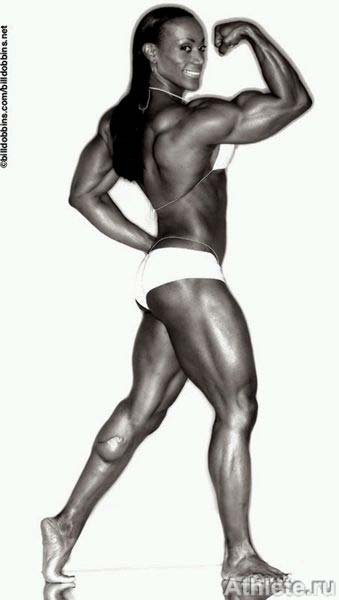
2. Laura Creavalle
3. Debbie Muggli
4. Marie Mahabir
5. Audrey Harris-White
6. Sue Price
7. Drorit Kernes
8. Yolanda Hughes
9. Muriane Nicolas
10. Diana Dennis
11. Laura Binetti
12. Christa Bauch
13. Eva Sukupova
14. Sabine Froschauer
15. Gabriella Spuhn
16. Fredrique Auchart
16. Veronique Gady
16. Sharon Bruneau
16. Nuria Sala
1995 Ms. Olympia Results:
1. Lenda Murray 
2. Kim Chizevsky
3. Natalia Murnikoviene
4. Sue Price
5. Laura Creavalle
6. Debbie Muggli
7. Joanne Lee
8. Michele Ralabate
9. Eva Sukudova
10. Nancy Lewis
11. Yolanda Hughes
12. Laura Binetti
13. Marie Mahabir
14. Muriane Nicolas
1996 Ms. Olympia Results:
1. Kim Chizevsky 
2. Lenda Murray
3. Natalia Murnikoviene
4. Laura Creavalle
5. Vicky Gates-Lewis
6. Nancy Lewis
7. Eva Sukudova
8. Andrulla Blanchette
9. Melissa Coates
10. Sue Meyers
11. Joanne Lee
12. Beatrix Gluck
1997 Ms. Olympia Results:
1. Kim Chizevsky 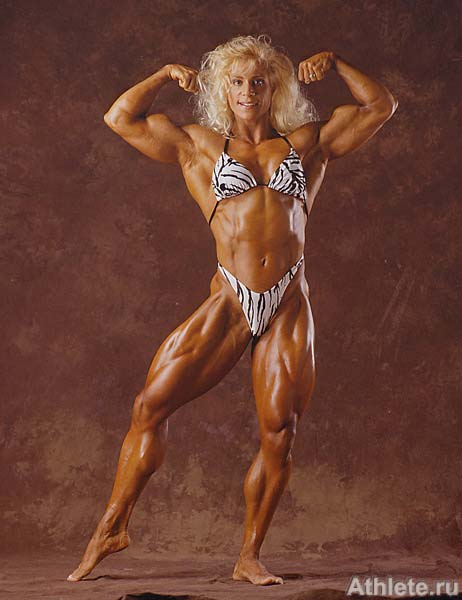
2. Lenda Murray
3. Yolanda Hughes
4. Laura Creavalle
5. Vicky Gates-Lewis
6. Jitka Harizomova
7. Andrulla Blanchette
8. Chris Bongiovanni
9. Sue Myers
10. Nancy Lewis
11. Melissa Coates
12. Gayle Moher
13. Laura Binetti
14. Nicole Bass
15. Valerie Gangi
16. Eva Sukupova
17. Tazzie Columb
18. Zdenka Turda
1998 Ms. Olympia Results:
1. Kim Chizevsky 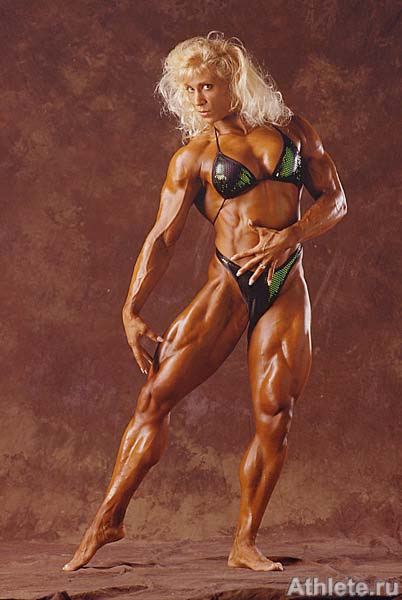
2. Yolanda Hughes
3. Vicky Gates-Lewis
4. Lesa Lewis
5. Laura Creavalle
6. Andrulla Blanchette
7. Jitka Harizomova
8. Eva Sukupova
9. Chris Bongiovanni
10. Yaxeni Oriquen
11. Gayle Moher
12. Valentina Chepiga
13. Zdenka Turda
14. Dayana Cadeau
15. Jackie DeGennaro
16. Beate Drabling
17. Sipka Berska
1999 Ms. Olympia Results:
1. Kim Chizevsky 
2. Vicky Gates
3. Laura Creavalle
4. Iris Kyle
5. Lesa Lewis
6. Tazzie Colomb
7. Andrulla Blanchette
8. Laura Binetti
9. Brenda Reganot
10. Yaxeni Oriquen
11. Gayle Moher
12. Valentina Chepiga
2000 Ms. Olympia Results:
+135 Pounds
- 1. Valentina Chepiga

- 2. Vickie Gates
- 3. Lesa Lewis
- 4. Yaxeni Oriquen
- 5. Iris Kyle
- 6. Denise Hosher
- 7. Theresa Bostick
-135 Pounds
- 1. Andrulla Blanchette
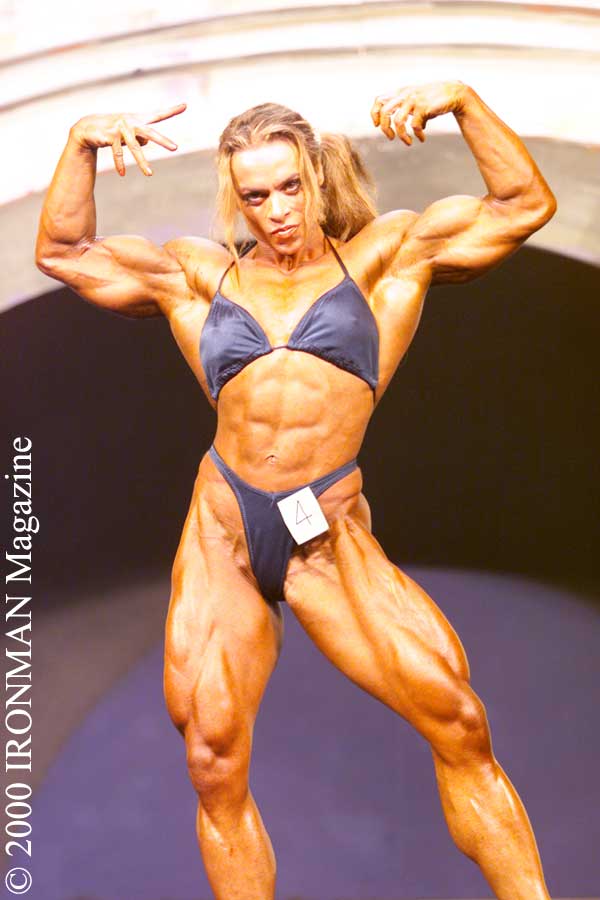
- 2. Brenda Raganot
- 3. Renee Casella
- 4. Cathy LeFrancois Priest
- 5. Jennifer McVicar
2001 Ms. Olympia Results:
Overall: Juliette Bergmann 
+135 Pounds
- 1. Iris Kyle

- 2. Vickie Gates
- 3. Yaxeni Oriquen
- 4. Valentina Chepiga
- 5. Lesa Lewis
- 6. Betty Pariso
- 7. Heather Foster
-135 Pounds
- 1. Juliette Bergmann

- 2. Andrulla Blanchette
- 3. Dayana Cadeau
- 4. Brenda Raganot
- 5. Gayle Moher
- 6. Renee Casella
- 7. Kim Harris
- 8. Fannie Barrois
- 9. Angela DeBatin
- 10. Joanna Thomas
2002 Ms. Olympia Results:
Overall: Lenda Murray 
+135 Pounds
- 1. Lenda Murray

- 2. Iris Kyle
- 3. Vickie Gates
- 4. Yaxeni Oriquen
- 5. Dayana Cadeau
- 6. Nancy Lewis
- 7. Betty Viana
- 8. Beth Roberts
-135 Pounds
- 1. Juliette Bergmann

- 2. Valentina Chepiga
- 3. Fannie Barrois
- 4. Sophie Duquette
- 5. Angela Debatin
- 6. Laura Creavalle
- 7. Susanne Neiderhauser
2003 Ms. Olympia Results:
Overall: Lenda Murray 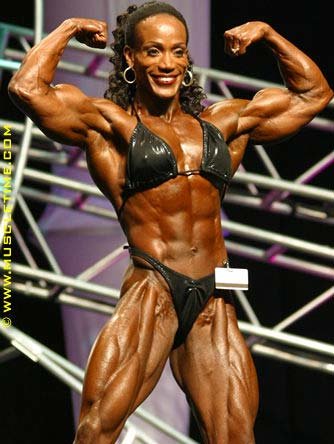
+135 Pounds
- 1. Lenda Murray
- 2. Iris Kyle
- 3. Yaxeni Oriquen
- 4. Betty Viana
- 5. Helle Nielsen
- 6. Betty Pariso
- 7. Vickie Gates
-135 Pounds
- 1. Juliette Bergmann

- 2. Dayana Cadeau
- 3. Denise Masino
- 4. Cathy Priest
- 5. Angela Debatin
- 6. Fannie Barrois
- 7. Kim Harris
- 8. Rosemary Jennings
2004 Ms. Olympia Results:
Overall: Iris Kyle 
+135 Pounds
- 1. Iris Kyle

- 2. Lenda Murray
- 3. Yaxeni Oriquen
- 4. Betty Pariso-Carmichael
- 5. Betty Viana
- 6. Lisa Aukland
- 7. Bonny Priest
-135 Pounds
- 1. Dayana Cadeau
- 2. Denise Masino
- 3. Marja Lehtonen
- 4. Joanna Thomas
- 5. Desiree Ellis
- 6. Mah Ann Mendoza
- 7. Nancy Lewis
- 8. Velentina Chepiga
- 9. Vilma Caez
2005 Ms. Olympia Results:
1. Yaxeni Oriquen 
2. Iris Kyle
3. Dayana Cadeau
4. Jitka Harazimova
5. Brenda Ragonot
6. Bonny Priest
7. Betty Viana
8. Betty Pariso
9. Rosemary Jennings
10. Antionette Norman
11. Mah-Ann Mandoza
12. Tonia Williams
13. Annie Rivieccio
14. Marja Lehtonen
15. Desiree Ellis
Competitors With The Most Ms. Olympia Victories
| Wins | Name | Year |
| 8 | Lenda Murray | 1990-1995, 2002-2003 |
| 6 | Cory Everson | 1984-1989 |
| 4 | Kim Chizevsky | 1996-1999 |
| 2 | Rachel McLish | 1980, 1982 |
| 1 | Kike Elomaa | 1981 |
| 1 | Carla Dunlap | 1983 |
| 1 | Valentina Chepiga | 2000 |
| 1 | Andrulla Blanchette | 2000 |
| 1 | Juliette Bergmann | 2001 |
| 1 | Iris Kyle | 2004 |
| 1 | Yaxeni Oriquen | 2005 |
IFBB Women's Hall of Fame
- 1999 - Carla Dunlap, Cory Everson, Rachel McLish
- 2000 - Bev Francis, Lisa Lyon, Abbye "Pudgy" Stockton
- 2001 - Kay Baxter, Diana Dennis, Kike Elomaa
- 2002 - Laura Combes
- 2003 - Lynn Conkwright
- 2004 - Ellen Van Maris
- 2005 - Stacey Bentley
- 2006 - Claudia Wilbourn
Olympia Forum Discussions
What are the members of Bodybuilding.com saying about the 2006 Ms. Olympia? Predictions:
bellisima - BodySpace
"1.Yaxeni
2.Brenda Raganot
3.Iris
4.Dayana Cadeau
5.Dena Westerfield
6.Bonny Priest
7.Jitka Harazimova
8.Colette Nelson
9.Heather Foster"
Human Torch - BodySpace
"I would like to see Jitka win one. This lady has a very symmetrical physique. Iris is a great FBB but since she started disrespecting the queen Lenda Murray, she somewhat fell from grace with me. It will most likely go down between Iris and Yaxeni for the 1 and 2 spot, with Jitka and Brenda battling for third."
Titania - BodySpace
"I'd personally like to see Yaxeni win again. IMHO, she has the size, the shape AND she looks feminine. I've never really been a fan of Iris. When Kim won, I don't think she looked her best. She had the size but her shape didn't appeal to me."
Crissy - BodySpace
"I really like Yaxeni's look but someone who I am really liking is Jitka Harazimova I see her placing high this year.
1.Yaxeni Oriquen-Garcia 2.Jitka Harazimova 3.Dayana Cadeau 4.Iris Kyle 5.Bonnie Priest
It is no secret I am a huge fan of Bonnie's! My fingers are crossed for her this year."
stealth swimmer - BodySpace
"I think Jitka Harazimova and Bonnie Priest will be battling it out for 4th and 5th Iris and Yaxeni for 1st and 2nd but I personally prefer Yaxeni's physique. Great lines and symmetry, size, lean without being overly ripped so she still looks feminine. I don't really follow intensively like I do with the male bodybuilding, but I still find it interesting and hope to watch when I get the O on pay-per-view. I think women can have muscle and still be beautiful. If anything they even have an exotic appeal because of having some muscle."
| RELATED POLL | ||||||
|
||||||