The 1970s, regarded by many as bodybuilding's most celebrated and popular era, sparked world-wide interest in what, up until then, had largely been considered a worthwhile pursuit among a relatively small, but growing, group of enthusiasts.
These enthusiasts contributed to what is known as the golden-era of bodybuilding (1940-1970) and effectively set the course for our champions of today. Following this golden-era period, the aforementioned 70s witnessed an intensification of bodybuilding popularity and the beginnings of a revolution, which showcased some of the finest physiques ever seen.
This period, largely through increased media exposure and a world-wide adoption of the bodybuilding ideology of improved quality of life through physical excellence, the likes of Arnold Schwarzenegger and Lou Ferrigno became household names. The 70s also produced Tom Platz, Ed Corney, Franco Columbo, Ken Waller, Frank Zane and countless others who have gone on to become movers and shakers of the fitness world.
Among the many champions of the 70s, however, few have continued to train specifically for bodybuilding competition. A new generation of bodybuilder has arrived and has seemingly obviated the standard set in the 70s, with monstrously proportioned mass.
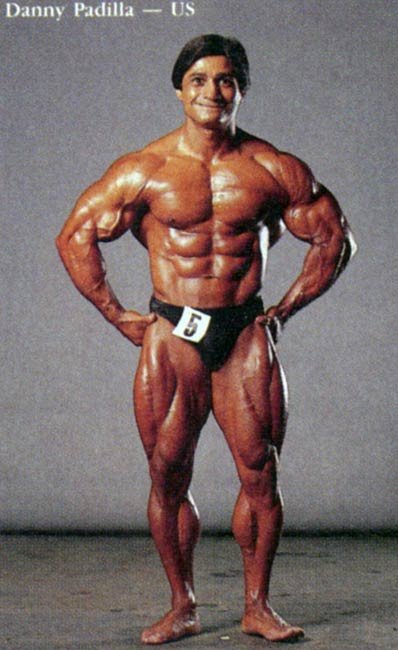
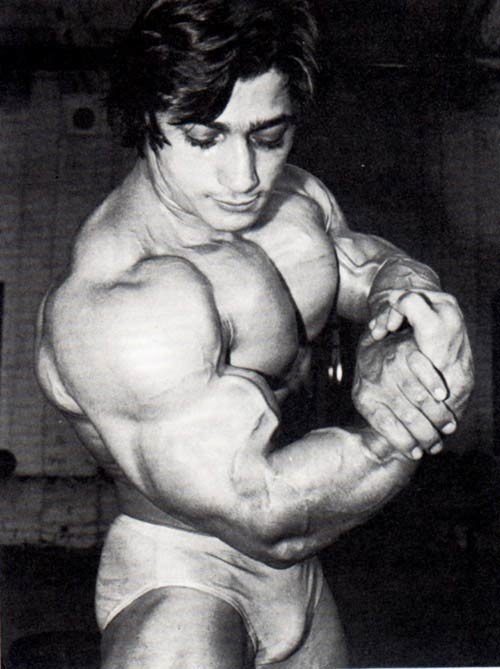
However, one of the few bodybuilding survivors from the 70s is still training with a vengeance, and with a view toward competing at the upcoming Masters Mr. Olympia. His love for the sport of bodybuilding, and passion for life, is an inspiration to us all. His name is Danny, Giant Killer, Padilla, and I had been granted the pleasure of talking to him.
A true bodybuilding legend, Danny, 53, won his hometown Mr. Rochester competition at the age of 17, going on to win the Mr. USA in 1975 and both Mr. America and Mr. Universe in 1977. He achieved the greatest shape of his life at the 1981 Mr. Olympia where he placed 5th.
A credible 3rd placing at the 1991 Night of the Champions, against a solid field, cemented his place as one of the most persistently hard working champions of all time. Danny feels bodybuilding has been good to him and now intends to compete in this years Masters Olympia to show the world what can be accomplished with dedication and perseverance.
Throughout his career, Danny has trained for the personal enjoyment it brings, and for the thrill of victory. "I love the sport and would like to encourage todays youth to become involved in bodybuilding," Danny said.
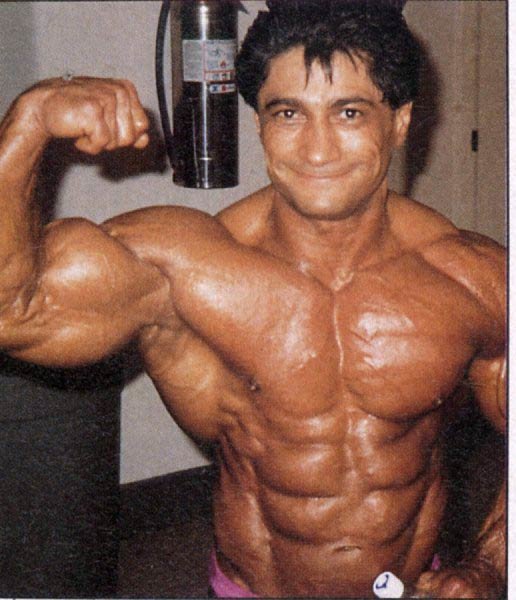
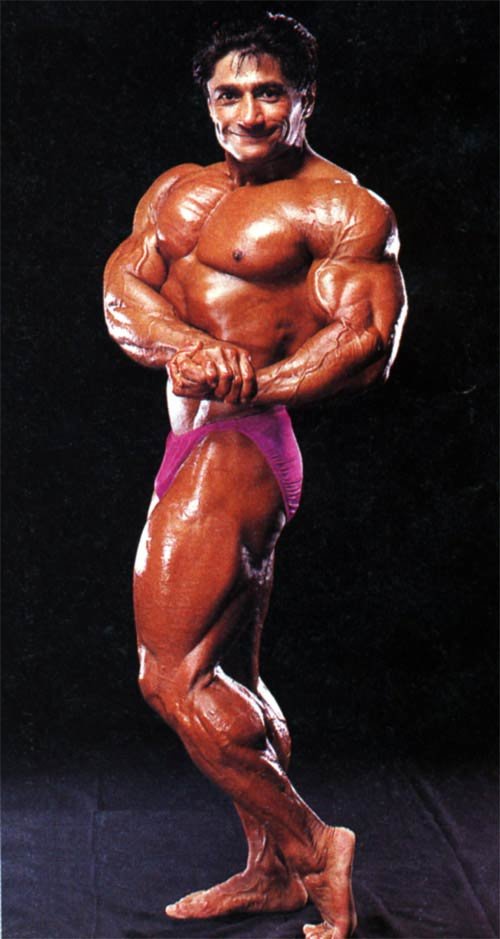
Known for his balanced size, Danny is thought to have been one of the most "complete" bodybuilders of all time, with his arms and calves, not out of balance with the rest of his body, being the envy of the sport. The symmetry is still there. The size is still there. So come the Masters Olympia, the Giant Killer will be ready to strike. Watch out.
 The Interview
 [ Q ] Hello Danny. What are you doing these days?
- These days I am working as a trainer at a local fitness center and preparing for the Masters Olympia which is supposed to be held in Vegas in October along with the regular Olympia.
[ Q ] Sounds great. How do you plan on preparing for the Masters Olympia? Will you be doing anything differently compared to recent years?
- Preparation for the Masters will be the same as for every show that I have trained for in my career. The diet program is low fats, high protein, and not a lot of carbs. An example of what I would consume would be oatmeal, chicken, steak once in a while, tuna, turkey. I try to eat 10 times a day and drink a lot of water and
- down 7 months before the show.
[ Q ] What do you weight now and what bodyweight do you plan on coming in at, at this years Masters?
- I am planning to step onstage at a bodyweight of 200. Now I am 194 and before starting to train for Masters I was 154.
[ Q ] How often do you train and what training methods do you employ?
- I train 6 days a week, training each body part twice a week. It�s the old dinosaur training
regiment
- that Arnold and I did back in the day which is the push pull system which is: chest and back the first day, the second day arms and shoulder, the third day legs then next it begins all over.
[ Q ] How does your pre-contest diet differ from your off-season diet? What types of foods do you eat and what supplements do you take (if any)?
- Pre-contest diet doesn't differ much from my off season and right now the diet is a little open. This will change about 6-7 months out from the show, I will then start cutting down on sugars and other carbs. I do take
- created and supplied to me by IronMan Magazine.
I use all of their products which include protein powders and their recovery drink called Recoverx which I use 3 times a day. I use another product called Profusion which is a milk protein combination. I like it as it gives me good results.
The Protein drinks I'll do 2-3 times a day to help me gain some weight. I usually use these with a lactose free non-fat milk and a little frozen yoghurt.
[ Q ] Just wanting to take you back a bit now Danny. When you were young, did you want to be a bodybuilder right from the beginning or did you have other plans?
- Yes, I wanted to be a bodybuilder since the age of 7. Even then I wanted to be Mr. Universe and Mr. America. The first time I saw a
- was when I walked into a Sears with my Dad and saw Larry Scott and
Dave Draper
- on the cover.
I looked at my Dad and said Pops, I want to be like these guys. He then pulled me by the ears and said, yeah come on Son, let's keep going. So eventually I pulled it off and here I am.
[ Q ] When you won the Universe and America back in 1977 you were clearly dedicated and devoted to developing one of the most balanced physiques the world has seen. Do you have the same level of dedication to building you physique today?
- Of course I have the same level of
- because I still have the same love that I always had for working out. I still train and have always trained because I like to, not so much for the titles. It so happens I got lucky and got some titles with it, but at this point for the Master�s I am as dedicated as I can be.
You would think that I was getting ready for the 1977 Mr. America again because I am training like this is the biggest show of my life. It is pretty hard, I mean I am 53 years old now and its hard to get rid of the body fat, but you just have to train a little harder to get into any kind of shape. The bottom line reason for continuing to train hard is I love the sport.
[ Q ] Other than your desire to compete in the Masters Olympia, what other goals do you have in life Danny?
- Other goals that I have right now are to train the younger generation, to try to keep them out of trouble and convince them to go to school. Education is very important. I never went to college, but I guess its never too late, you never know.
I would eventually like to write a book on bodybuilding and some of the bodybuilding experiences that I have had. I want to be able to pass this knowledge and history on to all bodybuilding fans and people who just like to read about bodybuilding.
[ Q ] When was the last time you competed Danny? How did you do?
- The last time I competed I believe was in 1991 and that was when I competed in the Night of Champions and placed 3rd. I also did a lot of competitions over in Europe that year, I placed all over the place from 2nd to 7th over there.
[ Q ] If your last contest was in 1991, this means you had competed for 22 years. What has been the highlight of your competitive bodybuilding career so far? Why?
- The highlight of my career was the 1981 Olympia, that�s because I was in the greatest shape of my life. Even though I got 5th I felt that I had accomplished everything that I had wanted to do which was to become one of the legends and I am blessed to be able to have that title. A lot a lot of people say I am one of the legends and I think it was due to them seeing me at the 1981 Olympia and seeing the condition I was in for that show.
1981 Mr. Olympia Standings:
This was an extremely close finish with five different judges voting for a different person to be #1. It was another year of the comebacks, which some people thought the contest was staged from the start. The judges were Dominic Certo (USA), Doug Evans (Wales), Winston Roberts (Canada), Franco Fassi (Italy), Jim Manion (USA), Jacques Blommaert (Belgium), and Sven-Ole Thorsen (Denmark).
| Place | Name | Country |
| 1 | Franco Columbo | USA |
| 2 | Chris Dickerson | USA |
| 3 | Tom Platz | USA |
| 4 | Roy Callender | Canada |
| 5 | Danny Padilla | USA |
| 6 | Jusup Wilkosz | Germany |
| 7 | Dennis Tinerino | USA |
| 8 | Jonny Fuller | England |
| 9 | Samir Bannout | USA |
| 10 | Roger Walker | Australia |
| 11 | Hubert Metz | Germany |
| 12 | Carlos Rodqigues | USA |
| 13 | Ed Corney | USA |
| 14 | Steve Davis | USA |
| 15 | Mike Katz | USA |
| 16 | Ken Waller | USA |
| 17 | Jorma Raty | USA |
From getbig.com.
Also at the NOC I scored a perfect score of 300 and lost to Robbie Robinson that was of course a highlight to me because I got a standing ovation after my posing routine. Even though I lost, a lot of people know that I could have won that show, so those were two great experiences for me.
[ Q ] What would be the low-light or the worst experience of your career?
- The 75' Universe when filming
- after I had trained all summer and was promised by the IFBB that I would represent the Light-Weight Champion of the World because I had won the USA that year.
We flew all the way to South Africa and did the photo shoots. I got to see Arnold, Louie and the rest of the guys at this time. It was all understood that Robbie would be the Middle-Weight, Mike Katz and Ken Waller would both pose down for the Heavy-Weight in South Africa, and I would be the Light-Weight.
 Evidently they decided to have 2 Heavy-Weights and a Middle-Weight and to my surprise bumped me the morning of the show. Of course I was devastated because I was ready for the show, I had a really good chance of winning the Light-Weight championship of the World.
After being denied, I decided to go on Portugal�s team. It was funny, I would never forget, Oscar State said to me, �I thought you were on America�s team.� I said no, America doesn�t want me and Portugal didn�t have a lightweight on their team so why can�t I compete. My Mom was born in Spain and my Dad in Puerto Rico, they had to go by Portugal somewhere along the line.
Oscar�s statement to me was that so crazy �I gotta let you in�. So they let me in and unfortunately for me I was on stage looking magnificent and I was in the final round, there was a protest which led to me being disqualified. The only conclusion I came to was because it was an embarrassment to the IFBB, how are you going to explain to everyone if Danny wins for Portugal.
After seeing me, the other countries I think were afraid of me so it as a good excuse to protest and get them to throw me out and that is what happened. That was how I ended up in the middle of South Africa talking to Arnold during Pumping Iron, seemingly appearing out of know where on the tape. He had come up to me and asked if I was ok, I said yeah and we just started talking about Franco and Ed Corney doing their routines.
I was initially in a lot of Pumping Iron and was taking out of it I guess, because of what happened. I was under the impression that Pumping Iron would have shown what I had gone through because it was filmed. But I don't think the IFBB wanted it to be seen because it was kind of embarrassing. I mean the IFBB is a great organization but again, how do you explain what happened to Dan Padilla � life goes on you know.
[ Q ] Wow, talk about controversy, and quick thinking. What drives you to be the best bodybuilder you can be?
- The love of the sport and just the love of working out.
[ Q ] What hobbies and interests, other than bodybuilding, do you have?
- I love to bowl, fixing stuff, I have electrical background and also do a lot of reading.
[ Q ] In the 70s, when you were among the best bodybuilders in the world, who did you class as being a truly great bodybuilder? Why?
- The Greatest was Arnold. He was the first tall guy who had almost a complete physique and back then this was unheard of. Today Arnold still continues to grow as a person and has done a lot for bodybuilding.
Sergio Olivia
- I have to mention because to me he was probably one of the greatest bodybuilders pound-for-pound that anyone has ever seen.
[ Q ] Were things really different back in the 70s in terms of bodybuilding? In what way?
- The guys were different. Then we did argue, but if anyone needed help we were there for each other. Today it is a little different. Its a dog eat dog world.
Back then we did it for the love of the sport. Yeah, we made money but nothing compared to what guys get today.
So I guess that's why it�s more cut throat than it was then. Also, it was little more fun. Now the guys are bigger, maybe even better than we were, but some of the physiques are kind of ugly.
It�s just part of the era, these guys are huge, cut up with big guts, just a new era with bodybuilding and part of what is going on with bodybuilding today.
[ Q ] The physiques certainly have changed. Who do you consider to be the best bodybuilder competing today? Why?
- Today would be
Ronnie Coleman
- , he is phenomenal because he is big, cut and most importantly, symmetrical.
[ Q ] Who in terms of bodybuilding served to inspire you when you were first starting out? Why?
- was the first bodybuilder to inspire me because I was able to meet him in NY in my career. He was so very humble, a soft spoken guy who was strong and huge and an inspiration. Then when I met Sergio and Arnold it was also great, they both had a strong effect on me.
[ Q ] In your opinion, what are the main benefits of adhering to a bodybuilding program?
- One of the main benefits of bodybuilding I think is that it is like a fountain of youth. I�m 53-year-old guy, hair isn�t grey and all in all I�m in pretty good condition.
Yeah, I have had some off-time due to open heart surgery but I recovered quickly because I was in good condition. I had good muscle tone.
[ Q ] These sound like excellent reasons for beginning a bodybuilding program. What advice would you give someone starting up in bodybuilding?
- My advice for those starting out is to stay away from bodybuilding shows early in your career because everyone always wants you to compete.
You are better off building your body with the basic exercises (squats, benches, rows, dead lifts) to try and build your strength while making sure you build a complete body. Also, don�t take your entire life and surround it with bodybuilding. Theres family and education, which are both very important.
[ Q ] Excellent advice Danny. Where are you living at the moment? What is the bodybuilding scene like there?
- I am living in Rochester at the moment and the bodybuilding scene isn�t too bad. We have a couple of professionals in the area, George Farah and
- , who are coming up in the sport and they kind of got the Rochester area jumping around a bit. Rochester is a quiet little town, not really a hard core bodybuilding town as CA and FL are but it serves my purpose.
[ Q ] Is there anything further you would like to add?
- I have to add some information about my website. It�s currently being redone, and will be updated very soon with good information and pics of my before and after shots training for the Master�s as well as pics that span my career.
The only cost to join is one buck. I am training and supporting myself and so anytime you join is a buck. This will go toward my supplement and training expenses and that�s all I�ll say about that.
[ Q ] Thank you very much for your time Danny. All the best.
- No problem David.