
Day after day the media extols the virtues of exercise for reducing the risks of heart disease, diabetes, and high blood pressure. Whether the daily reminders of age originate on TV, the newspapers or even the mirror providing daily images of age-related changes, the decision is made to hit the irons. Over 40 and heading off to the gym in an attempt to redefine the aging process….now what?
The key to a successful fitness regime after the age of forty is simple. You must accept that your body is changing. Many are frightened by the notion of change, especially in terms of aging physiques. Images of sagging skin, excess bodyfat, gray hair and little energy are negatively associated with the senior population. But, is it necessary to retain the stereotypical image of old age or is it possible for a group to revolutionize the notion of aging?
Babyboomers revolutionized the concept of youth in the 1960s and many in this group are at it again through the process of redefining the aging process. Rather than lead a sedentary lifestyle, today's boomers are actively pursuing the activities of their twenties and thirties. But, therein is the problem.
Physiological changes have occurred in the babyboomers during the decades following Woodstock. And many of these changes are showing up in the doctor's office in the form of sports-related injuries. As a result, the American Academy of Orthopedic Surgeons and the American Orthopedic Society for Sports Medicine coined the term, "Boomeritis, an ailment caused partly by years of athletic wear and tear and partly for age-related changes that cause tissue to become more susceptible to injury."
By acknowledging the physical changes associated with aging, it is possible to redirect focus to areas that will allow maximum gains. For example, rather than go for those ego boosting lifts commonly associated with youth, focus your attention on form, muscle contraction and getting the most out of each rep, providing efficient and effective, intense workouts.
Understand the physiological changes that happen through aging, and take a pro-active stance in reversing or slowing down the aging process. Once the barriers are removed it is time to put redefining age strategies into place.
- Longer recovery times are required. A five or six day split that worked for years is no longer effective because the body needs more rest between workouts.
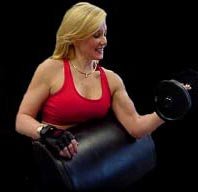 Redefining Age Strategy. Redesign your workout routine to allow for plenty of recovery time. Engage in intense workouts where efficiency is in order to counter-balance the fewer lifting days scheduled. Super-setting and drop sets create more volume in a shorter time period. Get into the gym, work your muscles, then go home and recover so that your muscles can grow. And remember, recovery also means adequate amounts of sleep, a concept often neglected by time-crunched babyboomers.
Start setting appointment times for both workouts and sleep in your calendar, and make these critical elements of success part of your redefining age strategy.
- Loss of muscle mass. Beginning in the mid-forties, there can be an alarming drop in the percentage of muscle mass. Just how much muscle mass can be lost? Up to 30% in the next two decades. And even "healthy seniors" can lose up to 50% of the muscle mass of their youth.
Redefining Age Strategy. Keep moving! Your workouts and cardiovascular exercise are non-negotiable aspects of health care. Resistance training programs need to be based on progressive resistance so that the body has the ability to gain or maintain mass at a time when peers are disintegrating in front of TV screens.
- Loss of bone density. Osteoporosis currently affects over 10 million Americans, with many more becoming victims in the near future. Many believe bone density loss begins in the senior years, but in truth, the loss begins as early as thirty-five. While commonly referred to as a women's disorder, by the age of 65, men fall victim to osteoporosis at the same rate as women.
Redefining Age Strategy. Incorporate a regular exercise plan of progressive resistance training and weight-bearing cardiovascular exercise into your daily routine. The National Institute on Aging states that osteoporosis is a preventable disorder when weight-bearing exercises such as "walking, jogging, playing tennis and dancing," become lifestyle activities done three to four times per week. Avoid the drudgery of lengthy cardio sessions by engaging in fun outdoor activities such as biking, hiking and skiing. And if you are sidelined by injuries, just a one-mile brisk walk has been shown by the University of Connecticut to have positive effects on bone density.
- Metabolic rate decreases. Fewer calories are needed to support the same level of activity.
Redefining Age Strategy. Make each calorie count by eating a healthy nutrient dense diet and work to expend enough calories to achieve the physique desired. Stay away from the food pyramid that places too much emphasis on refined carbohydrates. Replace simple carbohydrates with those that are complex in nature. Steel-cut oats, brown rice and sweet potatoes are fine examples of complex carbohydrates that won't spike insulin levels and yet will provide the necessary fuel for daily activities.
Enjoy a diet filled with green vegetables, some of which provide a negative calorie balance. What's a negative calorie balance, you ask? Negative calories refer to the state where more calories are expended to digest the food item than the item itself. Celery provides a good example of negative calories. At only ten calories per stalk, more calories are expended in chewing and digesting than the original stalk. Protein levels should be relatively high to support the muscle building process. Lean protein sources include grilled chicken, fish and beef. Eggs and whey with their high Biological Values (BV) provide additional sources of high quality protein. Fats are essential in the diet, but choose wisely. Think olive oil, not ice cream.
- Endurance decreases. A slowdown of the physiological processes of the body takes place with age. After the age of 50 there is a slight decrease in the number of fast motor units. But, is the decrease in endurance levels due to age or a de-conditioned state? Both!
Redefining Age Strategy. This strategy is simple! Don't allow your body to get into a de-conditioned state. Maintain endurance levels through activity and in turn, maintain current levels of fiber composition. "One longitudinal study of a group of runners examined in 1974 and again 1992, suggested that training could play a role in fiber distribution. Those athletes who continue training showed unchanged fiber composition. Those who stopped training appeared to have greater slow twitch fiber percentage. This is primarily due to selective atrophy of the fast fibers."
- Range of motion diminishes. With age, joints stiffen and elasticity is lost in tendons and ligaments resulting in a less flexible body.

Redefining Age Strategy. Try Yoga! Through gentle stretches and daily practice, yoga produces a more flexible body. But, yoga provides much more as it is a process towards balance. Practice yoga for six months and you'll see a marked difference in your flexibility. But, practice yoga for a year and the focus, balance and breathing techniques will translate into more volume lifted in the gym. Try it...it's trendy, but harder than it looks.
- Hormonal fluctuations. Women in their 40s and 50s are hit with a double whammy. Not only are they faced with the same age related issues as men, but hormonal fluctuations in the peri-menopausal and menopausal years become added variables in the age equation.
Redefining Age Strategy. Work harder! And realize a strategy that worked last year for weight loss may not work this year because of these new variables. Battle that middle-aged hormonal induced spread by adding in a longer or faster cardiovascular workout to the mix. You will release natural endorphins that help to elevate moods at a time when mood swings are common.
- Injuries will happen. Remember Eric Heiden, the legendary speed-skater that won five gold medals at the 1980 Olympics held in Lake Placid? Now known as Dr. Eric Heiden, professor of orthopedics at the University of California at Davis Medical Center, he not only treats Boomeritis, but also "occasionally pays the same price for overexertion and cumulative wear and tear on his own muscles and joints." Weekend warriors are notorious for producing Boomeritis related injuries. Sprains, strains and tears will occur in de-conditioned that are forced to engage in the same level of activity on the weekends that follow a completely sedentary week.
Redefining Age Strategy. According to Dr. Heiden, people need to be flexible and listen to their body. That may mean trying a new activity. For Heiden, knee problems required that he stop running five years ago. More recently this Olympic speed-skater hung up his skates. Today, Eric Heiden touts a fitness routine that includes flexibility, cardiovascular and resistance training. 
Eric Heiden provides an example of someone living a healthy and fit lifestyle in spite of the inability to partake in the activity that made him an elite athlete. Rather than throw in the towel and live a sedentary life, Heiden's exercise modifications still allow for a fit physique. Most babyboomers will only have to make slight modifications to their fitness plans as they age. By adding variety to cardio vascular exercise and periodization training concepts to resistance training, babyboomers that maintain a sound nutrition plan are capable of redefining the aging process.
Diane Fields, MBA, ISSA Certified Fitness Trainer, Specialist in Performance Nutrition and working on her third certification in Fitness Therapy, is a member of Legendary Fitness, LLC, a company geared towards the special exercise and nutritional needs of Babyboomers interested in redefining the aging process. Ms. Fields is a Contributing Writer for magazines and websites and is an industry spokesperson at conventions and contests. Here on www.bodybuilding.com she teams up with legendary bodybuilder, Richard Baldwin, Mr. America, Mr. USA to write a weekly column Bodybuilding for Babyboomers. Current projects include writing a fitness book geared towards the over 40 crowd and writing CEU courses for certification organizations. You may contact Diane Fields at fitnessgirl56@yahoo.com.
Copyright 2003. Diane Fields, Member. Legendary Fitness, LLC. All rights reserved. The advice given in this column should not be viewed as a substitute for professional medical services. Before undertaking any exercise or nutrition program, Legendary Fitness, LLC advises all to undergo a thorough medical examination and get permission from their personal physician.
References
(i) Krucoff, Carol. Medformation.com. Bodyworks-Battling Boomeritis. August 2002.
(ii) National Institute on Aging. Age Page. Exercise: Feeling Fit for Life. 1998.
(iii) Seiler, Stephen. Aging Effect on Skeletal Muscle. The University of Texas at Austin. 1996.
(iv) Moran, W. Reed. USA Today. October 10, 2000.
Good luck!