


Knowing how to balance cardio with weight training can be one of the most challenging aspects of putting together your training program. Learn how to do it here.
Training your body is all about balance. A complete exercise program should address not only resistance training but cardiovascular training as well. Proper balance between these two basic forms of exercise is essential to your training success.
Training balance basically boils down to the amount of cardio training you do compared to the amount of weight training you do. You are going to learn exactly what factors affect this training balance and how you can use them to ensure you reach your goals as quickly as possible!
The major issue you will need to take into consideration when balancing your cardio with your weight training is your primary training goal; if you're training to lose fat, your balance is going to be very different than if you're trying to gain muscle or if you're training for a specific sport.
What Are Your Goals?
Your primary goal will give you a general starting point for figuring out exactly how to balance your training, as well as what type of cardio and weight training you should be doing.
In addition to your primary goal, you will also need to take into account two other major factors:
- Your Body Type: Are you naturally slim? Do you gain muscle easily? Do you tend to hold onto fat readily?
- The Type Of Cardio Training You're Doing: Is it high-intensity or low-intensity? Does it fatigue you for weights? Does your weight training fatigue you for your cardio?
As you read through this article, I want you to write down the points that apply to you. After explaining these factors, I will tell you how to integrate everything you've learned in your personal training program.
In order to successfully balance your training, you need to first identify what your primary goal is. Are you trying to lose fat? Are you focused on gaining muscle? Are trying to improve sports performance?
It's very important to note, you will be far more successful in achieving your goal if you focus on one specific goal only. The training processes involved in losing fat or gaining muscle are very different and do not mix well with each other. If you try to do both at the same time, your results won't be as good as if you focused on one at a time.
Training To Gain Muscle
If you're training to lose fat, you're going to need to do more cardio than someone who is training to gain muscle. A good starting point is three times per week, 20-30 minutes per session. Depending on the other factors we're going to discuss, you may need more or less than this. Weight training three times per week should be sufficient to maintain and even build muscle mass.
Here’s an example of a three-day split for building muscle:



BodyFit
$6.99/month- 2,500+ expert-created single workouts
- 3,500+ how-to exercise videos
- Detailed workout instruction
- Step-by-step workout tips
- Training at gym or at home
- Access to Workout Plans
- Access to Bodyfit App
- Store Discounts
Already have a Bodybuilding.com account with BodyFit? Sign In

What comes with BodyFit?

- Instructional Videos
Don't risk doing a workout improperly! Avoid injury and keep your form in check with in-depth instructional videos.
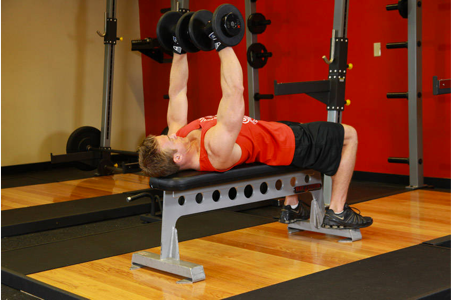
- How-to Images
View our enormous library of workout photos and see exactly how each exercise should be done before you give it a shot.
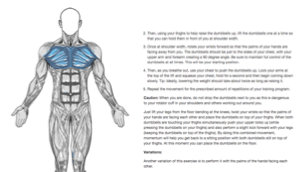
- Step-by-Step Instructions
Quickly read through our step-by-step directions to ensure you're doing each workout correctly the first time, every time.


BodyFit
$6.99/month- 2,500+ expert-created single workouts
- 3,500+ how-to exercise videos
- Detailed workout instruction
- Step-by-step workout tips
- Training at gym or at home
- Access to Workout Plans
- Access to Bodyfit App
- Store Discounts
Already have a Bodybuilding.com account with BodyFit? Sign In
What comes with BodyFit?
- Instructional Videos
Don't risk doing a workout improperly! Avoid injury and keep your form in check with in-depth instructional videos.
- How-to Images
View our enormous library of workout photos and see exactly how each exercise should be done before you give it a shot.
- Step-by-Step Instructions
Quickly read through our step-by-step directions to ensure you're doing each workout correctly the first time, every time.
BodyFit
$6.99/month- 2,500+ expert-created single workouts
- 3,500+ how-to exercise videos
- Detailed workout instruction
- Step-by-step workout tips
- Training at gym or at home
- Access to Workout Plans
- Access to Bodyfit App
- Store Discounts
Already have a Bodybuilding.com account with BodyFit? Sign In
What comes with BodyFit?
- Instructional Videos
Don't risk doing a workout improperly! Avoid injury and keep your form in check with in-depth instructional videos.
- How-to Images
View our enormous library of workout photos and see exactly how each exercise should be done before you give it a shot.
- Step-by-Step Instructions
Quickly read through our step-by-step directions to ensure you're doing each workout correctly the first time, every time.
Training To Lost Fat
With fat loss, your primary goal should be burning calories while sparing as much muscle as possible. Since you're most likely eating fewer calories, your body is not going to be eager to add muscle, therefore it's best to focus on keeping what you've got. Any muscle you may add is just ice cream on the cake (bad analogy for this topic!).
If you're training to gain muscle, you will need to do less cardio training. Too much cardio can actually hamper your muscle gain by slowing recovery and burning up calories that your body needs for the process of building muscle.
As a general guideline, one or two cardio sessions per week should be enough to maintain your cardiovascular conditioning and keep your bodyfat gains in check while not slowing muscle growth. You should train with weights at least three times per week, up to even six times if you can recover from it and still make progress.
If you are training for a specific sport, how many cardio sessions you need will depend greatly on the cardiovascular and muscle mass and strength requirements of your sport. Naturally, a long-distance runner is going to have far different requirements than a hockey or football player. The type of cardio training you do will also come into play here (which we will look at below).
As a guideline, the more cardio-oriented your sport is, the more cardio sessions you will need and the greater your focus should be on cardio training. If your sport is more strength-oriented, your focus should be primarily on developing that strength, with fewer cardio sessions. Of course, there are many sports that require both strength and cardiovascular capacity. Training in this case should be more equally balanced.
What Body Type Are You?
Now that you've identified your training focus and the general guidelines for it, we need to take a look at your general body type.
There are three main bodytypes:
- Ectomorph
- Endomorph
- Mesomorph
The catogories operate on a sliding scale—a person may be an ectomorph but have mesomorphic tendencies, for example (we will go more into each type below).
Ectomorph
The ectomorph is the naturally-slim person. They have a smaller bone-structure and can seem to "eat whatever they want and not gain an ounce."
The ectomorph has a fairly easy time losing fat so they will will generally not need to do as much cardio for fat loss. Two or three times per week should be plenty. An ectomorph trying to gain muscle may need to lay off cardio training completely in order to have enough recovery energy available for their body to even build muscle. Once or twice a week should be the maximum cardio frequency. Even weight training may need to be less frequent (two or three times per week) in order to see results.
Endomorph
The endomorph type is the heavyset end of the scale. The endomorph typically gains and holds onto fat easily and has a harder time losing it. The endomorph does tend to carry more muscle mass than the ectomorph, however.
Endomorphs will need to do more cardio to see significant fat loss. The minimum would be three times per week but some may require up to five or six sessions per week for best results.
An endomorphic person trying to gain muscle mass should continue to do cardio two or three times per week. Their tendency to accumulate bodyfat when eating excess calories (which is a requirement for muscle gain) can be reduced by keeping a reasonable amount of cardio in their training program. The endomorphic body has plenty of energy in reserve for muscle gain.
Mesomorph
The mesomorph has all the luck. This is the naturally-muscular person. They are characterized by having broader shoulders and a narrower waist (known as a "V" taper). They gain muscle easily and lose fat easily.
A mesomorphic person training to lose fat can get away with doing only one or two cardio sessions a week while still seeing fairly good results. They will have an easier time holding onto muscle while losing fat, which gives them a calorie-burning advantage (the more muscle you have, the more calories you burn in a day even while doing nothing). Mesomorphs who do more cardio sessions will see greater fat loss results than either of the other two bodytypes—their greater muscle mass helps them burn more calories.
The mesomorph has a relatively easy time gaining muscle. Their bodies seem to naturally want to add muscle and keep it. The mesomorph training for muscle gain should keep doing enough cardio training to maintain cardiovascular capacity (about once or twice a week). They can, however, still get away with doing more without compromising results.
What Type Of Cardio?
The type of cardio training you do will have a tremendous impact on the frequency at which you can do it and still get the results you want.
Low-Intensity Cardio
Low-intensity cardio training, such as walking or slow cycling, can be done practically every single day (even several times a day) for longer periods of time. This type of training is very easy for your body to recover from, regardless of your body type and your goals. It will have very little negative impact on muscle gain and can help you burn calories for fat loss.
Moderate-Intensity Cardio
Moderate-intensity cardio training, such as jogging or swimming, will need to be done a little less frequently. This type of training requires more energy both to perfom and for your body to recover from. A person trying to lose fat can generally perform four to six moderate-intensity sessions per week at around 20 to 30 minutes each. A person trying to gain muscle should reduce this amount to two to three sessions per week.
High-Intensity Cardio
High-intensity training is the toughest of the bunch but can actually net you the greatest and fastest results. High- intensity training is exemplified in activities such as sprinting and interval training. If you've ever had a coach make you run up and down hills, you've done high-intensity cardio. Basically, anything that you do as hard as you can for a short period of time could be considered high-intensity training. In fact, intense weight training with short rest periods is very good for cardio capacity.
High-intensity training is extremely effective for fat loss as it not only causes you to burn a lot of calories during the activity, it also raises your metabolism for a long time after the activity is done. This type of hard training should be done less frequently than the more moderate forms of cardio as it is much harder for your body to recover from. If you are training for fat loss, you should do at least two but no more than three high-intensity cardio sessions per week. If you are training for muscle gain, once or, at the most, twice per week should be the limit.
How Much Cardio You Need?
The three major factors that determine how much cardio you should do in your program (your primary training goal, your bodytype and the type of cardio training you do) must now all be taken into account when determining how much cardio you should be doing compared to weight training.
Every body is different and every person reacts to training in different ways. To determine how much cardio you should do, you will need to look at each factor on it's own then look at all three factors at once. When you write them all down, you will probably see a pattern develop. Here's an example.
- Fat Loss: 3 to 6 times per week
- Endomorph: 3 to 6 times per week
- High-intensity Training: 2 to 3 times per week
- Weight Training: 3 times per week
This would mean an endomorphic person training for fat loss with high-intensity training could do cardio three times per week and weights 3 times per week.
Here's another example:
- Muscle Gain: 1 to 2 times per week
- Ectomorph: 1 to 2 times per week
- Low-intensity Training: 2 to 3 times per week minimum*
- Weight Training: 3 to 4 times per week
Note: But can be done almost every day.
This would mean an ectomorphic person looking for muscle gain and doing low-intensity cardio training could do cardio two days a week at a minimum to maintain cardio capacity while trying to gain muscle.
Conclusion
Every person's situation is wide open to interpretation and, when it all comes right down to it, much of your training schedule is determined by the time you have available to you.
These guidelines should help give you an idea of what frequency of training is most appropriate for your specific goals and situation. Take these recommendations simply as advice, not as rules written in stone and feel free to experiment. You may find out that what actually works for you is exactly the opposite of what is written here!