
Summer is just around the corner, and it's time to shed those winter pounds to get your beach physique. Use these 9 great nutritional tips to transform your body just in time for summer!
1. Bump Up The Daily Protein Intake
This first nutritional tip is a no-brainer. If you are dieting hard on low calories/carbohydrates, your protein intake must be increased to maintain your muscle mass, and to avoid going into a catabolic state.
I suggest a protein intake of 1.5g-2g of protein per pound of body weight for the bodybuilder who is dieting to reduce body fat. The protein sources consumed must be very clean sources such as, egg whites, chicken breast, turkey breast, tuna, small amounts of red meat, and low carbohydrate protein shakes.
2. Lower Overall Carbohydrate Intake
This second nutritional tip is a very important one, because in order to lose body fat your carbohydrates must be reduced from you're off-season intake to enable your body to start burning body fat for fuel instead of carbohydrates.
When I say that your carbohydrate intake should be reduced, do not take your carbohydrates from 400g a day all the way down to 50g within a few days.
This would cause your body to go into a very catabolic state, your workouts would be terrible, and you would be extremely lethargic throughout the day.
When dieting down, plan your diet in stages. If you weigh 200 lbs in the off-season and your carbohydrates were at 2g per pound of bodyweight, try bringing them down to 1g-1.5g per pound of bodyweight for 3-4 weeks before making an adjustment.
3. Lower Your Overall Fat Intake
When comparing macronutrient calories, out of the three (protein, carbohydrates, and fats), fats has the most energy (calories) per gram, which is more than double than either protein or carbohydrates. So why waste precious calories by adding unnecessary fat sources into your diet?
Now, I am not saying that fats are entirely evil. I just don't feel the need to add foods like nuts, natural peanut butter, and oils to your diet when you get more than enough from trace fats in your protein and carbohydrate food sources.
Most bodybuilders, when dieting down to single digit body fat levels believe that adding fats to their diet will relieve the fatigue that they feel with hard dieting.
I personally feel that you are better off keeping the fats low and getting your calories from protein and carbohydrates instead. If you think about it, 2 tbs of natural peanut butter has roughly 200 calories and does not fill your stomach much at all.
Now on the other hand a large cup of brown rice or oatmeal has roughly the same amount of calories and will satisfy you for hours.
With that being said I do believe that a small amount of healthy fats such as fish oil and flax oil can be added to your diet with positive fat burning effects. Just make sure that your added fat intake does not bring your calories above your target intake.

 Click Image To Enlarge.
 A Small Amount Of Healthy Fats Such As Fish Oil And Flax
Oil Can Be Added To Your Diet With Positive Fat Burning Effects.
4. Zigzag Your Calories/Carbohydrates When Fat Loss Slows Down
After reducing your carbohydrates from your off-season intake for 4-6 weeks your body fat should begin to plateau. When this happens the typical bodybuilder will either reduce his carbohydrates even more for another 4-6 weeks or add more cardiovascular training, which could lead to a loss in muscle mass after a few weeks of doing this.
Now there is a better way to continue to drop body fat without putting your body in a catabolic state, by zigzagging your diet.
Zigzagging your diet is basically the same thing as cycling your carbohydrates and total calories. So if you were currently consuming 200g of carbohydrates per pound of body weight for the last 4-6 weeks what you would do is make that 200g intake your moderate carbohydrate day.
The next step is planning a low day, where you would consume 100g of carbohydrates. With this program you would also schedule a high carbohydrate day where you would consume 300g-400g of carbohydrates, similar to your off-season intake.
Now, as far as scheduling your diet to match your training split what you would do is use your moderate carbohydrate day on a training day, schedule your low carbohydrate day on your off training days, and schedule your high carbohydrate day every 5-7 days to put your body back into an anabolic state.
If you don't feel you need the high carbohydrate day at that moment you can always schedule it at a later date, just don't completely exclude the high carbohydrate day all together or you will risk losing muscle tissue.
5. Increase Your Overall Meal Frequency
By increasing your overall meal frequency and making your portions smaller you can reduce the time in between your meals and enable your self to eat more meals through out the day without changing your total calories.
This will keep you full through out the day by consuming a small portion of protein and carbohydrates every 2 hours instead of your normal 3 hour intervals.
So if your normal diet consisted of the typical 5-6 meals per day you could increase that to 7-8 meals per day and trick your body into thinking your giving it more food.
6. Cut Out Carbohydrates Later On In The Day
This is another very successful fat loss tool, which should be incorporated at the start of your diet phase. Depending on what time of the day you train, the last 2 meals of your diet should contain as minimal carbohydrates as possible.
This is an important concept because in the later hours of the day your metabolism begins to slow down and your body will not be able to use the in coming carbohydrates as a fuel source, so instead your body has no other option but to store them as body fat.
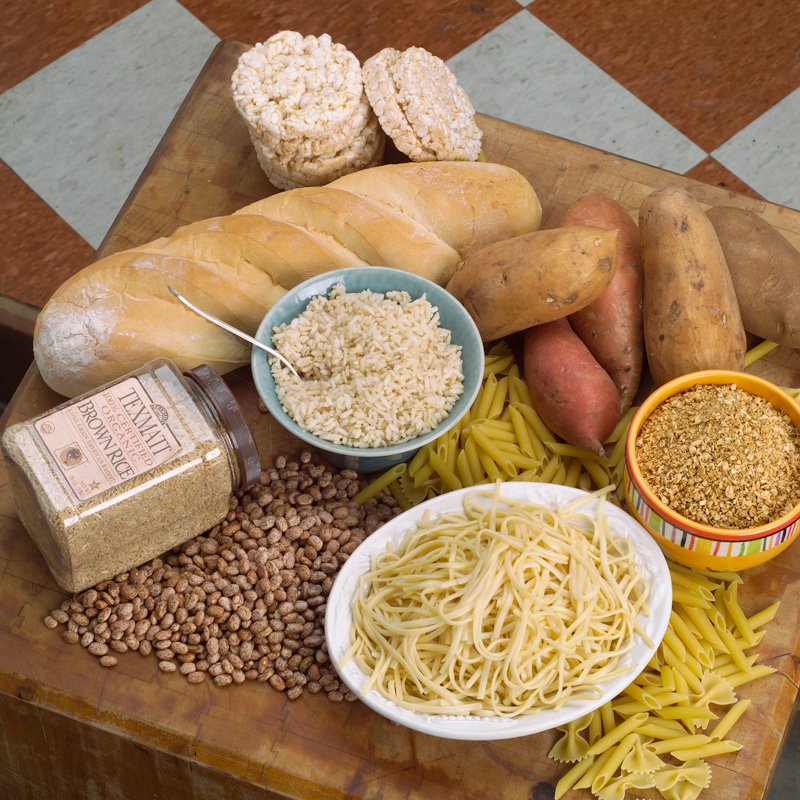
So as a rule at the start of your diet, keep your last two meals of the day protein and vegetables.
 Click Image To Enlarge.
 The Last 2 Meals Of Your Diet Should Contain
As Minimal Carbohydrates As Possible.
7. Increase Your Consumption Of Water
Water is the one of the most important nutrients for a hard training bodybuilder. The human body is made up of roughly 70% water, which means that you must consume a large amount of water on a daily basis to keep your body adequately hydrated.
A few more important benefits of consuming large amounts of water on a daily basis are that water keeps your stomach full longer in between meals, especially if you are consuming over a gallon each day.
Another important benefit of consuming large amounts of water is that if the water you consume is ice cold it will cause your body to burn more calories due to the fact that your body has to work harder to bring the cold water down to body temperature, rather than if it was consumed at room temperature.
8. Bring Your Carbohydrates Way Down For 3 Days When Fat Loss Slows Down
Every bodybuilder who embarks on a very strict diet will reach the point where they're body stops responding to their current diet and training program.
Nutritional tip #9 states that when fat loss begins to slow down, bring your carbohydrate intake very low for three days, before bringing it back up to your normal intake.
The reasoning behind this is that it takes approximately three days to bring your body into ketosis, so by doing this you will bring your body into ketosis (where your body is burning body fat for fuel) for a very brief period of time to shock your body to lose more body fat.
Energy from fat is mobilized to the liver and used to synthesize glucose (a process called gluconeogenesis) from lactic acid, glucogenic amino acids, and glycerol carbon substrates. Ketones are also produced during this fasting state, and are burned throughout the body.
What is Ketosis?
Ketosis is a stage in metabolism occurring when the liver has been depleted of stored glycogen and switches to a fasting mode such as occurs during sleep, during dieting, and during the body's response to starvation.
Energy from fat is mobilized to the liver and used to synthesize glucose (a process called gluconeogenesis) from lactic acid, glucogenic amino acids, and glycerol carbon substrates. Ketones are also produced during this fasting state, and are burned throughout the body.
9. Take One Meal Every Other Week To Eat What You Have Been Craving The Most
I feel that this last nutritional tip should only be used when you have already brought your body fat down to the 8-10% range and you have been dieting for at least 4-8 weeks.
Some people who have very fast metabolisms can use cheating once a week in their program with no negative effects, but most people cannot use this technique and their cheating should be limited to one meal every 2 weeks to 1 month.
I feel that this technique allows you to keep your sanity while you are dieting, and also kick starts your metabolism after dieting real strict for the past 4-8 weeks.
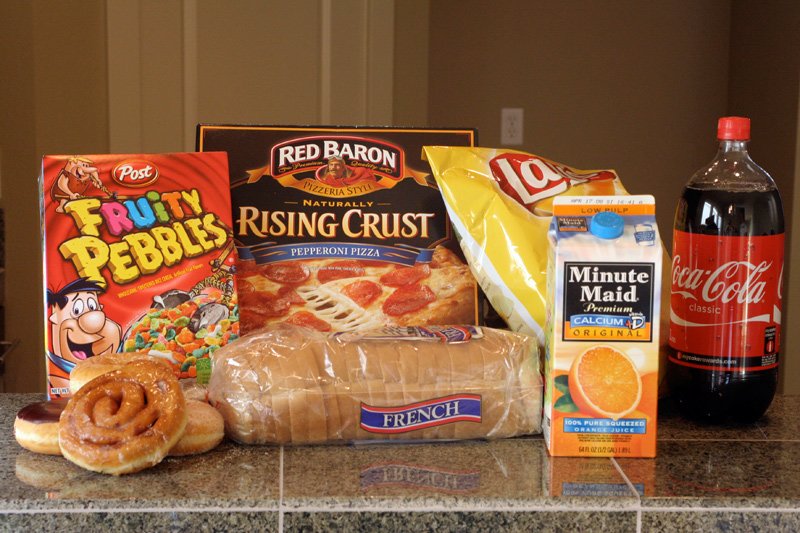
The one concern is that it is only one meal, and not a whole day. This means that you must keep your portions under control. One large pizza is reasonable, 5 large pizzas is not!
 Click Image To Enlarge.
 You Must Keep Your Portions Under Control.
Conclusion
By using these nutritional tips I feel that you can design a very effective fat burning diet that will enable you to achieve your goals of single digit body fat.
With these tips you will be able to plan a base diet that you can use for the first 4-6 weeks of your diet before your fat loss slows down. The next step in your diet would be to employ the zigzag technique with your carbohydrates for the next 4-6 weeks of your diet.
At this point, if your fat loss slows down yet again, the last step would be to use tips 9 and 10 to achieve those very low single digit body fat levels.