
Ask The Macro Manager: Does Fiber Count In Calories?

Fiber does plenty of good things in your body, but its place in caloric calculations has yet to be nailed down. Get some soluble knowledge about this important dietary component!
Q
I have a question concerning dietary fiber. Some people recommend counting it as calories, while others recommend ignoring it and recalculating calories accordingly. What should I do?
Fiber can be a little confusing. For a while, nutritional labels split this category into "soluble" and "insoluble" fiber, but those definitions didn't capture the function the fiber served. So the USDA's newer fiber definitions got rid of those classifications, opting instead for "dietary fiber" and "functional fiber." These two are defined by the USDA's Dietary Reference Intakes as:
Dietary Fiber: non-digestible carbohydrates and lignin that are intrinsic and intact in plants
Functional Fiber: isolated, non-digestible carbohydrates that have beneficial physiological effects in humans
Unfortunately, food labels don't distinguish these subtypes and neither classification gives you any idea of the calorie content of the fiber. So aside from the sentiment that we should be eating more of both, the categories are of little use to most people.
Fiber Has Calories?
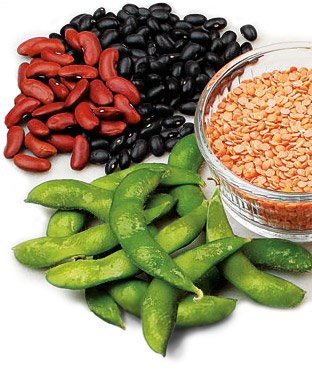
Some people consider fiber calorie-free, assuming that it just provides bulk to the diet, but what many people don't realize is that bacteria in your gut feed on some types of fiber. They chow down on your dietary bulk and it results in the production of short-chain fatty acids, which your body can use. So from that point of view, fiber would count as calories.
However, not all the fiber that you eat meets this fate, and there's no clear consensus on fiber's caloric contribution. On one hand, the FDA estimates the amount of caloric contribution due to bacterial degradation at about 1.5 calories per gram of fiber. However, different countries and institutions have divergent ideas of what fiber is, let alone how to calculate it in any given meal. The FDA's estimate is just that, an estimate.
The Trap of the Numbers Game
Counting just some of the fiber in your diet is looking tricky. You have two other options: Count all if it, or none of it. Which should you choose?
With any sort of change to your diet and supplement regimen, it is important to weigh the pros and cons. One con that many people forget is time and mental effort. We often think about the financial cost of a supplement or potential negative physiological side effects, but rarely do we think of the time and mental effort that comes with tinkering or (I use this term with suspicion) upgrading a program.
| Food Group | Serving | Fiber (g/serving) |
|---|---|---|
| Fruit | 0.5 cup | 1.1g |
| Dark-green Veggies | 0.5 cup | 6.4g |
| Cooked Dry Beans | 0.5 cup | 8.0g |
| Starchy Veggies | 0.5 cup | 1.7g |
| Whole Grains | 28g (1oz) | 2.4g |
| Meat | 28g (1oz) | 0.1g |
To be honest, there is little upside in taking the time to subtract the fiber content from all of your foods and then recalculate the caloric content. Remember: These are not perfect processes, and most people dramatically overestimate on one end or the other. We often obsess over the "calories in" portion of the equation, but rarely are we able to accurately measure the "calories out" portion of the equation. I was once taught in high school physics that you are only as accurate as your least accurate measure.
My advice would be: Don't worry about improving the accuracy of your calorie-counting by being technically correct about the contribution of fiber. It is wasted effort. If there is a caloric difference due to fiber, it's small enough that it's probably easily obliterated if you walk to work or take your dog for a stroll after dinner.
Count your fats, proteins, and total carbs. Monitor the percent contribution to total calories of each of those in addition to your total caloric intake. These are the most impactful macronutrient numbers, and they're ones you can manage.