
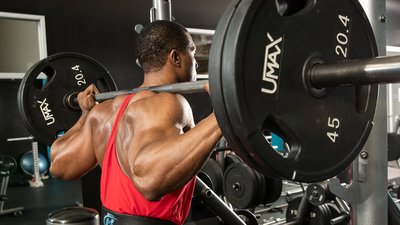
You'd be hard-pressed to find a bodybuilder, past or present, who's managed to positively alter his physique from his pro debut to five years later more dramatically than Phil Heath, your new Mr. Olympia. At every contest in his career, Heath has managed to show judges and fans alike something new, whether it's turning formerly weak body parts into strengths or making already standout body parts that much better. We all know where Heath managed this transformation from a youngster with untapped potential to undisputed best in the world: the gym. But exactly how he did it is something only he can comment on. In this exclusive FLEX interview, less than two weeks after his Olympia win and fresh off his victory at the Sheru Classic in India, we sought to find the answer to the one question on every bodybuilder's mind: How did he do it?
Lesser mirrors have shattered under the intensity of Phil's gaze.
Q. Your physique has improved dramatically from when you first turned pro. What are you doing now in your training that you weren't doing back then?
Phil Heath: Nothing. Everything's really stayed the same. The only thing that's really changed is the FST-7 protocol. Other than that, I've really been doing the same things all along.
What people need to realize is that I've been bodybuilding for only nine years. My pro career got started 2 1/2 years after I picked up a weight and decided to be a bodybuilder. People wonder what my secret is. There's really no secret. It's just that you guys have been watching my progression from the very minute I started bodybuilding.
So what you're saying is that a lot of your improvements can be attributed to muscle maturity?
Yeah, and I also probably got a bigger head start than most people because I was an athlete in college. I was Division I, and I already had a high fitness level. The person that just decides to start weight training out of the blue was probably never a star athlete. I don't want to sound like I'm elite, but usually the guys at this level were athletes from the start. That said, muscle maturity is only going to come from how many hours I spend in the gym. I still have to put in the hard work.
What would be the one key lesson you've learned in the gym since turning pro?
You don't need to reinvent the wheel. You don't have to come up with any exotic movements if what you're currently doing is working. If you've noticed that dumbbells work better than barbells for you on the bench press, then why change that? Maybe you should change the order in which you do the exercises for variety, so I've done that. But as far as what I've done in the past few years, it's just learning how not to overtrain, learning how to listen to your body, and realize that, yeah, if I go in the gym and something doesn't feel right, then I may drop that whole exercise and go on to something else. As far as switching my whole theory on training, no.
How does your training differ from off-season to pre-contest?
The past fews years, I've decided that going into a contest I should be able to use the same amount of weight as I was using in the off-season. Early in my career, I didn't have the strength required to keep up that mass going into a contest. now, I'm making sure that the weights being lifted are heavy all the time. Saying, "Oh, I'm just going to focus on higher reps and shred up"—that's a fallacy. Before I started working with Hany, I believed that. But not anymore. I realize that a strong muscle is always a bigger one and that you should be able to lift heavy throughout your contest prep until maybe the last 10 days. Frankly, I lifted heavy up until three days out from the Olympia. People choose to back off on their training approaching a show, but I don't believe in that.
Other than FST-7, what intensity techniques do you use in your training? Do supersets, drop-sets, rest-pause, or similar techniques find their way into your workouts?
No, not really. [Laughs] The only thing I do is maybe a reverse dropset every now and then with lateral raises. But that's about it.
You typically train each body part twice a week, with a few exceptions. Why do you think twice is better than once a week?
Look at Ronnie Coleman. He hit everything twice. I believe that if you're able to eat as much as a bodybuilder is supposed to, you're probably not going to overtrain. And more important, I want to make sure that weaker areas are getting enough volume throughout the week to where they stay stimulated and full. Your strong points don't necessarily need as much attention. So whatever you're trying to bring up, I don't see why you shouldn't train that twice a week if you have the time to do it. And obviously, that's going to depend on a person's ability to recover. I'm probably going to be an exception because my career is bodybuilding, so I've got every resource available to me—going to the chiropractor and all the extra therapy stuff I get done, along with all the food I eat, has enabled me to recover fast enough. The average person may not be able to afford that lifestyle. So if you're sore, yeah, maybe you shouldn't be doubling up as much. But if your body can hold up to it, then by all means, go for it.
What's your philosophy on rep ranges? You seem to reside in the 8-12 range for the most part.
Yeah, that's most comfortable for me. Anything above 12 reps, I realize that I should probably go heavier. And anything below eight, I feel like I'm just focusing on strength. Sometimes in the off-season I'll go five to seven reps just to see how strong I am on a certain body part, but since I train by myself I usually stick to 8-12.
How about your philosophy on volume. Is there a number of sets you try to hit for each body part?
You know, I'm chasing the pump, I'm chasing the look of that roundness in the muscle. There are days when I don't count sets at all, but then there are some days when I have to realize that I don't want to overwork because I still have an hour of cardio ahead of me or another training session later that day. I do three to five exercises per body part, and on that last exercise I'm doing 7's. I'm not necessarily saying that I have to keep some reserves in the tank, but I've got to be cognizant of what's really necessary, of how many sets I actually need. It just comes with time. You know your own body. You know when to put the pedal to the floor and when to back off a little. You can't go supercrazy all year; you're going to really get yourself burned out, especially if you're not able to recover. A lot of guys think that you have to hammer it out at the gym every single workout. Ideally, you want to do that. But you have to keep in mind that your body may not be recovering as fast, and you might actually be doing more harm than good. Also, if you start going too crazy and are not focusing on technique at all and are worried only about the poundage going up, that's when you can get into trouble.
Do you have a specific time limit for training sessions?
I usually allot two hours for a workout just in case something comes up. There will be days when I do shoulders for 60 minutes and days when I do shoulders for almost 100 minutes. But usually [I train for] about 70-90 minutes max, unless I have to do quads, calves, and hamstrings in the same workout, then it will definitely take two hours.
It just depends on how I feel. If you don't feel like you're tired, I don't see why you should go home. If you feel like you can do a couple of more sets, then maybe those two sets will push you to the next level. It's like with a basketball player. Do you go home after shooting 100 free throws? Let's say you made 90 out of 100 and you feel like shooting 10 more. Why not shoot 10 more?
Your typical training pace: Are you taking short rest periods and moving quickly or taking your time?
It just depends on the actual workout itself. If it's arm day, I should get done with that in 30 minutes because I'm not going to be sitting around taking long rest periods. Whereas with legs or back I might take a little bit longer with the heavier lifts. I'm trying to make sure that in the workouts where I'm going extremely heavy—like if I know I'm going to be doing a slightly higher-rep set of squats with 300 or 400 pounds—I'm going to make sure I have enough rest time between sets that I can actually get those weights for those reps. But if the weight isn't that heavy, I don't really need the extra rest.
And especially when I'm doing 7's, I'm maybe going to rest two to three minutes at the most [earlier in the workout], and then once I hit those 7's at the end, I'm resting only 30-40 seconds. I believe you need to take enough rest to lift heavy weights, but if it takes you 5-10 minutes to rest and get psyched up for a big lift, I don't know if that's going to be good. Because now you're not going to be in a bodybuilding zone; you're going into more of a strongman or powerlifting mode, where it's just about strength and you're not getting any cardio or the same pump. So anywhere from one to three minutes' rest is usually good for me.
It sounds like you train pretty instinctively. Just how instinctive of a trainer are you?
Yeah, I'm pretty instinctive. Let's say I'm doing front squats and something just isn't feeling right with my technique, then maybe I'll go to a machine instead or just switch to back squats. It's usually based around machine work. If I'm doing a certain leg press and I don't like the way it feels, then instead of scratching leg press off completely, why not change it to vertical leg press? Most gyms have more than one type of equipment. So you find out what works best for you, and that may change from day to day. But that's where you have to be willing to adapt.
Where do you go from here in terms of your training? Will you still be looking to tweak parts of your workout, or will you follow the exact same road map you've used up to now?
I don't know if there are things I want to tweak. What I've done in the past is take things that have worked for each prep and made notes on them. Like when I made gains in my back in 2008 for the Arnold Classic, I go back and look at those notes and say, "OK, this is what I did to yield those results."
For the 2010 Olympia, instead of training arms every week I actually didn't train them until the last month. That helped yield a better illusion because it didn't take away the size that I had acquired in my delts and chest. I take what I learned from each prep, apply those notes to the next, and go from there.
What's the goal for the 2012 Olympia?
Just to get bigger and better. I try to make changes in my physique every year, and I've been able to do that. I think the fans are expecting that. I've gotten everybody excited so that they don't know what to expect but improvement—but they don't know where. It's like, you know, a new model of a vehicle is coming out, and you're very excited. You don't know what it's going to look like, but you have a good idea because of the trend the company has set. So I feel like I'm that same company.
Everyone knows I'm going to come in shape, but they don't know exactly how big I'm going to be or where I'm going to improve. So my job is just to make sure that nothing changes to the negative—that my proportions stay the same, but I just get better. And just try to shock the world again.
Heath's Training Split
- Sunday: Quads Hamstrings, and Calves
- Monday: Chest
- Tuesday: Back
- Wednesday: Quads (AM), Hamstrings, and Calves (PM)
- Thursday: Shoulders
- Friday: Back
- Saturday: Chest and Arms

BodyFit
$6.99/month- 2,500+ expert-created single workouts
- 3,500+ how-to exercise videos
- Detailed workout instruction
- Step-by-step workout tips
- Training at gym or at home
- Access to Workout Plans
- Access to Bodyfit App
- Store Discounts
Already have a Bodybuilding.com account with BodyFit? Sign In

What comes with BodyFit?
- Instructional Videos
Don't risk doing a workout improperly! Avoid injury and keep your form in check with in-depth instructional videos.
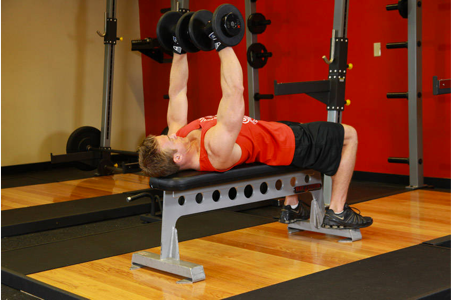
- How-to Images
View our enormous library of workout photos and see exactly how each exercise should be done before you give it a shot.
- Step-by-Step Instructions
Quickly read through our step-by-step directions to ensure you're doing each workout correctly the first time, every time.
BodyFit
$6.99/month- 2,500+ expert-created single workouts
- 3,500+ how-to exercise videos
- Detailed workout instruction
- Step-by-step workout tips
- Training at gym or at home
- Access to Workout Plans
- Access to Bodyfit App
- Store Discounts
Already have a Bodybuilding.com account with BodyFit? Sign In
What comes with BodyFit?
- Instructional Videos
Don't risk doing a workout improperly! Avoid injury and keep your form in check with in-depth instructional videos.
- How-to Images
View our enormous library of workout photos and see exactly how each exercise should be done before you give it a shot.
- Step-by-Step Instructions
Quickly read through our step-by-step directions to ensure you're doing each workout correctly the first time, every time.
BodyFit
$6.99/month- 2,500+ expert-created single workouts
- 3,500+ how-to exercise videos
- Detailed workout instruction
- Step-by-step workout tips
- Training at gym or at home
- Access to Workout Plans
- Access to Bodyfit App
- Store Discounts
Already have a Bodybuilding.com account with BodyFit? Sign In
What comes with BodyFit?
- Instructional Videos
Don't risk doing a workout improperly! Avoid injury and keep your form in check with in-depth instructional videos.
- How-to Images
View our enormous library of workout photos and see exactly how each exercise should be done before you give it a shot.
- Step-by-Step Instructions
Quickly read through our step-by-step directions to ensure you're doing each workout correctly the first time, every time.
BodyFit
$6.99/month- 2,500+ expert-created single workouts
- 3,500+ how-to exercise videos
- Detailed workout instruction
- Step-by-step workout tips
- Training at gym or at home
- Access to Workout Plans
- Access to Bodyfit App
- Store Discounts
Already have a Bodybuilding.com account with BodyFit? Sign In
What comes with BodyFit?
- Instructional Videos
Don't risk doing a workout improperly! Avoid injury and keep your form in check with in-depth instructional videos.
- How-to Images
View our enormous library of workout photos and see exactly how each exercise should be done before you give it a shot.
- Step-by-Step Instructions
Quickly read through our step-by-step directions to ensure you're doing each workout correctly the first time, every time.
BodyFit
$6.99/month- 2,500+ expert-created single workouts
- 3,500+ how-to exercise videos
- Detailed workout instruction
- Step-by-step workout tips
- Training at gym or at home
- Access to Workout Plans
- Access to Bodyfit App
- Store Discounts
Already have a Bodybuilding.com account with BodyFit? Sign In
What comes with BodyFit?
- Instructional Videos
Don't risk doing a workout improperly! Avoid injury and keep your form in check with in-depth instructional videos.
- How-to Images
View our enormous library of workout photos and see exactly how each exercise should be done before you give it a shot.
- Step-by-Step Instructions
Quickly read through our step-by-step directions to ensure you're doing each workout correctly the first time, every time.
BodyFit
$6.99/month- 2,500+ expert-created single workouts
- 3,500+ how-to exercise videos
- Detailed workout instruction
- Step-by-step workout tips
- Training at gym or at home
- Access to Workout Plans
- Access to Bodyfit App
- Store Discounts
Already have a Bodybuilding.com account with BodyFit? Sign In
What comes with BodyFit?
- Instructional Videos
Don't risk doing a workout improperly! Avoid injury and keep your form in check with in-depth instructional videos.
- How-to Images
View our enormous library of workout photos and see exactly how each exercise should be done before you give it a shot.
- Step-by-Step Instructions
Quickly read through our step-by-step directions to ensure you're doing each workout correctly the first time, every time.