Sometimes the best exercise is the one you're not doing. And why, exactly, is such a great move not part of your training? Probably one of two reasons: a) you don't know it exists, or b) it's so challenging that you'd rather skip it and do something easier. The following nine exercises are ones we feel every physique-conscious guy should practice. Some you've heard of but are ignoring, and others are so unique we bet they've never crossed your mind. Either way, it's time to add these moves to your repertoire.
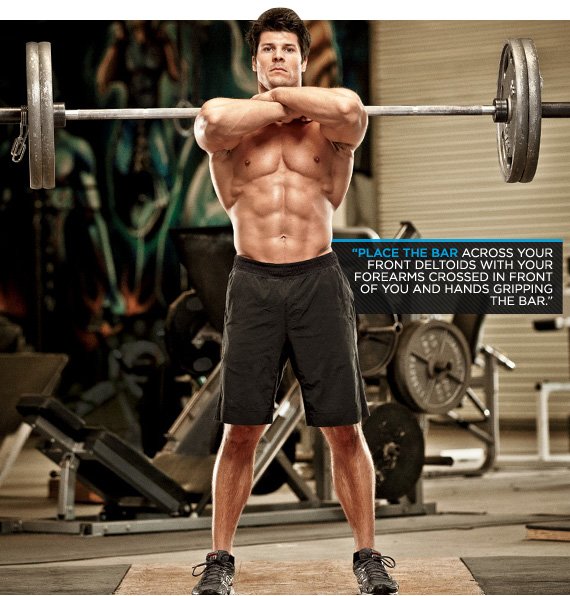
1. Front Squat
"Front squats have really helped my quad development, especially when I was preparing for the Ironman," says Phil Heath. "Most people don't do front squats, because they're uncomfortable and there are easier alternatives, but to really add size to the quads, they're a must."
{{caption}}
2. Crush-Grip Dumbbell Bench Press
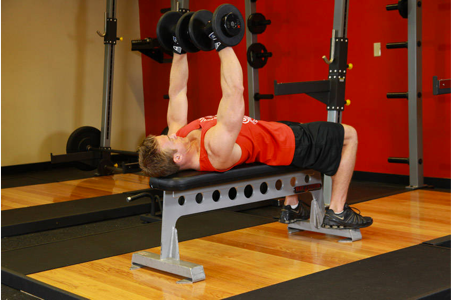
"'Crushing' the dumbbells together while slowing the tempo increases the tension across the chest, shoulders, triceps, and upper back," says Jim Smith, C.S.C.S. (owner of Diesel Strength & Conditioning (dieselsc.com), member of the livestrong.com advisory board) "More time under tension will immediately increase the muscle-building and natural hormone-release effect."
How To Do It
Sit on the end of a flat bench holding a pair of dumbbells. Lie back and hold the dumbbells over your chest, arms extended, with the insides of the dumbbells touching. As you lower the weights toward your chest, press them together as hard as possible. When they reach your chest, lift the weights back up, still pressing them together. Keep the rep speed slow.
3. Arched Back Pull-Up
Why You Should Be Doing It
"This exercise involves both a vertical and horizontal pull from the upper body—most pulling moves involve only one or the other," Martin Rooney (CEO of trainingforwarriors.com and author of Warrior Cardio: The Revolutionary Metabolic Training System for Burning Fat, Building Muscle, and Getting Fit) says. "It maximizes core and abdominal recruitment. So, the arched-back pull-up hits about as much total muscle as any lift."
4. Wide-Grip Upright Row
Why You Should Be Doing It
"Wide-grip upright rows can be a great deltoid builder if used correctly," Justin Grinnell, C.S.C.S. (powerlifter and co-owner of State of Fitness in East Lansing, MI (mystateoffitness.com)) says. "Doing them with the wider grip will take the traps out of the movement," he says, "and you'll hit the delts better than you would if you were using a narrow grip." But if you have shoulder impingement issues, proceed with caution.
How To Do It
Stand holding a barbell in front of your thighs with your arms fully extended and your hands outside shoulder width. With your knees slightly bent, pull the bar straight up your body, bending your elbows, until it reaches chest height. As you lift the bar, don't let your shoulders shrug up; keep them depressed to maintain tension in the delts. Hold the contraction at the top for a count, then lower back down.
5. Overhead Squat
Why You Should Be Doing It
"The overhead squat is not an exercise you should be skipping," Brian Strump, D.C. (owner of CrossFit Steele Creek and Premier Health & Rehab Solutions in Charlotte, NC (crossfitsteelecreek.com)) says. "It integrates functional strength, flexibility, and core and shoulder stability. With so much going on, the overhead squat elicits a hormonal response that builds muscle and burns fat."
How To Do It
Grasp a relatively light Olympic barbell in a power rack with a very wide, overhand grip (aka snatch grip), with your feet shoulder-width apart, your back flat, and your chest out.
Push-press the bar overhead so you're in standing position, arms fully extended, shoulder blades squeezed together. The bar should be slightly behind your head, not directly over or in front of it.
Maintaining this bar position, slowly squat down as if sitting on a stool, keeping your chest out, until your thighs reach parallel with the floor. Press through your heels to stand back up to the start position.
6. Biceps Ladder
Why You Should Be Doing It
On top of the crazy pump you'll get, the ladder has a host of other benefits."The biceps ladder is a great mass builder," says Jim Stoppani, Ph.D. (senior science editor and host of M&F Raw! at muscleandfitness.com) "First, it allows you to go heavier than you could with standard curls (using your own body weight). Second, you're focusing on the negative of each rep, which will further stimulate growth. And finally, the 'ladder' aspect of the lift functions like a dropset, increasing your total number of reps to maximize blood flow to the biceps. One trip up the ladder and your biceps will be screaming."
How To Do It
Set a bar in a power rack just above arm's length from the floor. Grab the bar with a shoulder-width, underhand grip with your body hanging underneath it just above the floor, in a straight line from head to toe. Starting with your arms fully extended, curl yourself up as high as possible, bringing your forehead to the bar. Do as many reps as you can, then raise the bar one setting and repeat. Keep raising the bar until you can't perform any more reps.
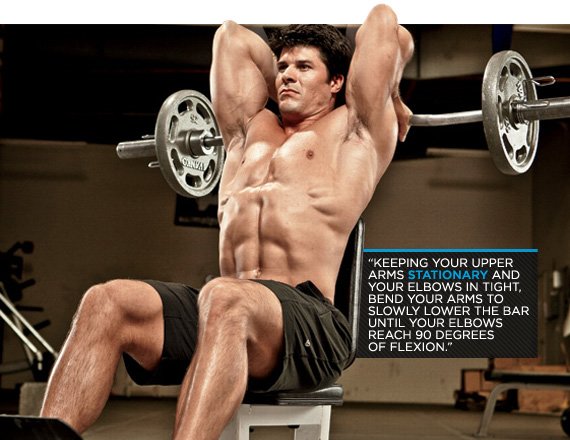
7. Seated Reverse-Grip Overhead Triceps Extension
Why You Should Be Doing It
"The long head of the triceps tends to get neglected," Ray Wetterlund III, C.S.C.S. (USA weightlifting coach and celebrity personal trainer in La Jolla, CA (rw3fitness.com)) says, "primarily because it responds best to heavy loads and overhead movements, which people often leave out of their arm routines. This is why the seated overhead extension is my go-to move for bringing up the long head."
8. Seated Rotation
Why You Should Be Doing It
"Life and sport happen in the transverse plane, like when you put on your seatbelt or swing a bat," says celebrity trainer Gunnar Peterson, C.S.C.S. (trainer to celebs such as Sylvester Stallon, Bruce Willis, and Tom Brady) "You need to train that way in the gym. Like the commercial says, 'Keep crunching,' but add in some side-to-side rotation to do everything better."
How To Do It
Sit on the floor holding a weight or medicine ball with both hands in front of you, elbows slightly bent. Start with your knees bent 90 degrees and feet on the floor (advanced trainees can raise their feet off the floor). Rotate the weight from one hip to the other in a continuous side-to-side motion, following the weight with your eyes and allowing your shoulders to rotate. Try to keep your legs from swaying side to side during the movement. It's not just difficult in terms of coordination, but it will also give your stabilizing muscles a ton of extra work.
9. Good Morning
Why You Should Be Doing It
"Good mornings are a really effective exercise that most people don't do," Guillermo Escalante, C.S.C.S. (bodybuilder and co-owner of SportsPros Personal Training/Physical Therapy Center in Claremont, CA (4sportspros.com)) says. "They target the larger posterior chain muscles (glutes, hamstrings, and paraspinals), which can help you improve your strength in lifts like the deadlift and squat, as well as decrease your risk of lower-back injury."
How To Do It
Stand with feet hip- to shoulder-width apart, holding a relatively light barbell across your upper traps. Keeping your back flat and knees slightly bent, slowly bend your hips back to lower your torso toward the floor. When your torso reaches parallel with the floor, reverse the motion to return to the standing position.
Just Do It
Want to get after these nine great exercises all at once? Try this upper-body/lower-body two-day split for a full-body blitz your muscles will never see coming.

BodyFit
$6.99/month- 2,500+ expert-created single workouts
- 3,500+ how-to exercise videos
- Detailed workout instruction
- Step-by-step workout tips
- Training at gym or at home
- Access to Workout Plans
- Access to Bodyfit App
- Store Discounts
Already have a Bodybuilding.com account with BodyFit? Sign In

What comes with BodyFit?
- Instructional Videos
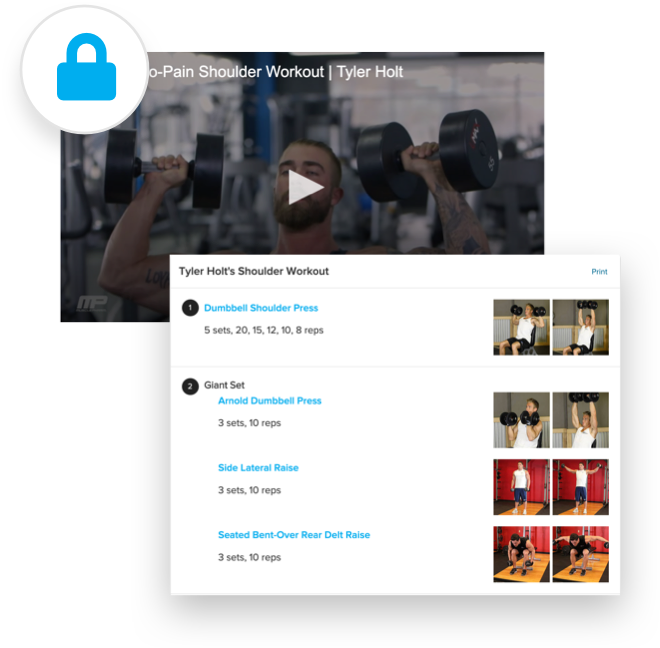
Don't risk doing a workout improperly! Avoid injury and keep your form in check with in-depth instructional videos.
- How-to Images
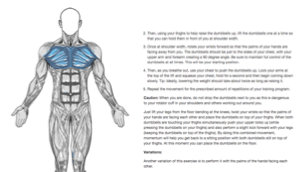
View our enormous library of workout photos and see exactly how each exercise should be done before you give it a shot.
- Step-by-Step Instructions
Quickly read through our step-by-step directions to ensure you're doing each workout correctly the first time, every time.
BodyFit
$6.99/month- 2,500+ expert-created single workouts
- 3,500+ how-to exercise videos
- Detailed workout instruction
- Step-by-step workout tips
- Training at gym or at home
- Access to Workout Plans
- Access to Bodyfit App
- Store Discounts
Already have a Bodybuilding.com account with BodyFit? Sign In
What comes with BodyFit?
- Instructional Videos
Don't risk doing a workout improperly! Avoid injury and keep your form in check with in-depth instructional videos.
- How-to Images
View our enormous library of workout photos and see exactly how each exercise should be done before you give it a shot.
- Step-by-Step Instructions
Quickly read through our step-by-step directions to ensure you're doing each workout correctly the first time, every time.