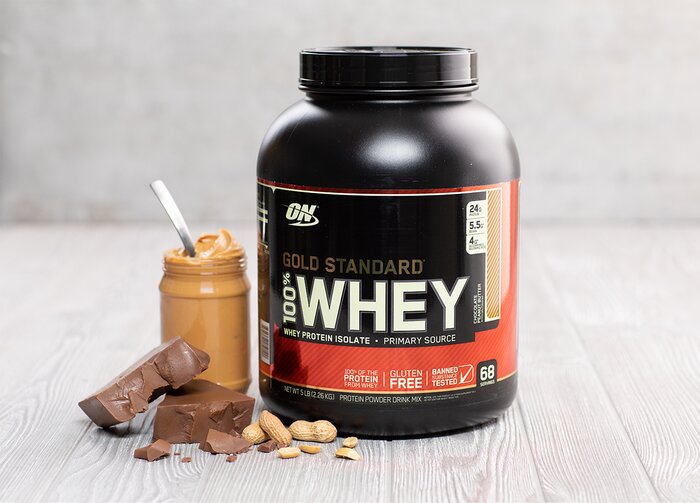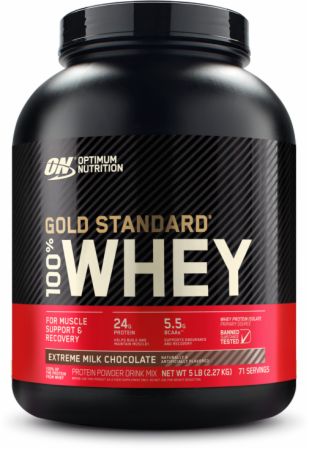
|
|
![]() By: Clayton South
Manufacturer: Optimum Nutrition
Value is the sum statement about a products worth. What a product is able to do for you or not, are things considered. Then, one ponders the cost of the product based on having weighed the "pros and cons." Value is the expression of the idea "Am I getting my moneys worth?" Ultimately, all things considered, the final factor of cost analysis is determinative. Buying a protein is like buying a car: Different options for different price ranges. Concluding review, I shall make a determination on the value of this product for the bodybuilder.
The quality of a protein product is determined by the satisfaction of several requirements: Yield, Functionality, Amino Acid Profile (BCAA - EAA ratio), WPI:WPC Ratio, Filler Percentage, Taste, Ease of use, Blendability, Digestibility, Functionality and results.
For example, say we had a protein powder that had a serving size of 100 grams total mass. Lets also assume that in that 100gm serving size 50gms was protein. This would be a yield of 50%. Therefore, when purchasing the product, you would be paying for 50% non-protein! Not a good deal. With 100% Whey the results are WHEY better! Observe the calculation:
29.4gm serving size x 100 = 75% / 22 gm protein per serving
Therefore, 75% of total mass is protein. This is an excellent yield, depending on the type of Whey protein fraction the product is predominantly composed of. This of course means that 25% of the total mass is not protein. What could it be? A percentage may be the…
BCAA stands for Branch Chain Amino Acids, and EAA stands for Essential Amino Acids. Both are important to consider when making a purchase. Branch Chain Amino Acids act as nitrogen carriers, which assist muscles in synthesizing other amino acids required for anabolic effect [Transamination]. They also stimulate production of insulin which allows circulating blood sugar to be taken up by the muscle cells and used as an energy source. Further, during a fat-reduction cycle, Amino Acids function in an anti-catabolic manner, this helping the body to spare lean muscle tissue. Essential Amino Acids include Tryptophan, Lysine, Methionine, Phenylalanine, Threonine, Valine, Isoleucine and Leucine. Amino Acids will determine how "complete" or "incomplete" a protein is, because proteins are made of a combination of 20 Amino Acids. Consider the Amino Acids present in 100% Whey from Optimum Nutrition and their uses in the body:
As you can see, Optimum 100% Whey has all 20 amino acids needed for complete protein formation, including the 8 essential amino acids needed by your body! The BCAA to EAA ratio is excellent. Consider the following calculation:
The next thing to consider when buying a Whey protein supplement is…
These types of protein are distinguished by their differing molecule size, and subsequent digestibility in the gut. The smaller the molecule size, the easier the protein is digested. Also, WPI has a higher BV (Biological Value) rating than WPC. This would lead some persons [and supplement companies] to conclude that WPC is "filler" or "inferior" because its biological value is lower than WPI. If that premise is logical, then anything below WPC must be REALLY inferior...must be, by logical extension really [to be scientific like the supplement companies] "really, really junky." These "junky" and "inferior" proteins would include egg protein, beef, chicken, peanut butter, pork, and other viable protein sources. Yet, we know that these foods work wonders for adding mass, so how can the idea that WPC is inferior be correct? It is not. As Feliciano (2000) pointed out, a diet high in protein, regardless of the source, will yield similar results. Having said that, when we examine Optimum Nutrition's 100% Whey protein we find a combination of all the proteins listed above. This means that Optimum has "covered all the bases" when it comes to Whey protein! Because your body desires homeostasis and strives toward those ends, it is good to have variations, even among like proteins. Although WPC is the primary ingredient on 100% Whey from Optimum, WPI is the second ingredient, and given the products high yield, a statistically significant percentage of the product is WPI. The general rule is: The higher the yield, the greater concentration of WPI.
It is not possible to have 100% WPI; that is a serving of protein with a yield of 100% where the serving size and the protein yielded are identical. Therefore, most filler is comprised of ash, moisture, etc. Filler can best be thought of as: Any substance that is non-protein or non-amino acid. Therefore, ingredients like cocoa, used in the flavoring process, would fall into this category. So would any fats or carbs present in the mixture. By its very presence filler must comprise even a small amount of the total mass of the product. The only products in Optimum Whey that qualify as "filler" are: Cocoa, Artificial Flavor, Lecithin and Acesulfame Potassium. Given the high yield of the product and its excellent BCAA to EAA ratio, it is mathematically evident that filler constitutes a negligible percentage of the products overall mass.
Often times, when venturing into stores, one will see a massive bucket of Whey protein that says something to the effect of "mouth watering taste!" However, after buying it and using the product, the only question is: Great taste compared to WHAT? Sometimes the product in question is so inedible that it tastes expired, or worse, contaminated. 100% Whey is the best tasting chocolate protein I have ever used. It is not chalky, and it is very appetizing when mixed with a beverage like 1% or 0% milk, or water. A great recipe idea is mixing skim milk, ice cubes and two servings in your blender. If you like, you could also add some fruit like peaches or strawberry's. Low calories do not necessarily mean low taste!
A products usefulness is the result of one thing: Its efficacy with respect to its function. In other words, how well does the product work in response to the specific function for which it was designed or is now being used? This is the ultimate question, and its answer, along with costs consideration, are the determinative elements in the decision making process. This question, naturally, is also subdivided into categories upon which it is dependent: Workout regimen and dietary habits. Simply even if a product has amazing potential it will not work if a) Your bodybuilding program sucks or b) Your diet regimen suck. Both must be optimized first before the efficacy of a product may be measured. A baseline must be established before deviation may be attributed to the introduction of a supplement. In The Ultimate Mass Building Workout I outlined a workout regimen that focused on heavy lifting. I also alluded to eating habits. In Adding Mass in the Offseason: Protein I discussed in detail the importance of protein supplementation in hard training athletes. I discussed the "how and whys" of dietary discipline. While using the Ultimate Mass Building Workout and the principles found in Adding Mass in the Offseason: Protein I supplemented with 100% Whey from Optimum.
During this time my bodyfat percentage remained constant with little variation, my caloric intake was increased in response to an increased workload, and my sleep length was increased. Having increased calories, workload and sleep during other mass building phases, and noticing similar results, the additional mass may be correlated to my use of 100% Whey. During the leaning-up period, 100% Whey is also very useful. Its high concentration of Amino acids in general, and Glutamine in particular, are key to preventing symptoms associated with overtraining. For every serving of 100% Whey there are 100 calories, 2 grams of fat, 22 grams of protein, and only 2 grams of carbohydrate. Thus, its low caloric content is ideal for a calorie-reduced diet. Accordingly, I use 100% Whey as my protein source year round. Its high concentration of Glutamine per serving [2.4 grams] is very beneficial. If your dietary requirements dictate 40-45 grams of protein per meal, two scoops of 100% Whey will deliver, as well as giving you 5 grams of peptide-bonded glutamine! Finally, the cost analysis is telling. For 160 servings the cost at Bodybuilding.com is a mere $79.99! That's an AMAZING price! Click here to get some!
Conclustion It is clear to see why Optimum Nutrition is a trusted company, and also why 100% Whey is such a phenomenal seller. It works! It has an awesome yield, a good BCAA to EAA ratio; it tastes great, mixes well and delivers on its ability to help add mass. What more could someone want in a protein supplement? Oh, and its not overpriced so as to pay for a huge advertising budget. When companyX states that "we have a research budget of over $1 Million per year" and is then, on top of that amount, able to pay for an advertising budget including print and television, the question must be: Where is the money coming from and how are they getting it? Look in the mirror folks, because they get it from YOU! If you do not believe me, compare the price of 100% Whey to CompanyX's newest can of protein. Notice the price difference. Optimum, by contrast, keeps its advertising budget low, and allows its products to speak for themselves. Why? When you have a product that works, it does not take long for people to catch on. People are not stupid and can, usually, recognize a good deal when they see one. Remember, the best form of advertising is word of mouth [perhaps companyX should remember this instead of spending $1 Million per year because no one is talking about THEIR products!] If something works, it works, and it does not need bells and whistles and star endorsements to "convince" people. Results speak for themselves. In my view, 100% Whey is not just a good deal for a good product, but a great deal for a great product! For anyone wanting to add size, while not putting their wallet on a diet, get some 100% Whey by Optimum from Bodybuilding.com today! You will be glad you did!
Get your Optimum Nutrition 100% Whey Protein Today, Click Here! Reference List Feliciano, J. (2000). Protein Wars 2000. Flex Magazine, 162 Recommend this article to a friend by e-mail here! Visitor Reviews Of This Article!
Related Articles
|
||||||||||||||||||||||||||||||||||||||||||||||||||||||


Value:
Quality is relative concept. Speaking specifically of protein, quality is a statement of products desirability relative to other available choices. Lets face it, not all protein powders are created equal. Some protein powders, like HDT 5+1, are good only for dumping down the toilet [I can say this from personal experience with the product]. Other proteins cause gastro-Intestinal bloating, cramps, and flatulence. Yet still, some taste like plaster of Paris, are not very blendable, and are so thick that it makes you regurgitate.
With respect to taste, many protein powders are like clothing sizes. Although a manufacturer may make a "large" garment, another manufacturer will make a garment, call it large, and it will be different in size. So it is with protein powders with respect to taste.

Other protein powders that I have used [HDT 5+1] when I was short up for money were worse than my least expectations. OK, for a cheap product I was not expecting WPI that tasted like a t-bone steak. But, I was also not expecting one step up from horse trough pickings that, unfortunately, I received.
From experience, 100% is one of the most "user friendly" products I have used.
Regarding digestibility, 100% Optimum Whey is very agreeable. With some powders one feels bloated and full. Often times the powders are so crudely manufactured and the products so raw, that the gut has difficulty with absorption. Not so with 100% Whey. When mixed with a beverage, it is light, flavorful and fails to alter the consistency of its host liquid. The only noticeable change is the pleasant chocolate flavor that was absent before its introduction.
The results obtained, after factoring all other potential spuriousness [i.e. x>y & x>m; x being the spurious causal factor] were favorable. At the time I was also using