
In bodybuilding circles the importance of rest and days off between workouts is emphasized tremendously. The theory is that your muscles grow and get stronger while you are resting, not while you are working out. Thus, the key to avoiding over training and making progress in the gym is to workout hard and rest up as much as possible.
While I agree that rest and days off are important, sitting on the couch and doing nothing on your days off is not as effective as doing some active recovery workouts. What are active recovery workouts? These are workouts that you do in between your regular workouts to speed up recovery.
Yes my friend, as hard as it is to believe, sometimes the best thing that you can do for those super sore legs is to workout. Lets talk some more about active recovery and go over some ways to incorporate it into your training.

What Are Active Recovery Workouts?
Lets go over what active recovery workouts are and what the goal of active recovery training is. Active recovery workouts are low intensity and low volume workouts in which the goal is to get blood into the muscles that you worked the day before to enhance recovery. In addition, another goal with active recovery is to loosen up stiff muscles.
This comes in particularly handy after heavy squat and deadlift workouts, which tend to tighten up the lower back. Effective active recovery workouts work the entire body and should leave you feeling energized. If you feel more tired after an active recovery workouts, then you did too much work.
 |
Increasing intensity and volume are not goals for active recovery workouts. | |
|
||
In fact the intensity and volume should stay the same and only increase in direct correlation to your regular workouts. In other words, if you increase the weight on squats and deadlift, you can increase the intensity that you use on active recovery exercises for legs such as bodyweight squats and dumbbell swings.
Nevertheless, the goal is not to work harder with each active recovery workout. Save your intensity for your regular workouts.
Active Recovery Workout Examples
Next, lets go over some examples of some active recovery workouts. Active recovery workouts should be fun and you should go into them with a freestyle attitude. In other words, you do not have to be as serious and goal oriented with active recovery workouts as you are with your regular workouts.
 |
||||
|
|
|
||
|
||||

One example that you could implement for active recovery is to take a yoga class a few times a week on your days off. Just make sure that you stick to beginner and intermediate yoga classes to avoid depleting energy for your regular workouts. Yoga works the entire body and the different isometric holds will stretch out your muscles and get an ample supply of blood into the worked muscles for recovery.
Another example that is good after a hard leg workout is to go for a 30-60 minute bike ride. If weather permits then forget the gym and choose to go to an outdoor location that will allow you to get some fresh air and peace of mind. Playing team sports such as basketball, volleyball, or flag football is another way get some blood moving around the body and have a good time.
 Check Out All Our Sports Articles Here!
Remember what I said, active recovery workouts should be fun. It should not feel like another intense workout that can be both mentally and physically draining just thinking about.
Here are a few more active recovery workouts for those of you that want more organized and focused options:
Combat Conditioning
"Combat Conditioning" is a name that fitness author Matt Furey came up with many years ago for a variety of bodyweight exercises that many wrestlers and combat athletes use to get in shape. While Matt did not create these exercises, he did choose a variety of excellent bodyweight drills for his book, "Combat Conditioning" for people to use to get in to great shape.
|
||||
|
|
|
||
|
||||

Many years ago, I did a program in which I used "combat conditioning" exercises exclusively as my workouts for several months. In addition to getting much leaner and flexible, my muscular endurance went through the roof. Unfortunately, I made the mistake of doing too much of a good thing and ended up with some overuse injuries. I made the mistake of doing hundreds of reps per exercise on bodyweight exercises such as Hindu Pushups and Hindu Squats.
Both are great exercises. However, like any other exercise too many reps or too much volume is not a good thing. While I do not feel that most bodyweight exercises such as the ones done in "Combat Conditioning" are great for building size and strength, many of them are great for muscular endurance and for active recovery as well.
Here is a great active recovery program that you can use with bodyweight exercises:
- 25 -
- 25 -
Bodyweight squats(weighted squats shown)
- 10 -
- 25 -
- 15 -
Reverse Pushups
- 25 -
- 25 -
- 15 -
Sit-ups
- 10 -
Reverse Pushups
- 20 -
Bodyweight Squats
In the beginning, take a one-minute break in between each exercise. Over time, decrease the breaks to thirty seconds and eventually work up to no breaks at all. Again, this workout is done for active recovery so do not be in a hurry to make it harder. Pace yourself and focus on doing each exercise with perfect form and leaving a lot left in the bank.
Save your major withdrawals for your intense workouts. In addition, to being a great workout in between your regular workouts, this program could be done in and of itself for 1-2 weeks if you are really over trained. Take two weeks off from the gym and implement the above program for a week or two and you will be ready to go in no time. For more information on "Combat Conditioning", check out Matt Furey's website at www.mattfurey.com.
Kettlebell Training
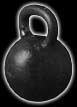 For those of you that know who I am, you know that I am a big fan of kettlebell training and that for the last few years' kettlebells have been my main source of resistance training. While I do feel that kettlebell training can be used to get bigger and stronger, a great way to benefit from kettlebell training without giving up the gym is to use kettlebell training for active recovery.
Kettlebell ballistic drills such as swings, clean and jerks, and snatches work the entire body as one unit. In addition to teaching full body synergy and coordination, these exercises get a lot of blood moving through out the body. Especially to places such as the lower back, shoulders, and legs really require help after tough workouts in the gym.
Add a few kettlebell drills that work the core and stabilize the shoulders such as windmills and Turkish Get-ups and you are all set. Here is a sample kettlebell training program for active recovery
- 1x10
- 1x5 l,r (left and right)
- 1x5 l,r
- 1x10 l,r
- 1x10 l,r
- 1x5 l,r
- 1x30 seconds
Do the above program in a circuit and take one-minute breaks in between each exercise. Pick a kettlebell that is easy for you to handle but not too easy. The above exercises will stabilize and increase flexibility in the shoulders, get blood flow in the legs and lower back, and loosen up the body and get your energy up. If you do not have kettlebells, you could of course use dumbbells for the above program.
You will not get the benefit of shoulder stability and grip work that kettlebells provide. However, it is a good way to get started and will provide some benefits. For more information on kettlebell training, visit my website at http://www.mikemahler.com.
Active Recovery Wrap-Up
- Limit Active Recovery workouts to two sessions per week
- Limit active recovery workouts to one hour or less
- Remember to keep the intensity and volume low. The goal is not to get an intense workout.
- Have fun with active recovery and use it as a day to do things that you normally do not do for training
- Pick compound exercises such as squats and pushups. Forget about bicep curls and triceps pushdowns. Those are poor choices for active recovery.
Okay, no more wasting time on the couch watching Oprah and Dr Phil. Get moving, live life, and recover from your workouts faster than ever.
About The Author
Mike Mahler is a strength coach and kettlebell instructor based in Los Angeles, CA. For more information on Mike's new DVD, go to www.mikemahler.com.