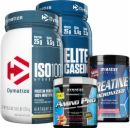


When it comes to building muscles, the right amino acids can make all the difference. Learn which aminos can help boost your strength and size at a faster rate!
We all know that protein provides amino-acid building blocks for making muscle and other body proteins. However, not all amino acids are used to make body protein, but instead play other roles in muscle gains and performance.
Furthermore, several amino-acid-derived nutrients like creatine and carnitine have special roles in muscle and should be considered as part of a muscle-building plan.
Branched-chain amino acids (BCAAs) are a special subset of the essential amino acids (EAAs) and include leucine, isoleucine, and valine. What makes BCAAs so unique is that once you consume them, they go directly into the bloodstream where they're largely available for use by your muscles.
Leucine in particular helps to signal muscle protein synthesis (MPS) by activating the mTOR (mechanistic target of rapamycin) pathway. This in turn leads to the production of muscle proteins and over time may lead to greater gains in muscle strength and hypertrophy!1
BCAAs are important to have throughout the day, and you can find them in food sources (e.g. animal proteins) as well as supplement form. When protein intake is reduced, like during periods of dieting, supplementing with BCAAs becomes even more important to help keep you in an anabolic state and to maintain as much muscle mass as possible.
BCAAs have also been shown to reduce muscle soreness and markers of muscle damage after intense exercise. I recommend taking 5 grams of BCAAs in a 2:1:1 ratio (2 parts leucine to 1 part isoleucine and 1 part valine), before and during training, as well as throughout the day.
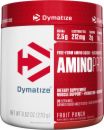
It would be hard to find a supplement ingredient with more research support than creatine, especially creatine monohydrate. Creatine is found in skeletal muscle, as well as elsewhere in the body, where it provides a readily available anaerobic energy resource. During resistance training when energy needs are high, creatine helps to recycle ATP—an important energy source—at a faster rate so that you can maintain strong muscle contractions throughout your entire workout.
Supplementation can enhance muscle creatine levels and support greater developments in strength and muscle size.2-4 For most, 3-6 grams daily will suffice and can be taken as part of a pre-workout formulation, post-workout shake, or with food throughout the day. Just make sure to be consistent, as it takes about a month to fully saturate your muscles with creatine.
Beta-alanine is a unique amino acid in that it's not used to make protein, but rather helps to delay fatigue during intense exercise. Once ingested, beta-alanine is converted into carnosine, an important muscle-buffering compound that helps to prevent the accumulation of hydrogen ions in your muscles. This allows your muscles to perform more repetitions before fatigue sets in.
To enhance gains in muscle strength and size, I recommend supplementing with 3.2-6.4 grams of beta-alanine daily.5 Just be warned that beta-alanine can cause a slight tingling sensation when taken at levels above 800-1200 milligrams. You will need to decide if this is a pro or con and whether you need to split your intake throughout the day or to go after that experiential aspect.
The list of potential supportive roles of carnitine in athletic performance has evolved and grown. Carnitine at a dose of 2 grams taken before or immediately after a workout can aid in the recovery process and help to reduce muscle soreness over the next day or two.6-8 Muscles that are less sore can allow you to train harder and get the most out of your workouts!