
Massive shoulder (or, anatomically speaking, deltoids, of which there are three heads: anterior (front) medial (side) and posterior (rear)) development in particular creates not only an illusion of size but conveys the impression that one is powerful.
A great set of shoulders will look equally impressive on stage, in the gym or when clothing is worn. However, good shoulder development takes a great deal of effort given that shoulders tend to be a very stubborn muscle group. The shoulders need to be targeted with a wide variety of exercises, for both overall mass and the detailed definition that illuminates the separation of all three deltoid heads.
Variety is important with respect to all muscle groups and particularly so with shoulders given their complexity. Training only with presses (the primary mass building exercise for shoulders) will for most people result in overdevelopment of the front deltoids.
Raises, which target the side deltoid, should be combined with presses to encourage balanced development. It doesn't stop here though. Rear deltoids, which are often neglected, probably need to be trained harder than both the front and side, given they do not undergo the secondary stress that the front and side do in a typical training session.
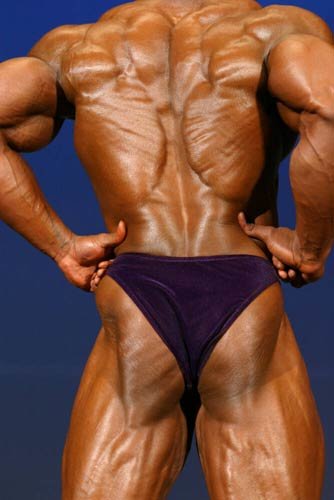


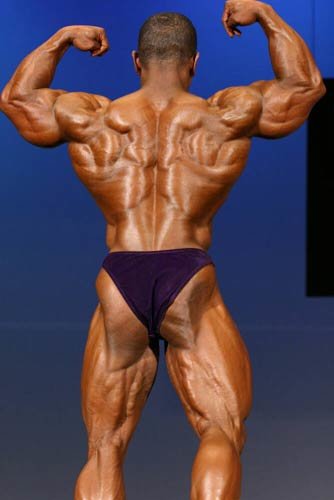
Probably the most complete rear deltoid development I have seen belonged to professional bodybuilder Vince Comerford. Back in the early 90s he made a particular point of mentioning, at a seminar, the importance of rear deltoid training. He said front and side deltoids receive an indirect stimulus when most other, non-shoulder specific, exercises are performed.
Personally, I feel that my front and side deltoids tend to take the majority of the stress during upper body weight training sessions while the rear deltoids take much less. Many bodybuilders, particularly in the amateur ranks, are notoriously deficient in terms of rear deltoid development, and by virtue of this have poor deltoid/trapezius tie in.
So the message is clear: prioritize rear-deltoid training. The focus of this article will be on complete shoulder development. Given that, ideally, exercise type and sequence should be changed regularly, five sample shoulder workouts will be provided.

Training Frequency
Training shoulders once every four days should be sufficient, provided correct diet and rest strategies are in place. Two different shoulder sessions per week for varieties sake should keep the gains coming. Training shoulders with chest is probably the best idea.
If these groupings are trained separately shoulders will undergo direct stress four-times per week and this might amount to over-training in the long run. Training shoulders directly after chest is most advantageous because they will be sufficiently warmed up, and less prone to injury.
Exercises
As mentioned, given the complexity of the deltoid grouping a large number of exercises should be used in different combinations from session to session for the best results. Remember to concentrate throughout the set to ensure that muscle tension is maintained.
Bent-over dumbbell raises (Rear deltoids).
-
The most effective exercise for rear deltoids. Include this exercise every second session.
Upright rowing (Rear deltoid/trapezius tie in).
-
A controversial exercise due to the internal rotation of the arms which places the external rotator muscles in a vulnerable position and causes them to stretch under tension. However it is a effective exercise so should be performed every second or third session by experienced lifters (those with more than one year of solid gym experience).
Dumbbell press (works primarily the front deltoids).
Behind the neck press (overall deltoid development).
-
A very effective, somewhat controversial, exercise. Again experienced lifters should only use this exercise, as when the bar is placed behind the neck, the shoulders are placed in a vulnerable position. Lifters with strong shoulders and no history of injury will experience great gains from this exercise (used as a key mass builder by most of bodybuilding's legends).
Front dumbbell raises (Front deltoids).
-
A great exercise for really isolating the front deltoids.
Side laterals (Side deltoids).
-
The best exercise for isolating the side deltoids. No need to go extremely heavy on this exercise as much of the stress can be taken off the muscles if this is done.
One arm cable side lateral raises (a variation on side dumbbell laterals).
-
Can be used to control the tension on the shoulders more effectively. Effective for pre-contest isolation work.
The Arnold press (entire shoulder development).
-
With this exercise the rotator cuff muscles try to stabilize the weight as it is moved in two directions at once. Again, a potentially dangerous exercise but one well worth doing if one is experienced and strong in this region. Personally I find this exercise, along with behind the neck presses, to be the most productive in terms of overall development.
Workout Plan
Now that the best exercises have been chosen they can be placed into combinations that produce results. The following sessions can be swapped around to keep the muscles guessing and the gains coming.
Exercises for front, side and rear deltoids will be included in each session. Rep range is 8-12 as this seems to accommodate the progressive resistance bodybuilding style of training better than lower or higher reps.
Workout One:
-
Dumbbell press: three sets of 8-12 reps.
Side laterals: three sets of 8-12 reps.
Bent-over dumbbell raises: 3 sets of 8-12 reps.
 Click here for a printable log of workout one!
Workout Two:
-
Behind the neck press: three sets of 8-12 reps.
One-arm cable side lateral raises: 3 sets of 8-12 reps.
Front dumbbell raises: 3 sets of 8-12 reps.
Click here for a printable log of workout two!
Workout Three:
-
Arnold presses: 3 sets of 8-12 reps.
Upright rows: 3 sets of 8-12 reps.
Bent-over dumbbell raises: 3 sets of 8-12 reps.
Click here for a printable log of workout three!
Boxing
It is by no accident boxers tend to have some of the most extraordinary shoulder development. Boxing, and I speak here of the training that goes with it also, will help to etch shoulder definition like no other sport. Whenever the heavy bag is hit, the shoulder takes the majority of the stress. Likewise with overhead speed-ball and pad training.
 Keeping the hands up in a fighting stance places constant stress on the shoulders. Making both wide and smaller circles with arms placed horizontally and skipping (both standard boxing exercises) also place tremendous stress on the shoulders. If one has access to a boxing gym, equipment and a trainer, this type of training would provide a change to the usual weight oriented training.
It could be done perhaps once every third or fourth week, in place of a chest and shoulder session, to shock the muscles and stimulate further gains.
Read boxing articles here.
Conclusion
The hallmark of a great bodybuilder is a well defined and muscular set of shoulders. Arnold Schwarzenegger himself said “you can run but you can't hide your shoulders“, meaning they can be seen from all angles, unlike most of the other muscle groups.
The shoulder grouping of muscles can be very hard to train, and develop, but with perseverance and intelligent training methods they can be developed to perfection.
| Clean and Press Dumbbell Side Lateral Raises Bent Over Dumbbell Flyes Other |
|
Thanks,