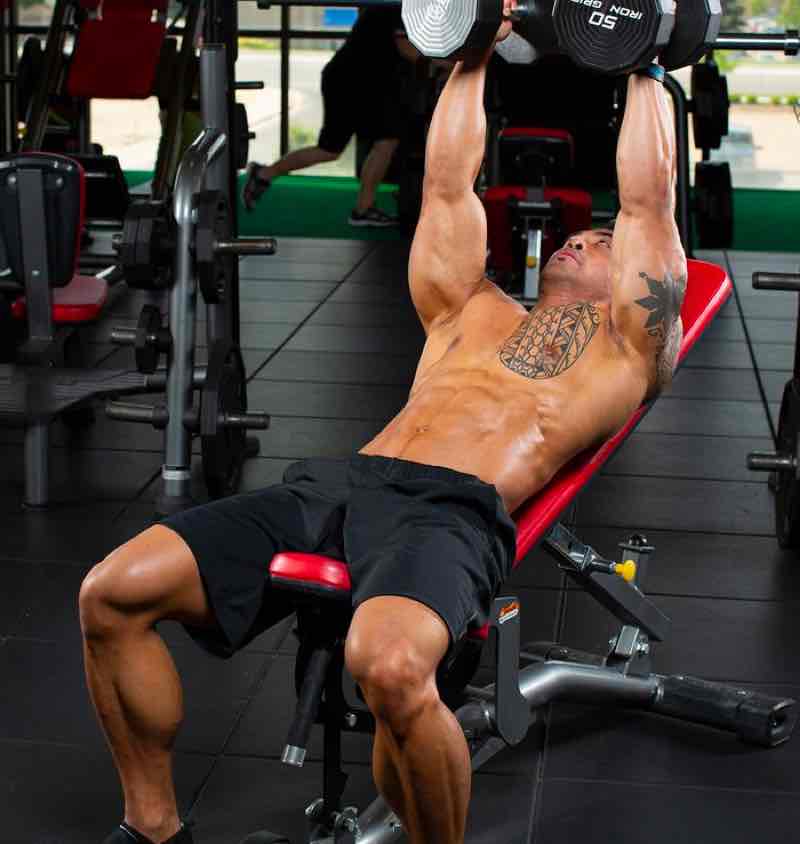
The zig zag workout takes advantage of this short term recovery to achieve a higher overall training intensity.


Partial Recovery & Advanced Training Techniques: The Zig-Zag Workout.

By: Yuval Goldstein

In my previous article, I have outlined an advanced training technique which relies on the phenomenon of partial recovery of muscles occurring several hours after training.

Partial recovery also occurs in the short term, where muscles trained intensively in a set - even performed to failure - can exert a substantial portion of their maximal strength during the next set, after a resting period of several tens of seconds. The "zig zag" workout takes advantage of this short term recovery to achieve a higher overall training intensity.


Introduction

A conventional workout session consists of several exercises performed successively without repeating an exercise performed earlier. For instance, in a session targeting the quadriceps, you may begin by performing several sets of squats, then move on to leg presses, and then perhaps to hack squats, leg extensions, etc.

Normally, you will not perform squats again after you have moved on to the next exercise. I have discovered, however, that a session in which I go back and forth between two exercises targeting the same muscle or muscle group can be highly effective.

I have termed this method the "zig-zag" workout and in this article I will detail it and attempt to explain the mechanisms behind its efficacy.


Shortcomings Of A Regular Session

When working very heavy, there is a good possibility that you will exhaust a muscle to a degree which will hinder the ability to perform subsequent exercises involving the muscle.

The best known example of this is the exhaustion of secondary muscles when performing compound exercises, such as the biceps giving up in seated cable rows or lat pulldowns, or the triceps quitting on you in a bench press. Performing compound exercises first, then isolation exercises, usually ameliorates the problem.


In A Regular Session
Muscle Exhaustion Can Occur In Biceps
During Seated Cable Rows

Click To Enlarge.

However, in many cases the problem is not the exhaustion of secondary muscles but rather that of primary muscles. This can take one of two forms: The failure of one of the muscles in a muscle group, or a certain section of a single muscle (such as one of the heads). Let's discuss these respectively.

Muscle Group Work

    During the performance of a session of exercises targeting a muscle group, such as the quadriceps, we may perform an exercise for several sets to failure, in a way which will fully exhaust one of the muscles in the group while the others will retain a significant portion of their maximal strength.


    Leg Press
    Click To Enlarge.

    Staying with the quadriceps, it is possible to fully exhaust the Vastus Lateralis while preserving some of the strength of the Rectus Femoris, when performing leg presses. The situation can be reversed when performing hack squats, in which the Rectus Femoris takes more of the work load than the Vastus Lateralis.


    Hack Squats
    Click To Enlarge.

    Arriving at such a condition can be deleterious to the overall effect of the session, as the total failure of one muscle in a muscle group will severely limit the ability of the group as a whole to perform well in subsequent exercises.

Single Muscle Work

    A similar process can take place when working a single muscle, such as biceps or triceps. What happens here, however, is not so much the failure of the entire muscle as it is that of section(s) of the muscle.

    For example, performing lying triceps extensions will work the medial and long heads more than the lateral head, while standing high pulley rope extensions will emphasize the lateral head. In both cases, performing one of these exercises very heavily can result in a severely diminished performance in the next.


    Lying Tricep Extension
    Click To Enlarge.


The Zig Zag Solution

This is where the zig zag comes in. In the zig zag, you perform several sets of a certain exercise quite heavily, but without going to failure, then switch to a different exercise which emphasizes different muscles in a muscle group or different sections in a single muscle, then switch back to the first exercise, ad exhaustium (don't look this up in your Latin dictionary - you won't find it - but you get my drift).

Assuming the two exercises emphasize slightly different muscles or sections of a muscle, those worked heavily in the first exercise will have a chance to partially recover during the second exercise. This partial recovery will greatly increase the ability to exhaust the muscle or muscle group more completely after a series of back and forth exercises.

While the notion of different exercises working various muscles in the muscle group to varying degrees is widely acknowledged, as is the recognition that working a single muscle by performing different exercises will emphasize different sections of it, I suggest there may be a third level of differentiation.

It is possible that even within a certain section of a single muscle, different groups of fibers will be recruited depending on the exercise used. If that is the case, it would provide another explanation for the effectiveness of the zig zag (and the superset, for that matter): The groups of fibers working hard in the first exercise may work less hard in the second, again allowing the requisite opportunity to partially recover. So we can see that the principle of partial recovery takes place on all three levels.


Hands-On

Let's take leg training. A good choice would be leg presses and hack squats.

For example, you could do 3 sets of leg presses, then 3 sets of hack squats, then 2 more sets of presses, then perhaps another set of hacks. You will notice that the routine is pyramiding down - the reason for this is that you still do want to fatigue the muscle to a considerable degree performing each exercise on its own.

Leg Press »
Hack Squats »
Leg Press »
Hack Squats »
Pyramiding Down

However, this is fertile ground for experimentation. For instance, instead of alternating two exercises, you could alternate three. Also, despite of my recommendation for down pyramiding, you could try one set on each alternating exercise. Variety is the key word here, and you will have to find what works best for you.

Unlike in a superset, do not take too short rests between sets. In fact, I have found that too short rests on this routine are counter-productive. You should rest as you would when performing a regular workout.

Here are some further suggestions for pairing exercises:


Chest:

Triceps:


Back:


Biceps:


Legs and Glutes:


Recovery

Since this is a shock technique you would be wise to observe a proper recovery period. As noted in my previous article, you should allow soreness to completely subside before working the same muscle again.

Also, do not perform any exercise where the muscle plays a secondary role. As with my previous routine, even if soreness has completely disappeared but you feel the muscle is not its usual strong, avoid working it. Last, if you feel tired the day after performing the "zig-zag", take a day off from any training.

I recommend that you do not use this routine on an ongoing basis. It is a rather taxing routine which is best used infrequently to get out of a training plateau, but as such I have found it to be very effective.

References

  1. William D. McElroy, "Cell Physiology And Biochemistry", Prentice-Hall, Englewood Cliffs, NJ, 1964
  2. Michael Yessis, "Kinesiology Of Exercise", Masters Press, Indianapolis, IN, 1992

Yuval Goldstein

Recommend this article to a friend by e-mail here!

Visitor Reviews Of This Article!
Read Visitor Reviews - Write Your Own Review

Back To CORE Training's Main Page

Back To The Articles Main Page.

Related Articles
Recovery Period's Effects On Strength.
Rehydration And 'Sport Drink' Ingredients!
What Are The Best Ways To Refresh Oneself During/Post Workout?


WTF ALRI WTF

There's A Hardcore Freak In All Of Us!
Learn More!
 
Member Login

Sign in for more FREE features and tools!

Username or
Email Address:
Password:
Remember Me


New to Bodybuilding.com?
Sign Up Now It's FREE!


Better Bodies Men